Key Takeaways
- Colin Kaepernick said growing out his hair for braids, inspired by Allen Iverson, Randy Moss and Ken Griffey Jr., became “a major point of contention” with his white adoptive parents.
- He recalled his parents calling the style unprofessional and saying he looked “like a little thug,” leaving him to question whether their love extended to his Blackness.
- Kaepernick shared the story on Kerry Washington’s Street You Grew Up On while promoting his memoir The Perilous Fight, which explores his identity struggles and activism.
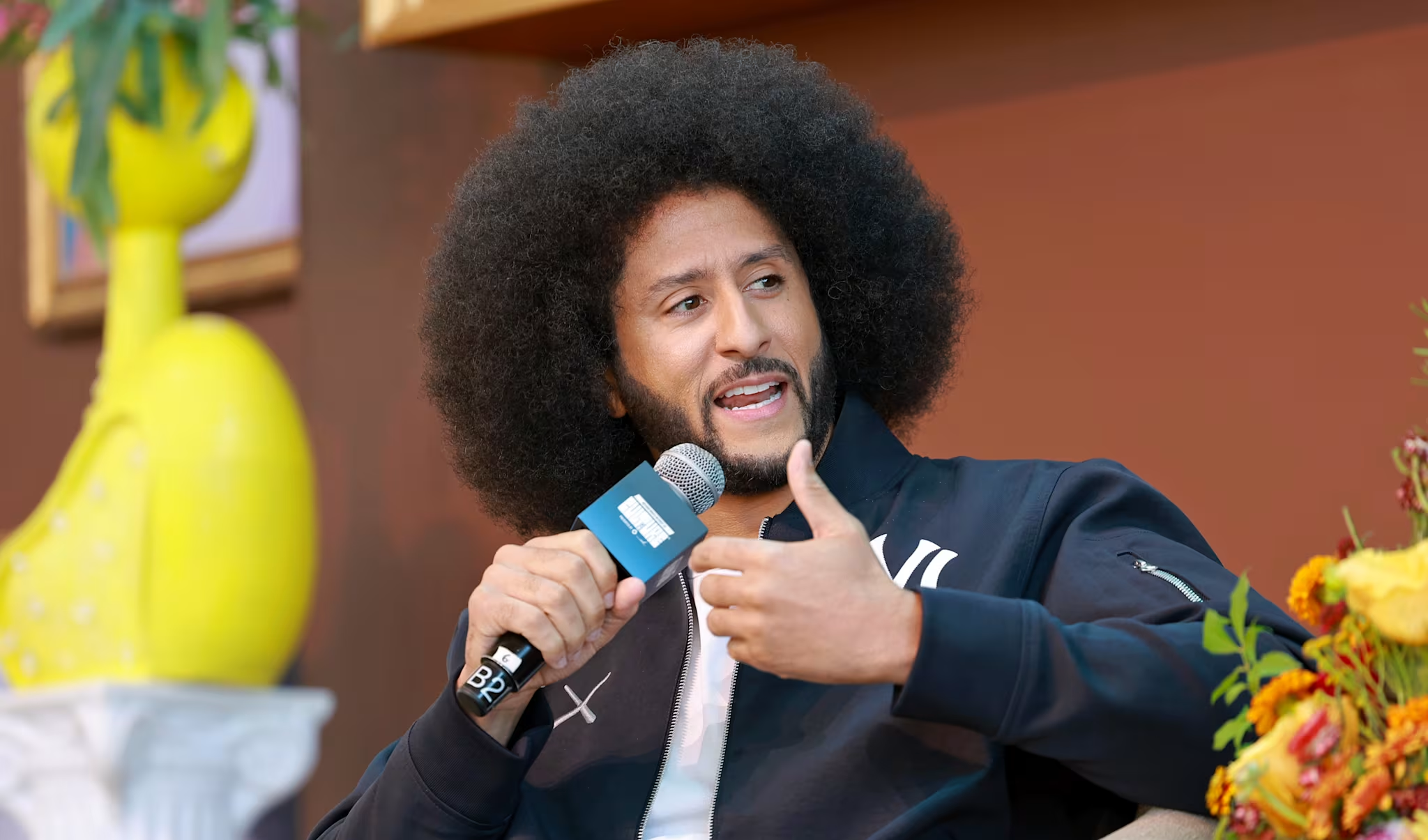
Colin Kaepernick is reflecting on how something as personal as his hairstyle became a source of conflict while growing up with his adoptive parents.
During an appearance on Kerry Washington's Street You Grew Up On, the former San Francisco 49ers quarterback recalled wanting to grow out his hair and eventually get braids after being influenced by Black athletes he admired.
"Hair was another one," Kaepernick said. "[I] had to navigate growing my hair out for the first time."
Kaepernick pointed to Allen Iverson, Randy Moss and Ken Griffey Jr. as inspirations. But adopting a similar look wasn't immediately embraced at home.
"That led to me growing my hair out trying to get braids," he said. "And that... became a major point of contention just... as I was going through that process."
Kaepernick, who was raised in Turlock, California, by white adoptive parents, said questions about his appearance eventually escalated into criticism about how others might perceive him.
"How I showed up became like, well, why are you doing this? Is this a phase? You know, you don't look professional," he recalled.
Things reached another level after Kaepernick finally got his hair braided.
"Ultimately led to a point where I had my hair braided and was like, 'Oh, well, you look like a little thug,'" he said.
Before growing out his hair, Kaepernick remembered getting drastically different haircuts at Supercuts, describing them as "getting everything shaved" without even receiving a lineup. He said he wouldn't get his first proper lineup until college.
His first experience getting braids was much more meaningful. Kaepernick said his mother accompanied him to a Black-owned barbershop, where he met the woman who would eventually begin braiding his hair at her home. Those appointments became "almost like my moment of peace," he recalled.
The conversation arrives as Kaepernick promotes his memoir, The Perilous Fight, released Sept. 15. His hair and identity have been recurring subjects throughout the press run.
The issue also followed Kaepernick into his NFL career. In 2017, Michael Vick publicly suggested that Kaepernick should cut his hair and adopt a "clean-cut" appearance while trying to return to the league. Kaepernick responded at the time by posting the definition of "Stockholm Syndrome" on social media.
Looking back, Kaepernick said he never doubted that his parents cared about him. What remained more complicated was whether that acceptance extended to every part of his identity.
"I understood my parents love me," he said, "but whether or not they love my blackness and how that showed up felt like another conversation."Colin Kaepernick is revisiting the fights he had at home over his hair, and the moment his mother looked at his fresh braids and told him he looked like a little thug.