Key Takeaways
- Tyra Banks submitted side-by-side footage in her defamation lawsuit against Netflix, arguing that Reality Check selectively edited her interview and America’s Next Top Model clips to misrepresent what she said and did.
- Her filing says the docuseries cut her acknowledgment that she remembered Shandi Sullivan’s story and rearranged another scene to suggest Banks—not Sullivan—introduced the subject of cheating.
- Netflix and EverWonder Studio have moved to dismiss the case under anti-SLAPP protections, citing Banks’ agreement granting editorial control, while her attorney insists the dispute concerns factual accuracy rather than final-cut approval.
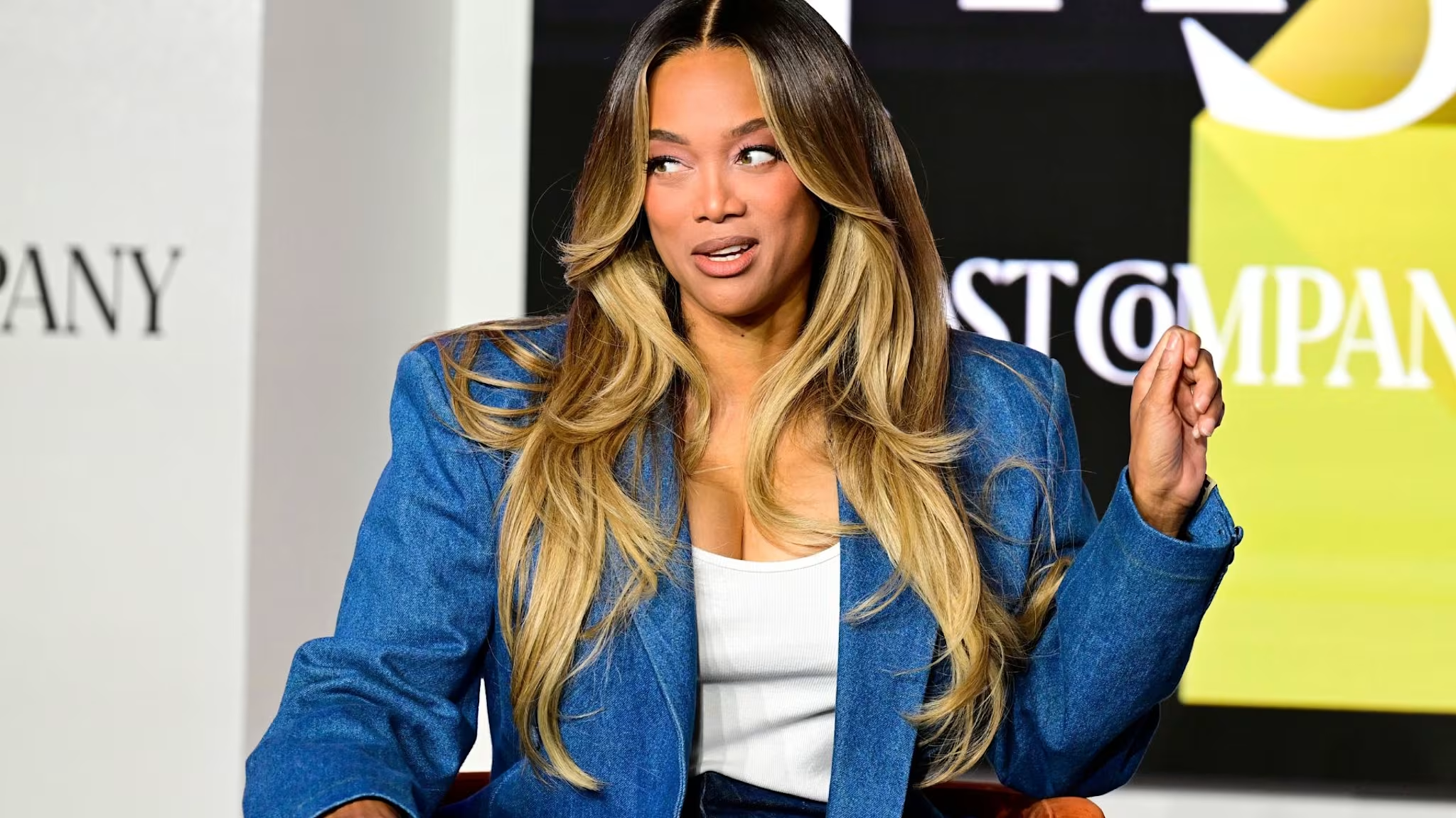
Tyra Banks is no longer just telling a court Netflix distorted her words—she’s showing exactly how they changed them.
In a new filing in her defamation lawsuit over Reality Check: Inside America’s Next Top Model, which Deadline obtained, Banks submitted side-by-side videos comparing footage from her full interview and the original America’s Next Top Model with scenes that appeared in the Netflix docuseries. Her attorneys say the comparisons show how “selective deletion, rearrangement and other editing techniques” created impressions not supported by the original footage.
One example goes directly to a central allegation in Banks' lawsuit: how Reality Check handled Cycle 2 contestant Shandi Sullivan's account of an alleged sexual assault.
In the documentary, Banks is asked, “You remember the story with Shandi?” She responds, “Um,” before the sequence ends, leaving her response unresolved.
The footage Banks’ attorneys submitted shows more. Banks nods before answering, “Um … I do remember her story.”
“The nod was not cut off. It was cut out,” her filing states. Banks' attorneys contend that the edit created the impression that she couldn't remember Sullivan or what happened during the 2004 season.
A second comparison turns to an actual America's Next Top Model episode—and the moment Sullivan’s relationship comes up.
The original sequence, according to Banks' filing, shows Sullivan asking Banks whether she had ever cheated or been cheated on. Banks answers, notices Sullivan getting emotional, and asks if she's OK.
“Sullivan raised the subject,” Banks' attorneys argue. “The Docuseries say Banks did.”
Those clips add something tangible to an argument Banks’ team has made since she sued Netflix in June. Banks alleges that filmmakers used only about 16 minutes from her lengthy interview and assembled portions of it in ways that falsely characterized her role in some of America's Next Top Model's most controversial moments.
Netflix, for its part, isn't backing down.
The streamer moved to dismiss the lawsuit in August and, along with EverWonder Studio, filed an anti-SLAPP motion. Netflix has argued that Banks signed an agreement giving the filmmakers editorial control and acknowledging that she had “no right to review or approve” the finished documentary.
Netflix has also rejected Banks' interpretation of the Sullivan sequence, previously arguing that “a documentary expressly showing Banks remembering does not imply that she forgot.” The company maintains that Reality Check never accused Banks of being present during Sullivan's alleged assault, being able to intervene or covering it up.
Banks' attorney Tom Clare says the fight isn't about his client wanting final cut.
“This is not about Tyra being ‘dissatisfied’ with an edit, nor is it about wanting creative control,” Clare previously said in a statement. “It is about whether viewers were given an accurate representation of her words and the facts.”
That dispute follows months of ANTM alumni revisiting the show's history. Tiffany Richardson accused Banks of bullying her during their infamous Cycle 4 confrontation, while former creative director Jay Manuel aired his own grievances in Reality Check.
Banks, for her part, acknowledged in the documentary that she “went too far” with Richardson.
Former judge Kelly Cutrone later defended Banks and accused Manuel of treating her unfairly.