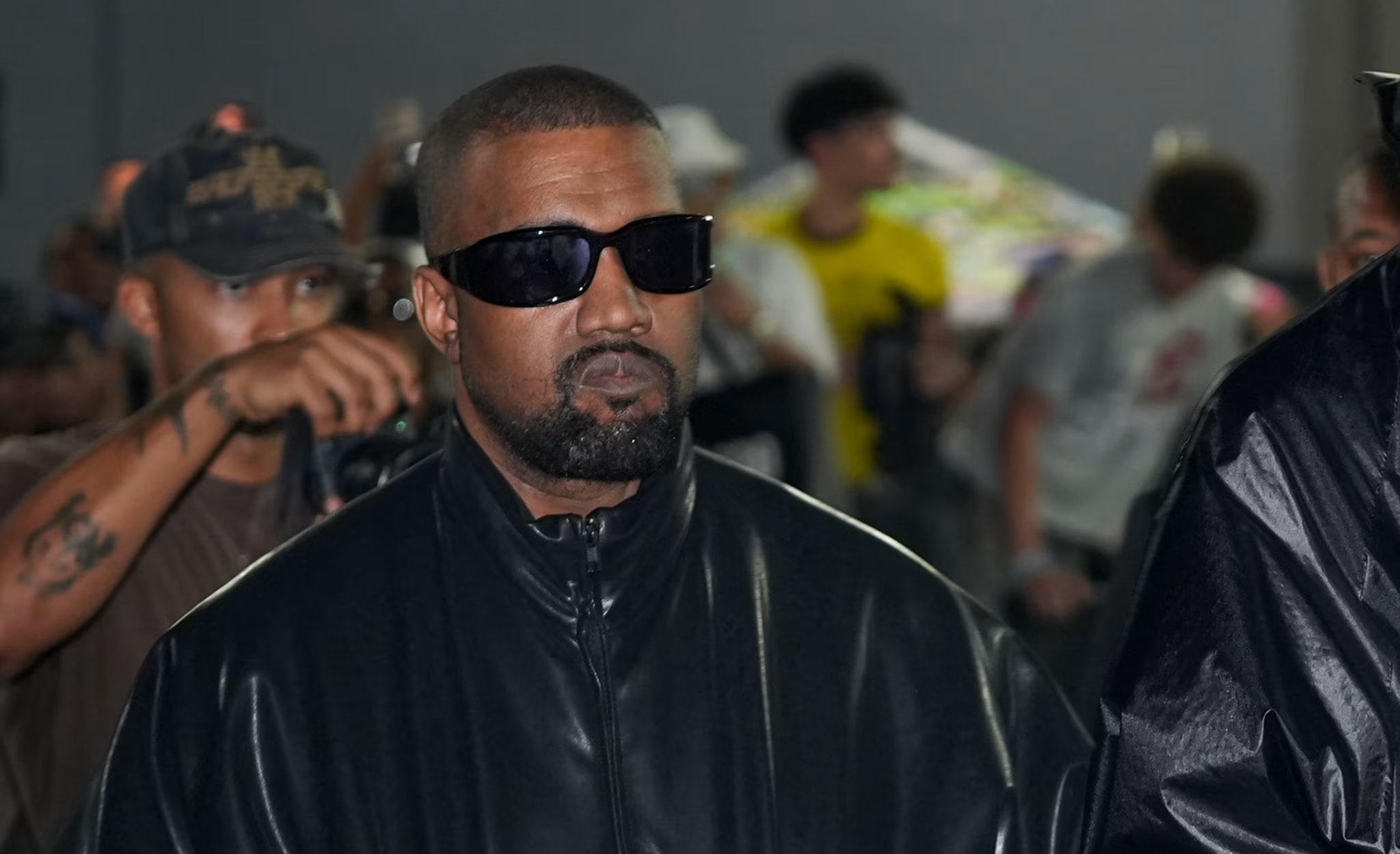
Ye’s attempt to get references to antisemitic remarks removed from the copyright lawsuit he’s facing from Alice Merton has been denied.
According to legal documents obtained by Complex, U.S. District Judge Fernando L. Aenlle-Rocha ruled that the allegations could help explain why Merton opted to refuse to let the artist formerly known as Kanye West sample her song “Blindside” for “Gun To My Head.”
Ye’s legal team has previously requested that the court strike the allegations pertaining to his remarks, with his lawyers arguing that they had no bearing on the infringement — and they only served to generate more controversy with the press.
Merton’s legal team argued that the comments played a huge role in her making the decision to reject Ye’s request.
The judge found the disputed allegations weren’t unduly prejudicial and could have a bearing on the litigation.
In Merton’s original lawsuit filed last March, she claimed that Ye released “Gun To My Head” in August 2024 and was sent a cease-and-desist letter that demanded he stop using the song.
In addition to mentions of antisemitic remarks, the judge in the case declined to remove references to Ye’s past copyright cases, finding that they could be relevant to his knowledge and intent. Merton’s lawsuit cited previous Ye sampling controversies involving Donna Summer, Boogie Down Productions, Syl Johnson, and more.
Ye must answer this complaint by Oct. 23.
Ye’s comments continue to impact him after his apology earlier this year. In 2022, adidas ended its partnership with Ye due to his antisemitic statements. Months after that, Ye praised Adolf Hitler during an appearance on Info Wars and eventually sold swastika T-shirts on his Yeezy website before Shopify removed the store for violating the platform’s terms.
In January of this year, Ye issued a full-page apology via the Wall Street Journal.
“I am not a Nazi or an antisemite,” Ye wrote. “I love Jewish people.”