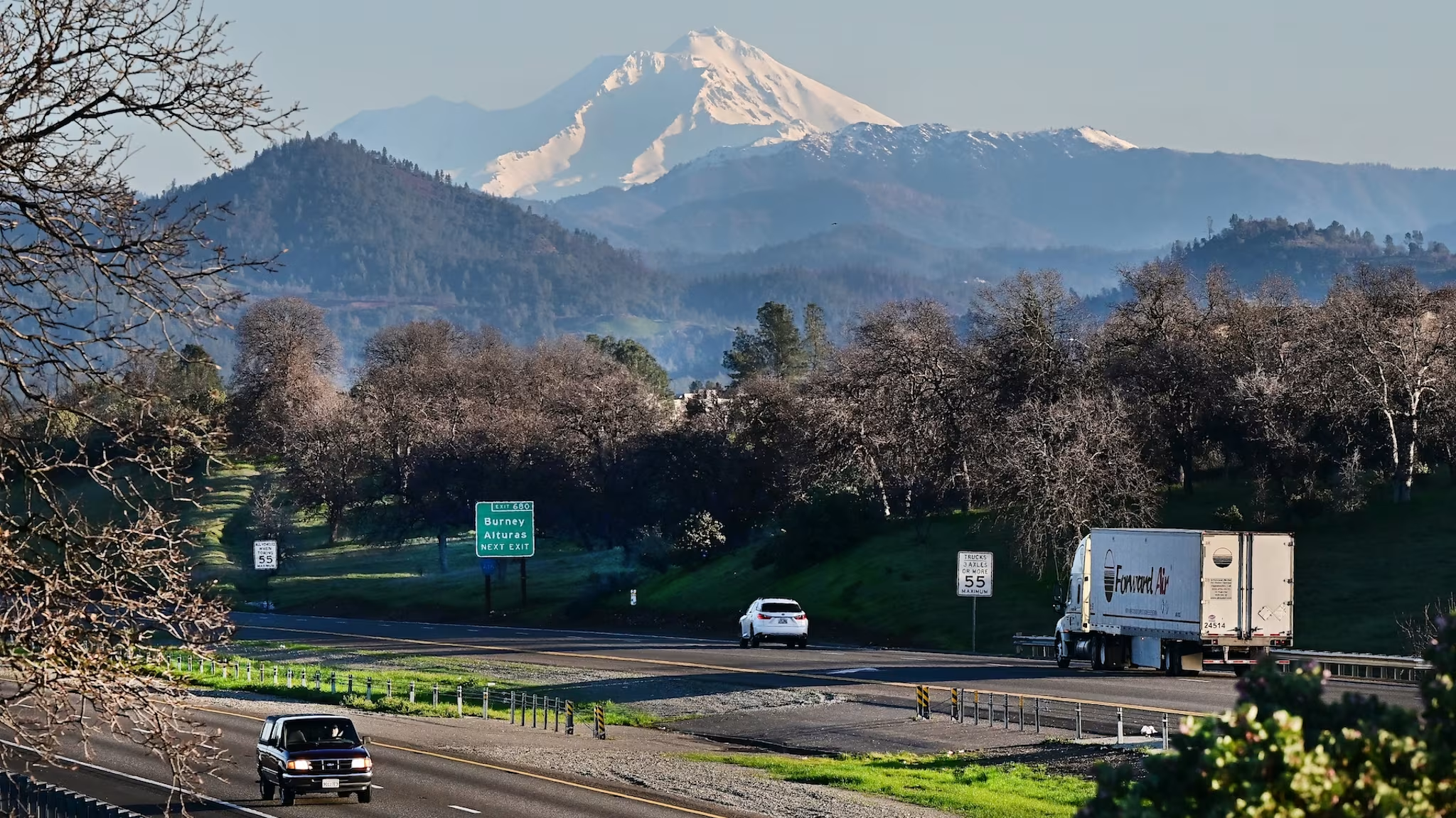
Three men from Roseville, California found themselves stranded overnight on Mount Shasta after using Google's Gemini AI to plan their route and packing list, a misjudgment the Siskiyou County Sheriff's Office called a "critical misstep."
The novice climbers made base camp at 8,400 feet on Aug. 30 before setting out at 3 a.m. the next day with daypacks for the summit, filled with what Gemini recommended they bring. The group reached the top at 7 p.m. Sunday, five hours past the recommended noon turnaround, then began descending in the dark, according to ABC News.
About an hour into the descent, one hiker fell and injured his knee. The group called sheriff's dispatch for directions but ultimately wandered off-route into the steep Mud Creek Canyon drainage, where they were forced to bivouac for the night with little to no shelter.
Their cell phones died during the descent, leaving the men without GPS navigation or the ability to call for help. US Forest Service Climbing Rangers reached them Monday morning (Sept. 1), provided medical aid, and escorted all three back to the trailhead without further incident.
After the rescue, one of the men told a deputy the group had leaned heavily on Gemini throughout the planning process. The AI reportedly estimated an eight-hour ascent; the actual trip ran roughly sixteen hours.
The Siskiyou County Sheriff's Office said Gemini also told the hikers to drastically underestimate their packing load. "They were advised by Gemini to bring far less food and water than their group required, especially when their planned 8 hour ascent became a multi-day ordeal," the office said.
One hiker admitted: "We relied too much on AI rather than our own critical thinking."
Sheriff Jeremiah Larue said the technology's tendency to project confidence is part of the danger. "It tends to want to give you favorable information and also make you seem like you're kind of invincible, and I think that that causes problems, especially when something can be extremely dangerous," he told KPTV. "AI can be a good tool, but it shouldn't be used as the expert. Go talk to actual people."
The Clear Creek Route, while the least technical path to the 14,179-foot summit, demands physical conditioning, gear for all-weather conditions, and readiness for an unplanned overnight. Authorities have previously warned that the canyon the group stumbled into is among the mountain's most hazardous areas. "Serious accidents and fatalities occur on the Clear Creek route when individuals become lost and wander into more dangerous terrain, such as the Mud Creek drainage," the sheriff's office noted.
Officials advised climbers to contact the local USFS Mount Shasta Ranger Station before any trip, carry multiple methods of navigation, and never depend solely on AI or cell phones for route planning.
The rescue played out days before Google announced a partnership with Jimmy Donaldson's Beast Industries on a survival series in which teams use Gemini to navigate extreme environments.




