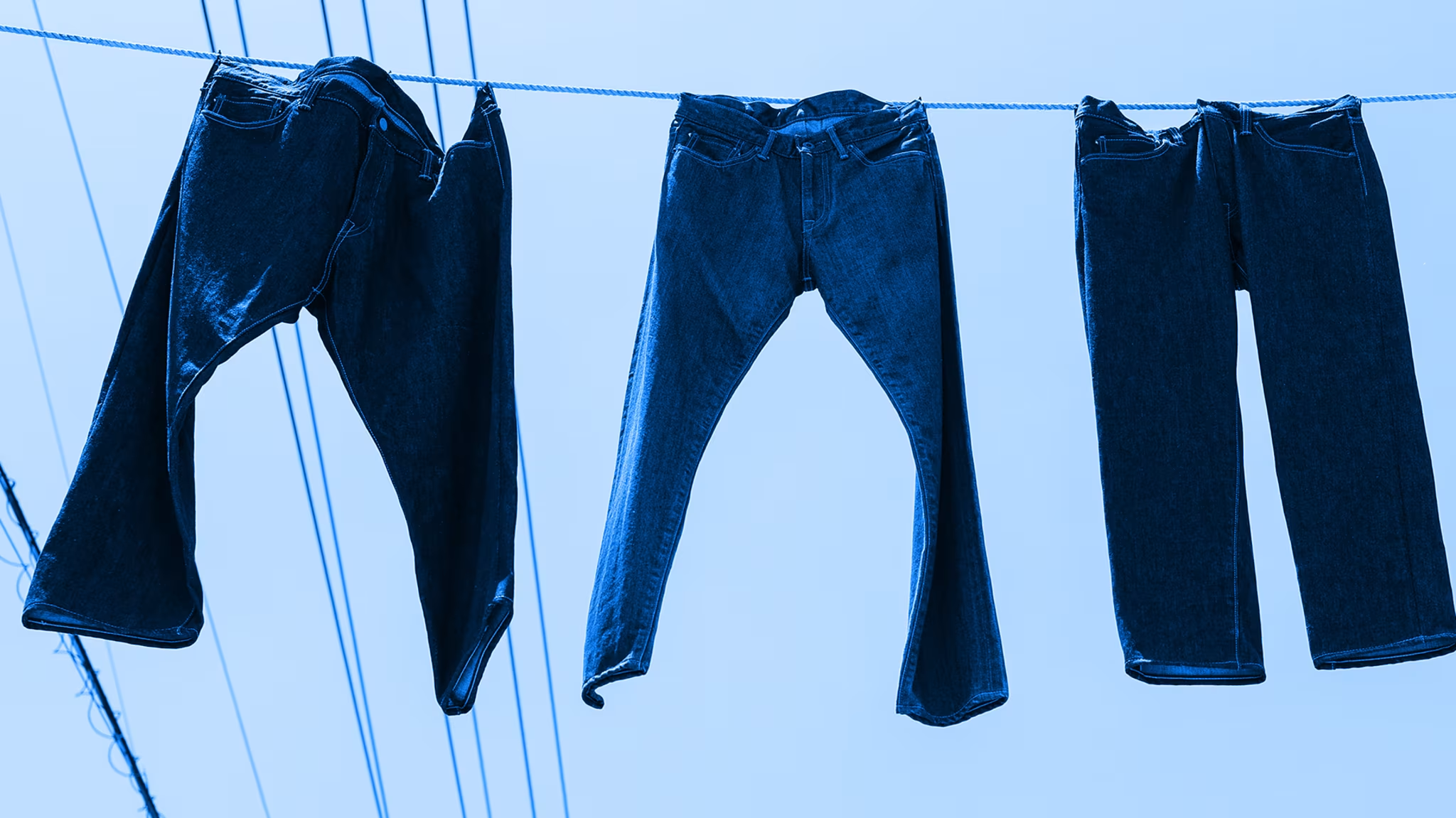
Everybody loves Japanese denim. It’s treated as the holy grail of jeans. But why?
If you’re embarking on your Japanese denim journey, there are some things you need to know. From its origins to pivotal movements like The Osaka Five to shopping tips to what selvedge even actually means, treat this as a starting point.
Here are some things to know about Japanese denim.
Shop the Jeans Collection on Complex.
Tetsuo Oishi Founded the First Japanese Jeans Brand
In the 1950s, Tetsuo Oishi was importing roughly 30,000 pairs of Levi’s 501s from America to Japan every month. Sold at postwar markets like Ameyoko and Yokohama, they became a cultural phenomenon among the Japanese youth. The popularity prompted Oishi to study how 501s were made. One year later, he created a prototype and sought a partnership with Cone Mills, who provided fabric to Levis at the time.
When he was denied, Oishi discovered an alliterative fabric from Canton Mills in Canton, New York. He founded CANTON shortly thereafter. It was the first Japanese brand to produce American denim. CANTON jeans were originally produced in factories that were built in the Miyagi and Akita Prefectures. In order to keep up with demand, he eventually partnered with Maruo Clothing in Kojima.
Japanese Denim As We Know it Today Started in the ‘70s
As the United States gradually embraced mass production throughout the ‘60s and ‘70s, Japan aimed to keep the original tradition and quality of American made denim alive.
Japanese manufacturers started to purchase the shuttle looms that American factories were getting rid of. They would go on to produce their own selvedge denim on these traditional looms, which provided denser and more textured jeans. This is what we can roughly point to as the birth of Japanese denim.
Kurabo Made the First Japanese Selvedge Denim
In 1972, the Japanese textile company Kurabo manufactured the first Japanese selvedge denim fabric in history in Kojima. It was known as KD-8. The 14-ounce fabric was used by pioneers like Big John and even by Levi’s in the early years of its Asian market expansion.
Kojima Is the Epicenter of Denim in Japan
Located in the Okayama Prefecture, Kojima is widely known as the hub of Japanese denim production. Following the rapid rise in popularity of jeans in the ‘60s and ‘70s, many of the factories in the Kojima pivoted to denim production. It has become known as the “Sacred Land of Jeans” and is still home base for numerous Japanese denim brands to this day. Tourists can even experience Jeans Street, which features over two dozen denim-centric shops.
The Osaka Five
These five brands are largely credited with ushering in the modern Japanese denim movement in the ‘80s and ‘90s: Studio D'Artisan, Denime, Evisu, Fullcount, and Warehouse. A subsection of the Japanese youth became obsessed with traditional heritage and craftsmanship of Levi’s jeans from the ‘50s and ‘60s. The Osaka Five capitalized on this trend in the marketplace and were able to offer modern reproductions of these vintage jeans.
Of the five brands, Evisu undoubtedly has had the most mainstream notoriety. Its jeans featuring handpainted seagull branding became a signature piece of the hip-hop uniform in the 2000s, worn by stars like Jay-Z and Lil Wayne. Today, it lives on as a key element of Y2K fashion and has entered a new chapter through placements on stars like Travis Scott and collabs with major streetwear labels like Palace.
Natural Indigo Dyeing Is Still Prevelant
While some mills have resorted to synthetic indigo, the purists still dye using natural indigo. While it is a more laborious process, it produces the most consistent and high quality results. The labor intensive process is also why many pairs of Japanese selvedge jeans command a higher price point.
The Selvedge Is the Key Detail
We all know that selvedge denim is synonymous with quality craftsmanship, but what does it actually mean? The selvedge is the self-finished edge that is created by the shuttle looms to prevent the fabric from fraying and coming apart. It is usually denser than the rest of the fabric and can be identified with a colored thread (traditionally red).
Sizing Up Is Usually the Way to Go
If you’re buying raw Japanese denim, that means it hasn’t been pre-shrunk. So, when you finally do wash your pair, it is going to shrink up significantly. It’s best to size up to avoid them shrinking too much. However, this isn’t a hard and fast rule. There are also pre-shrunk styles. In that case, order your usual jeans size. Just make sure you’re reading the labels before purchasing. Best case scenario, you will be able to final a local shop and try some pairs on before you make your final decision.
Iron Heart, Sugar Cane, and 3Sixteen are some of the speciality brands to check out first if you’re in the market for raw selvedge Japanese denim, according to expert and 3Sixteen founder Andrew Chen.