Key Takeaways
- Charles Spencer says Princess Diana genuinely loved Prince Charles and married him in 1981 despite his alleged admission the day before that he did not love her.
- Spencer describes the 20-year-old Diana as romantically inexperienced, guided by her heart, and convinced that her “first big love” might work out.
- His memoir, “Swan Song: Diana, My Sister,” makes further disputed claims about Charles during the marriage and after Diana’s death, while Buckingham Palace says grief may have colored Spencer’s memories.
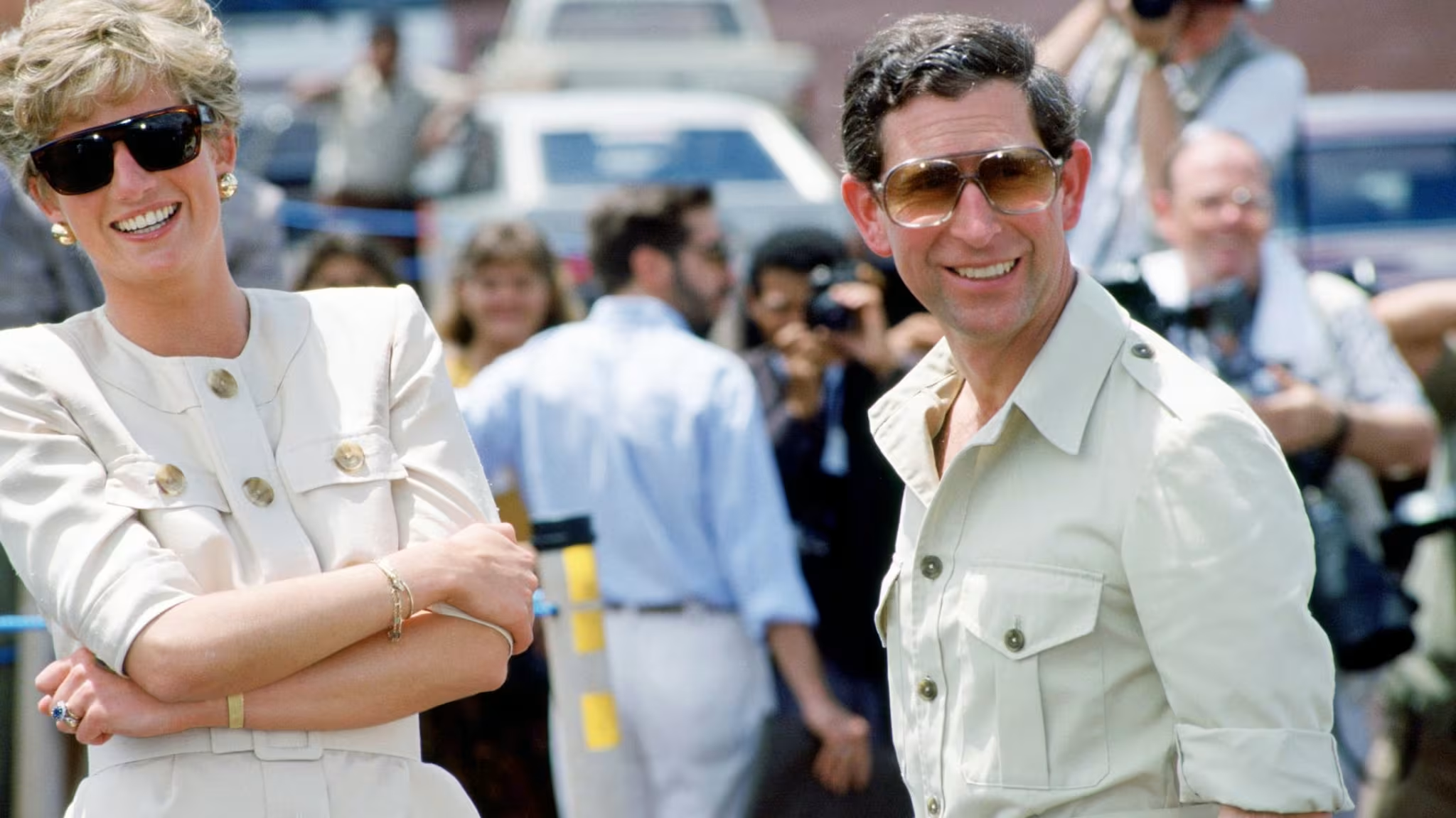
Charles Spencer says Princess Diana was genuinely in love with the future King Charles III when she married him in 1981—even though, according to her brother, Charles told Diana the day before their wedding that he wasn't in love with her.
The 9th Earl Spencer revisited the beginning of his sister's troubled marriage during a Sept. 28 appearance on CBS Mornings, where Gayle King asked why Diana went through with the wedding despite expressing doubts to her father. Spencer's answer was surprisingly simple: Diana loved Charles.
According to Spencer, Diana told him Charles had said, “I'm not in love with you, but I'm going to marry you anyway,” just one day before their ceremony at St. Paul's Cathedral.
“Well I, as a younger brother, I was very reassured,” Spencer told King. “You know, when I talked to Diana before the wedding, during the engagement—she was clearly, genuinely in love with Prince Charles, you see.”
Diana was just 20 when she married the 32-year-old heir to the British throne. Spencer, who was 17 at the time, said his sister had “no romantic experience at all” and described Charles as her “first big love.”
“I think, with Diana, she was very much somebody of the heart,” Spencer explained. “She led with the heart, and she was really her own person,” adding that “maybe she thought it would be okay.”
That recollection puts a striking bookend on some of the considerably darker stories Spencer tells in his newly released memoir, Swan Song: Diana, My Sister.
And yes, there was the valet.
Similar decades-old rumors involving Charles and a male royal aide were previously denied by Clarence House, which said allegations about Charles's sexuality were “entirely without foundation.”
Swan Song doesn't stop with the marriage. Spencer has also written that Charles sounded “giddily elated—like a lottery winner” when the two spoke after Diana's death in Paris in 1997.
He further alleges that Charles later told him, “Rest assured, we'll forget her soon enough,” during a dispute surrounding Diana's funeral.
Buckingham Palace pushed back against one of Spencer's claims earlier this month, saying that although it does not generally comment on books, King Charles is mindful that “the pain of fraternal grief can cloud reason, affect judgment and color memory in ways others do not recognize, even many years after such a loss.”
Spencer, for his part, isn't backing away from any of his claims. He has maintained that he's documenting his sister's life rather than settling scores.
“Part of my duty, I am a historian, is to lay down facts,” he told People. “There's no viciousness. I'm not resentful or bitter.”