Key Takeaways
- Prince Harry said he went nearly 20 years without crying after Princess Diana’s funeral, mistaking emotional numbness for strength after losing his mother at 12.
- In a new MasterClass on grief, Harry also discussed panic attacks after serving in Afghanistan and a two-week depression following his family’s temporary move to Canada in 2019.
- British tabloids attacked his disclosures as privileged self-pity, weeks after Diana’s brother Charles Spencer warned that the press’s treatment of Harry and Meghan echoed the scrutiny Diana endured.
Prince Harry has spent nearly three decades learning how to grieve his mother, Princess Diana. Now, as he opens up about the emotional toll of losing her at 12 years old, he's facing another round of criticism from a new tabloid report, weeks after his uncle warned that the media's treatment of Harry and Meghan echoed what Diana endured.
The Duke of Sussex, 42, joined neuroscientist Dr. Mary-Frances O'Connor for Redefining Grief: Building Resilience Through Loss, a new MasterClass released Oct. 8. During the conversation, Harry revealed that he went nearly 20 years without crying after his mother's funeral.
"I didn't cry when I was told my mum died, only at her burial, and then not again for nearly two decades," Harry said. "I was convinced that was strength, but it wasn't. It was a 12-year-old boy with no permission to fall apart and no roadmap for how to heal."
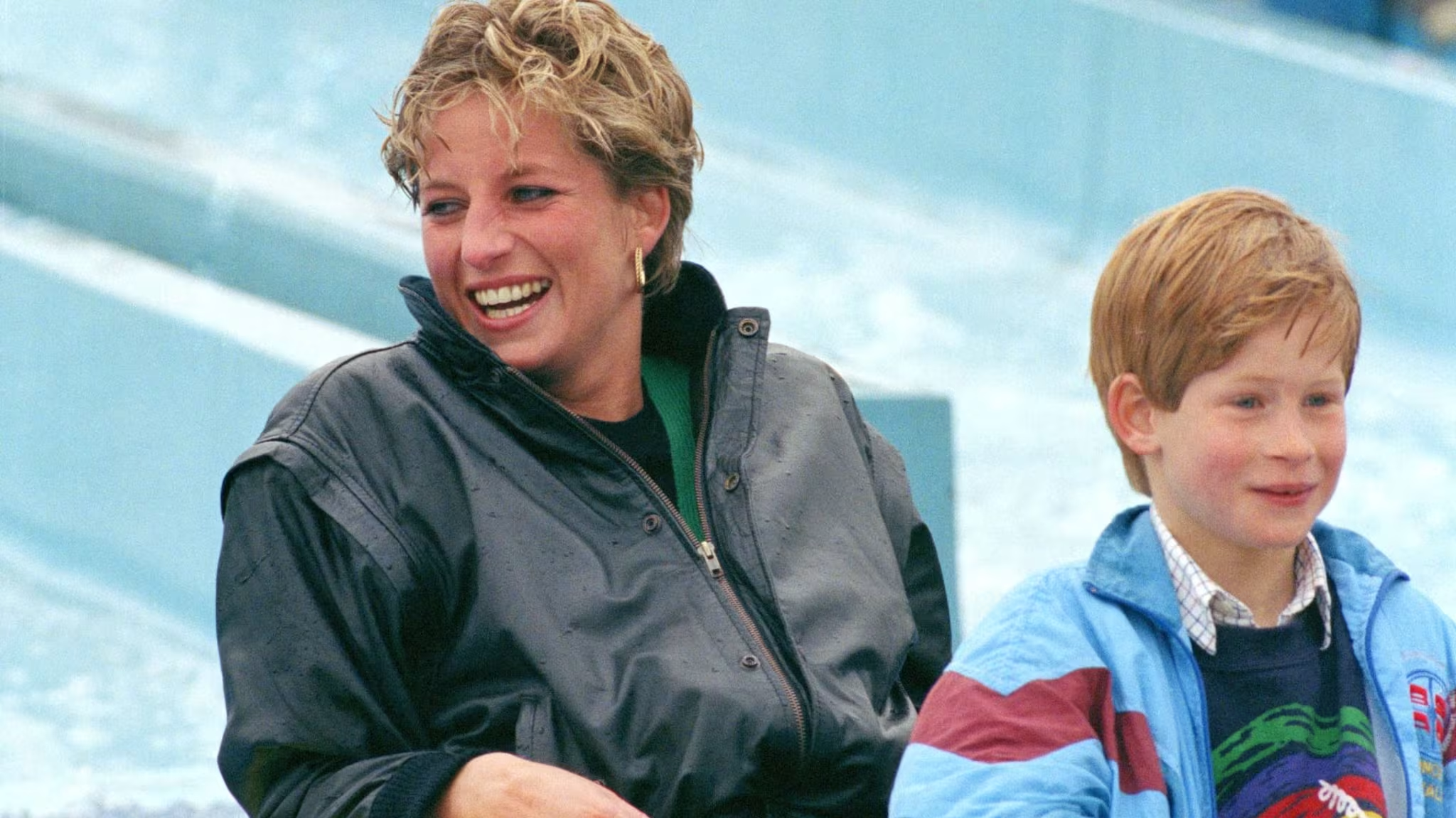
Diana died in a Paris car crash on Aug. 31, 1997, at age 36. Harry recalled greeting thousands of mourners outside Kensington Palace alongside his older brother, Prince William, just days after her death.
He remembered shaking hands with strangers whose palms were wet from wiping away tears, while he struggled to express his own grief.
"I almost felt guilty that I was unable to show the same emotion as these people who were crying for someone they'd never even met," he said.
For years, Harry mistook that emotional numbness for resilience.
"Grief doesn't always look like sadness. It can look like numbness. It can look like distraction," he explained, recalling how frequently he answered questions about his well-being with two words: "I'm fine."
Harry also discussed serving two tours in Afghanistan and experiencing panic attacks after returning home in 2013. Even putting on a dress shirt could trigger feelings of suffocation, while public engagements left him terrified that people would notice his sweating and anxiety.
In late 2019, after temporarily relocating to Canada with his wife, Meghan Markle, and their son Prince Archie, Harry experienced what he described as an adrenaline crash.
"I actually slipped into depression for about two weeks, and I felt like I couldn't function without adrenaline," he revealed.
His comments drew criticism in an Oct. 10 RadarOnline report, which quoted an unnamed royal source claiming some people see Harry as a “millionaire crybaby.”
"Millions of people experience depression, anxiety, and overwhelming stress while worrying about paying their rent, keeping their jobs, or putting food on the table," the source said. "They don't have the luxury of retreating to another country and taking time away from their responsibilities."
"I saw it with Diana," Spencer said, recalling her "tears of despair" and how deeply criticism affected her.
He said it was troubling to see "echoes of that now."
"I'm on my deceased sister's sons' side, both of them," he said. "If either of them wanted anything, then I'd be equally there for them."
Harry, who recently returned to Britain with Meghan and their children, says he now finds purpose in his family and the charitable work that continues his mother's legacy.
"The biggest factor for me is the energy and the joy and happiness that I get being with my family, especially our kids," he explained.
And after years of suppressing his grief, Harry offered one final reflection on the boy who lost his mother in front of the world.
"If I could go back and have a moment with my younger self, it would be to give 12-year-old Harry a hug and tell him that everything's going to be OK."