Image via Getty
Anyone can debate their favorite sneakers. Sometimes choices are personal. They like them because it has sentimental value. That’s fine and dandy. But when it comes to “iconic” sneakers, which is the most overused word, there’s no little debate which shoes should be in that discussion. These sneakers are recognizable to nearly everyone. Stan Smiths. Air Jordan 1s. Air Force 1s. The list goes on. A lot of people know a lot about these shoes, too. They’re part of American and sneaker history. But what are some things about these well-known shoes that’s not known by majority of folks? Here are some facts you may want to know.
Adidas Stan Smith
Stan Smith is known for something other than his signature shoe or being a tennis legend: his moustache. His face has been placed on millions of Adidas sneakers over the past five decades, but one thing was missing from them: his moustache. Smith has had a muff diver on his upper lip for the majority of his adult life, but there was a six-month span when he didn’t have it. It just so happened that this is when they created the now-iconic image for his signature. Interestingly enough, the Stan Smith itself wasn’t Smith’s shoe when Adidas first made it in the ‘60s. It belonged to French tennis star Robert Haillet, who had his name taken off his shoe after his retirement and re-gifted to Smith.
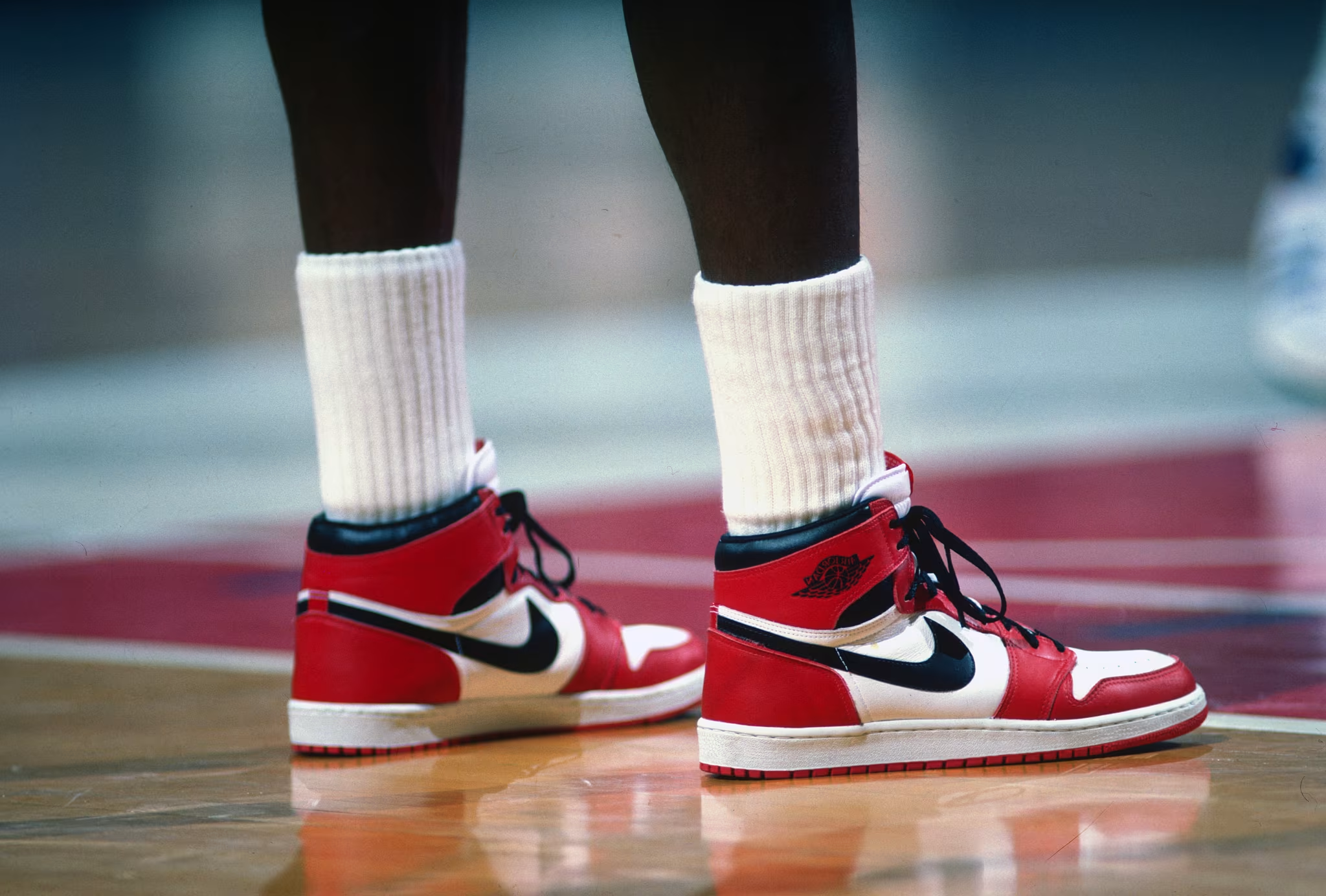
Air Jordan 1
The Air Jordan 1 was the shoe that not only started it for Michael Jordan himself, but for a lot of people who have a love of sneakers—whether they got into sneakers in 1985 or 2015. A lot of people know the man who gave his name to the Jordan 1, but the mainstream audience may not know that the man behind the shoe, Peter Moore, has a two-prong, or rather two-brand, history in the sneaker industry. Not only did he design the Air Jordan 1, but he also later went to Adidas and re-branded the company away from the Trefoil logo into its current performance logo with the slanted three stripes, and came up with the concept of the company’s Equipment line that was inspired by Adi Dassler’s slogan, “The best of Adidas.”
Nike Air Max 1
The history of Nike’s Air Max 1 is well known. It was the brand’s first sneaker with visible Air, released in 1987, designed by Tinker Hatfield, and inspired by the Centre Pompidou in Paris that shows the building’s inner structure on the outside. Less known, however, is that the sneaker design almost cost Hatfield his job at Nike. In his portion of the Netflix documentary Abstract: The Art of Design, he says, “It was widely discussed that I had pushed it too far. People were trying to get us fired.” There were even co-workers who were plotting to take his job, Hatfield says. Good thing none of that happened, as Nike has made the sneaker a centerpiece for Air Max Day, its made-up holiday celebrating the creation of the technology.
Converse Chuck Taylor All-Star
Ever notice that the soles on a pair of Converse Chuck Taylors are bit different than other shoes? That they're a little fuzzy instead of smooth and made of regular rubber? There's a reason for that. Apparently, the reason is due to tariffs from China, which are a hot-button topic right now due to President Trump imposing tariffs on China that will affect the sneaker industry. It's cheaper to import sneakers with fuzzy soles than non-fuzzy ones. Go figure.
Nike Air Max 95
The Air Max 95 was the first shoe in the Air Max line to have forefoot Air, but the aesthetic design is much more interesting than its technical components. Designed by Sergio Lozano, the sneaker was made to mimic the human body, from a sole that represented the spine to the laceloops made to resemble a rib cage. One of the more subtle elements of the shoe, however, is the Swoosh. In fact, the original design mockup didn’t have a Swoosh on it at all. Instead, it was tacked on, small as possible, on the rear of the design. On top of that, the shoe’s signature gradient colorways were used for a purpose, too: So the sneaker wouldn’t get dirty. That’s why the majority of the signature colorways of the shoe have an all-black midsole (the paint doesn’t chip away over the years like its white counterparts).
Air Jordan III "True Blue"
Michael Jordan’s career in the NBA spans three different eras: His first run with the Bulls, his second run with the Bulls, and his stint with the Wizards. The latter is interesting for sneaker connoisseurs, because he wore some of the models from his earlier playing days, including the Air Jordan XI and finally taking the Air Jordan IX, which released during Jordan’s baseball year, to hardwood. But the Air Jordan III “True Blue” is the only sneaker he wore during the Bulls era and his time with the Wizards. This is a tricky one, because he never wore it during an actual NBA game, rather first an exhibition between the NBA All-Stars and the USA National Team. This only worked because NBA players weren’t allowed to play in the Olympics at the time. Later he wore it an exhibition game with the Wizards.
Adidas Samba
The Samba is just more than a popular sneaker for Adidas over the years. For many Americans, it’s served as their access point into the brand’s archive outside of the Stan Smith or Superstar. It’s also the most iconic indoor football shoe of all time. But the shoe itself is much different than its first iteration in 1950. It originally was a mid-cut leather boot that was designed for West German footballers who were practicing on hard, icy surfaces during the winter. Since then it’s been chopped down, the tongue has been stretched out and shortened, given lifestyle collaborations, and had life in subcultures from punk rock to football casuals and beyond, and more.
Nike Air Force 1
If you watch Full Size Run or are an old school aficionado, you might know this fact already. But if you’re not, the Air Force 1 was the first sneaker ever to be retroed, according to legendary collector DJ Clark Kent, who also happens to be the sneaker’s biggest fan. Legend has it that the shoe came into the world in 1982 as the brand’s first basketball sneaker with Air. It then went out of production, but was brought back thanks to stores in New York City and Baltimore that begged Nike for the shoe to come back, due to its regional popularity. Nike would then go on to give those shops special makeups and continually grow the Air Force 1 franchise.
New Balance 574
The New Balance 574 is undeniably the best-selling and most popular shoe from the sneaker brand of all time. A lot of that is thanks to its pricepoint (below $100) and that it was part of the 2 for $89 promotion the brand ran with Foot Locker in the 2000s. The shoe has since been reworked to get back to its original shape, which was a daunting task for the brand for one major reason: The shoe itself was never really “designed” in the purest sense. Instead, legendary footwear designer Steven Smith created the New Balance 576 model and someone on the product side stripped the shoe down to make it cheaper at retail and easier to manufacture. It was a takedown version of the performance running shoe before that was an ongoing trend in the industry like it is now.
Vans Authentic
Vans is known as the California sneaker brand, and a company that got its roots in the skateboarding scene. But Vans’ start is something much more innocent and less devious than sidewalk surfing: Boating. The Vans Authentic, which was created in 1996, was originally called the #44 Deck Shoe and made to grip against wet conditions. Just so happens the Waffle sole also works well on skateboards and pretty much everything else. The shoe was shortly adopted by skaters and the rest is history.




