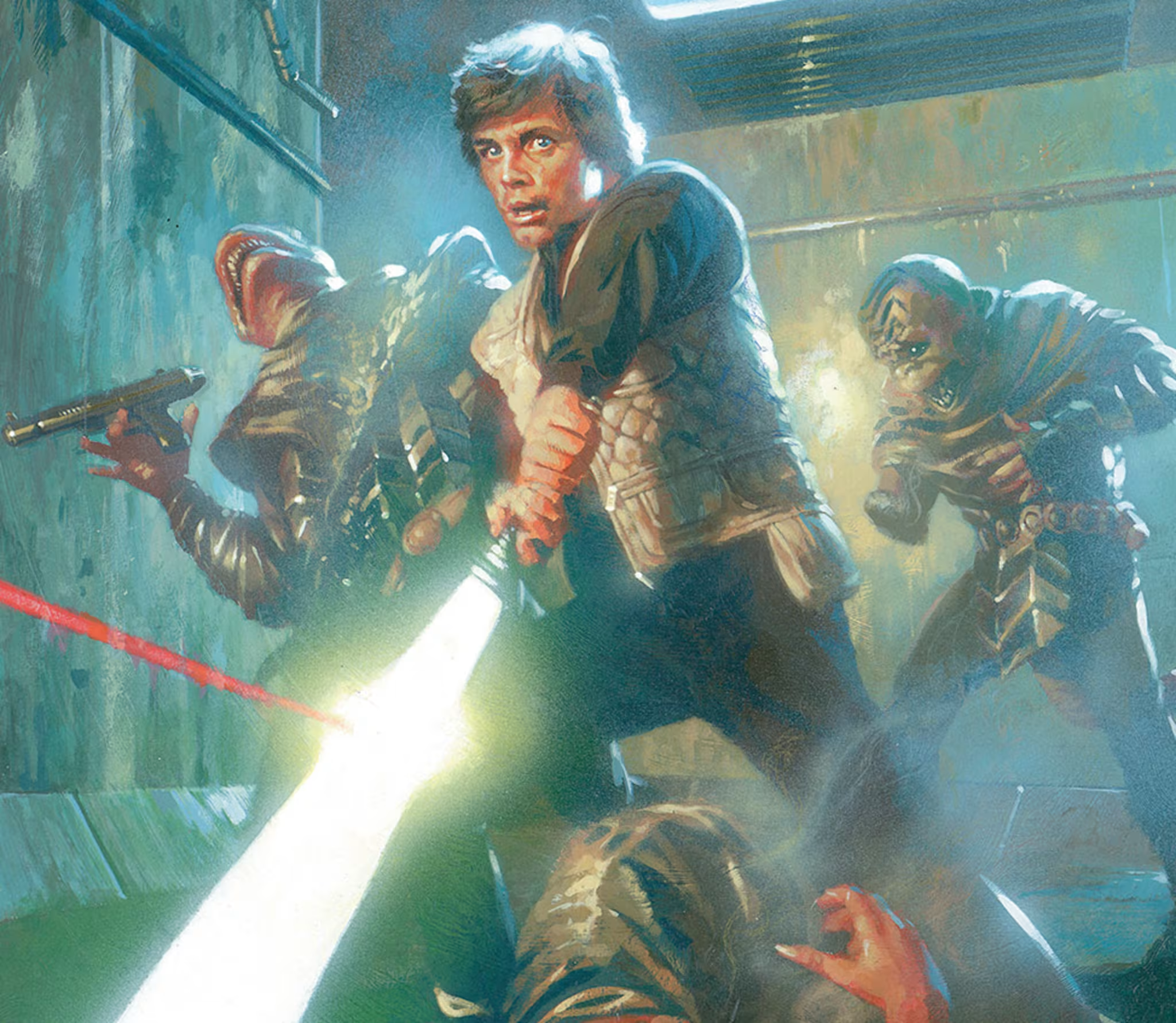
Star Wars has always been one of, if not the, biggest movie franchise of all time, yielding a vast array of movies, television shows, albums, comic books, video games, and, of course, action figures. But let’s go back to an interesting time in the world of Star Wars. A time before the prequels, before the Special Editions, before Disney, when all Star Wars fans could do was enjoy the incredible original trilogy, which all began that wonderful summer of 1977.
To be clear, when Star Wars (not yet known as A New Hope), The Empire Strikes Back, and finally The Return Of The Jedi hit theaters, through the late ‘70s through the early ‘80s the movies produced a plethora of merchandise and made George Lucas and Lucasfilm very wealthy, and for most other franchises, the fevers eventually fade, but for some reason while it may have faded, the presence of Star Wars had continued to be present in pop culture, mainly due to the development of at home media. Originally Betamax, then VHS, and even Laserdisc fans were able to take their favorite movies home for the first time and watch them as many times as they pleased. The original trilogy’s release on VHS was a huge deal and kept Star Wars in the pop culture conversation for years to come. Then the ‘90s hit, and as the world changed, Star Wars needed another hit.
“A Movie Without a Movie”
In the ‘90s, despite the fact that there hadn’t been a new film in over a decade, Lucasfilm decided to continue the stories of Luke Skywalker, Han Solo, and Princess Leia with other media such as novels and an amazing series of comics and graphic novels published by Dark Horse Comics. Not to mention the fact that the hit toy line “Power of the Force” by Kenner was revitalized for a newer ’90s audience. What we didn’t know was that Lucas had a few more plans up his sleeve to further expand his universe for decades to come. The Special Editions of the original Trilogy were being worked on as Lucas and co. tried to fully realize their vision of the films (for better or worse), and early development had started on what would eventually become the prequel trilogy. Before Star Wars returned to theaters, Lucasfilm wanted to show that interest in the Star Wars Universe was alive and well.
During a meeting, Lucasfilm Publishing director Lucy Autrey Wilson and Bantam Books editor Lou Aronica were discussing a new novel. During this meeting, Aronica had a crazy idea that, while risky, could potentially lead to huge profits for Lucasfilm in a multitude of ways. What if they didn’t stop at a novel? What if they launched a campaign across multiple media that would normally surround the launch of a major film? Wilson brought the idea back to Lucasfilm Licensing President Howard Roffman, who approved the idea, making it a company-wide initiative. They unofficially dubbed the project “A Movie Without A Movie.” This would be the first multimedia “transmedia” storytelling in modern entertainment.
With Lucasfilm aligned on their next big project, they still had to figure out what the story would actually be about. While different time settings around the original trilogy were discussed, game designer Jon Knoles suggested they place the story between The Empire Strikes Back and Return of the Jedi. The Rebels suffered their first major loss, the Empire was chasing them throughout the galaxy, Han was frozen in Carbonite, and Darth Vader was revealed to be Luke Skywalker’s father; the good guys were on the ropes, to say the least. The team was able to put together a new adventure with the original Star Wars characters and introduce a few characters who would become legendary themselves.
Enter Dash Rendar
While the old gang was coming back to enter another adventure, the hero of the story was a newcomer, Dash Rendar, another mercenary pilot who was at one point a rival to Han Solo. Dash was to be a rougher, less attached version of Solo; he was an extremely reluctant hero for the Rebel Alliance, was only motivated by money, and had no problems riding off into the sunset never to be seen again after his job was done. Basically, if you took away Solo’s heart, you had Rendar. Dash is hired by the Rebel Alliance to track down Boba Fett before he can take Han to Jabba’s palace, and he sure has his work cut out for him as he encounters multiple bounty hunters, gangsters, and even the Empire itself. When it came to the villains of the story, we had the usual suspects in Darth Vader, Jabba the Hutt, and the Emperor, but we also were introduced to Prince Xizor, the leader of the criminal syndicate the Black Sun. Vying for the Emperor’s favor, Xizor knew that if he could take out Luke Skywalker and thus cause Vader to fail in his promise to turn Luke to the Dark Side, he could possibly become the Emperor’s new No. 2. With these new additions plus new outfits, planets, and many other sub characters to be encountered, we had the players set, thus began production on the products.
A Galaxy Far, Far Away
First off in the project, Lucasfilm entered the video game world. The classic, and extremely successful Shadows of the Empire video game was developed for the Nintendo 64 as well as the PC. In the game, you took control of Dash Rendar in both third-person shooter levels as well as levels where you pilot his iconic ship, The Outrider.
The opening level was a Star Wars fan’s dream as Dash is drafted into the Rebel Alliance and thrown into the Battle of Hoth, basically recreating the opening battle of The Empire Strikes Back. Throughout the game, we could listen to an original score created entirely for the campaign by composer Joel McNeely, which was also available on CD and vinyl. A hit novel was written that gave the story a lot more depth than the video game could, and if novels weren’t your thing, the incredible writers and artists at Dark Horse comics created a fantastic multi-issue adaptation that still holds up today. Last but certainly not least, the action figures—boy, was there an incredible line made for Shadows of the Empire. We got new ships, new figures, new two-packs, and different variations of characters we had already seen (Chewbacca even got a crazy haircut). The marketing was extremely on point for the rollout of these products in toy stores, bookstores, and wherever you got your media, as the instructions were to treat this as promo for an actual movie. All the products got prime placement in stores, which led to huge sales across the board.
The project was a huge success, to say the least. The game was one of the biggest sellers on the N64, the book became a bestseller, and the toy, of course, sold like hot cakes. All this success was extremely important because without it, who’s to say whether or not we would have gotten the Prequels or further Star Wars projects? The decision was made; the world was ready for more Star Wars. Soon followed the Special Edition re-releases of the original trilogy, and the rest is history.
This successful Shadows of the Empire campaign pioneered what eventually would be called “transmedia storytelling,” telling a single story across multiple media. Lucasfilm took a huge risk, and it paid off, and that’s really what they always have done; swing for the fences and hope for a home run, and boy do they have a good batting average.




