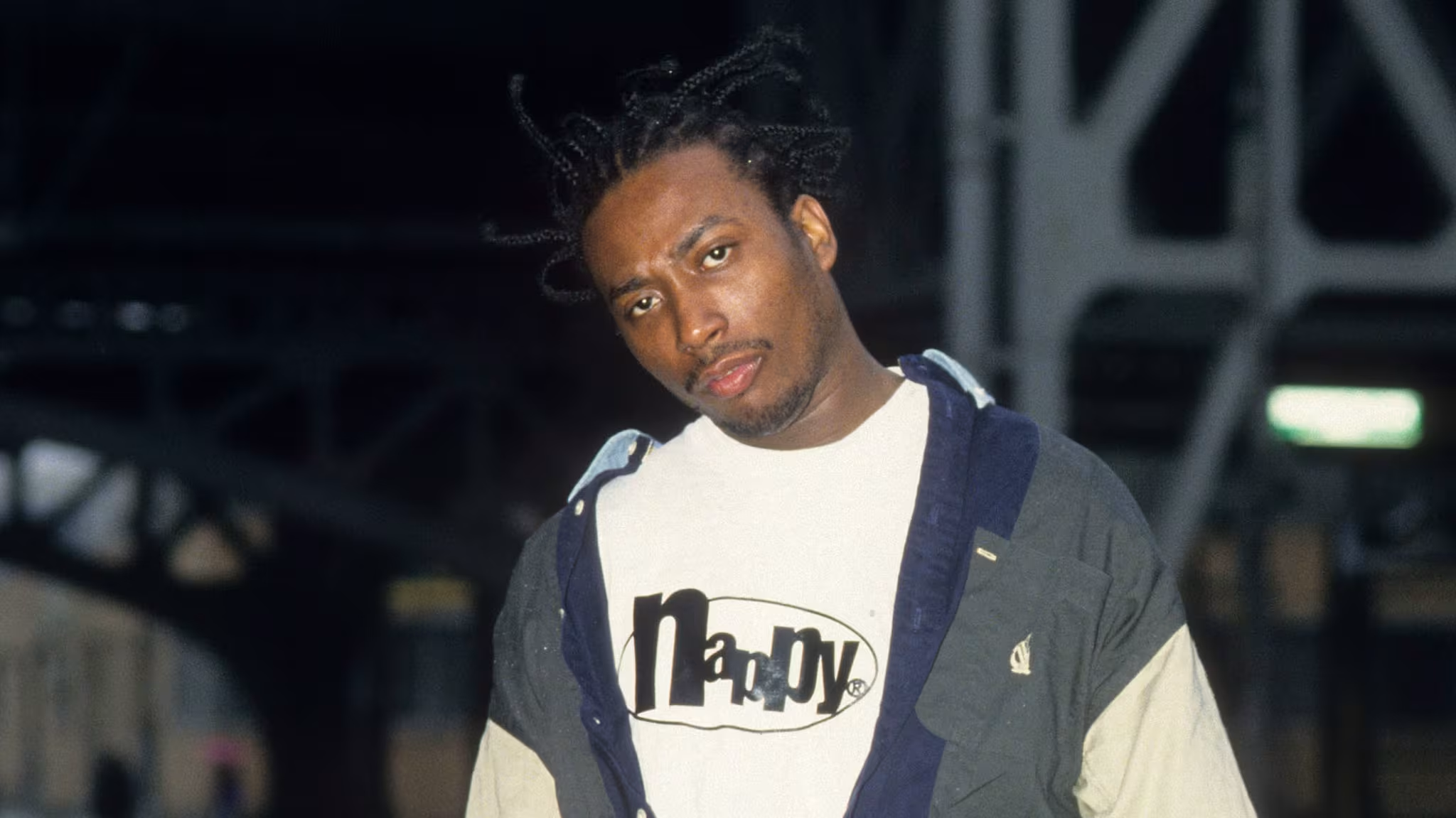
Ol' Dirty Bastard's legacy is now permanently etched into the neighborhood that helped shape him.
Friends, family, and fans gathered in Brooklyn on Sunday (July 26) as a stretch of Putnam Avenue in Bedford-Stuyvesant was officially co-named ODB Jones Way in honor of the late Wu-Tang Clan rapper, born Russell Tyrone Jones.
The ceremony drew a large crowd of supporters, who cheered as members of ODB's family pulled a cord to unveil the new green street sign. Following the reveal, relatives were presented with a ceremonial version of the sign while ODB's 1995 anthem "Brooklyn Zoo" played through speakers.
Among those in attendance was ODB's older brother, Ramsey Jones, who reflected on the significance of the moment.
"I am very honored to be here because my grandmother's house is on this block on Putnam Avenue, right next to where the mural is," Jones said during the ceremony.
He added that the recognition meant just as much to their family as it did to the community.
"I'm so honored, my mother's honored. Thank you."
The mural Jones referenced recreates the cover art from ODB's 1995 solo debut, Return to the 36 Chambers: The Dirty Version, which famously featured a replica of a New York City public assistance identification card. ODB's mother, Cherry Jones, also attended the unveiling alongside other relatives.
The ceremony doubled as a neighborhood block party, with fans honoring the late rapper in their own ways, from pouring out liquor in tribute to arriving in customized lowriders, sporting Wu-Tang Clan apparel and "Protect Ya Neck" merchandise, and purchasing commemorative items created for the occasion.
Ahead of the unveiling, the Wu-Tang Clan encouraged fans to attend the historic event with an Instagram post featuring a throwback photo of ODB standing beneath the original street sign at the corner of Putnam and Franklin avenues.
"Ol' Dirty Bastard. Unique Ason. Big Baby Jesus. Call him whatever you want — Bed-Stuy is calling it ODB Jones Way," the group wrote. "We heard you. We'll keep it raw."
Widely regarded as one of hip-hop's most original and unpredictable voices, ODB helped propel the Wu-Tang Clan to global fame while carving out his own lane with a wildly charismatic solo career. His influence continues to resonate more than two decades after his death in 2004.




