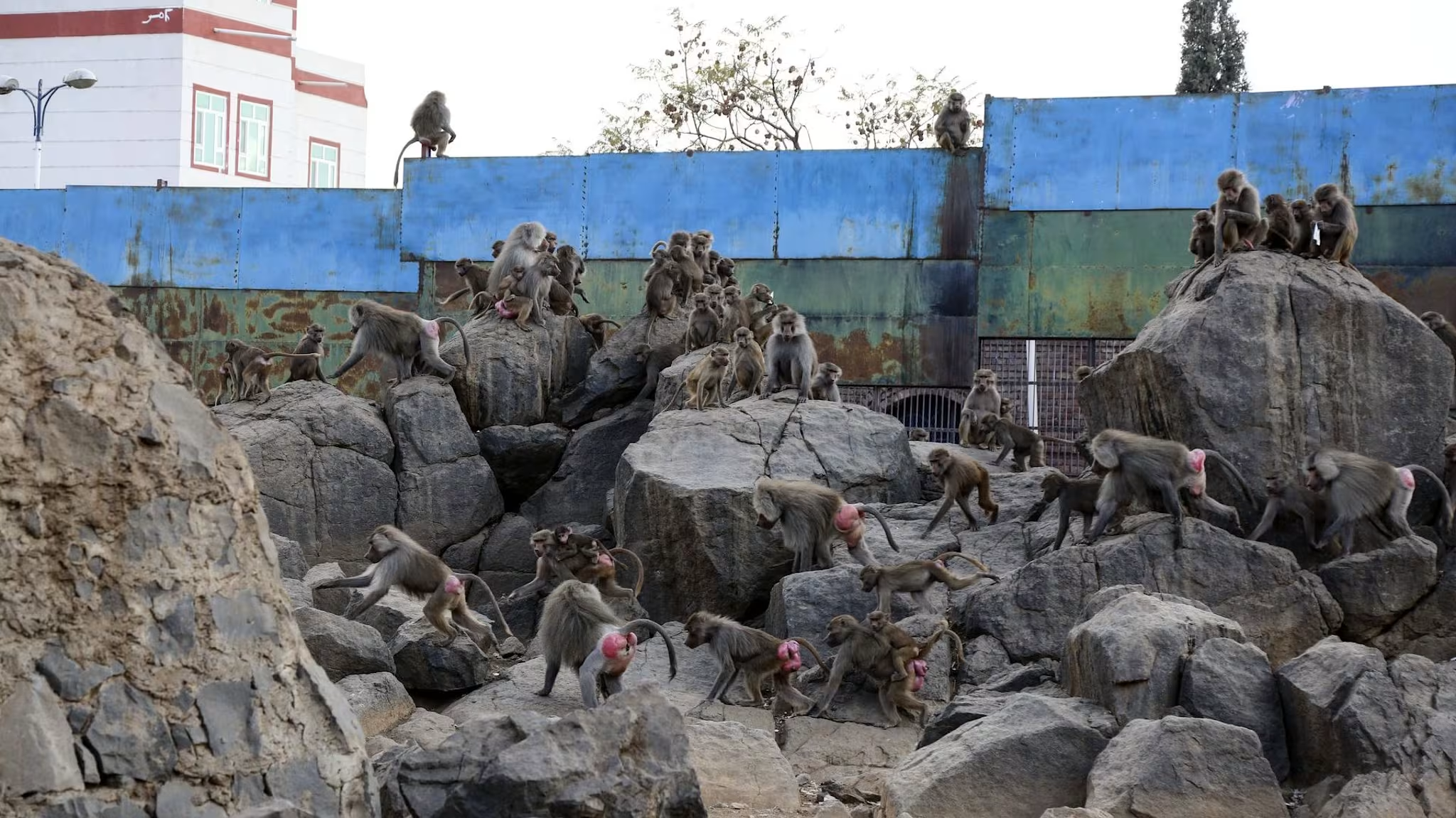
For the first time ever after an unprecendented experiment, scientists have created embryos that are a mix of both human and monkey cells, NPR reports.
The experiment, conducted by Professor Juan Carlos Izpisua Belmonte and a group of scientists, was done with the intention finding new ways to produce organs for those in need of transplants. In it, scientists injected stem cells from humans into embryos from macaque monkeys, which were then studied for 19 days, as scientists reported activity after one day, with human cells growing in 132 of the embryos.
“This is one of the major problems in medicine — organ transplantation,” Juan Carlos Izpisua Belmonte said. “The demand for that is much higher than the supply.”
After the breakthrough was presented Thursday in the journal Cell, NPR reported that the research raised some concerns among scientists, mainly related to the ethics of the study.
“My first question is: Why?” said Kirstin Matthews of Rice University’s Baker Institute. “I think the public is going to be concerned, and I am as well, that we’re just kind of pushing forward with science without having a proper conversation about what we should or should not do.”
Insoo Hyun, a bioethicist at Case Western Reserve University and Harvard University, noted that thousands of people die every year in the U.S. waiting for organ transplants, saying that he doesn’t see it as being “ethically problematic.” “It’s aimed at lofty humanitarian goals,” he said.
The goal of the study wasn’t to generate a “monster,” Belmonte added in response to ethical concerns, but rather to understand how cells from different organisms “communicate with each other.”
Related Stories

Discovery of New Particle May Break Laws of Physics
Physicists have discovered increasingly strong evidence that suggests a subatomic particle known as muon disobeys the known laws of physics.

Watch Black Light Experiment Show How Easily Virus Spreads at Restaurant
A black light experiment depicted in a viral video from Japan's NHK public broadcasting organization shows just how widely and quickly germs can spread.

One German Concert Experiment Indicates 'Low to Very Low' Risk of Contracting COVID-19 at an Indoor Show
The team enlisted 1,400 COVID-free volunteers to watch German pop singer Tim Bendzko perform for 10 hours at Quarterback Immobilien Arena for the study.




