Key Takeaways
- A Taiwanese man used his robot vacuum's camera to record his wife with another man, then won NT$500,000 (approx $16,000) in civil damages for infringement of marital rights.
- After his wife counter-sued, the Taoyuan District Court sentenced him to five months in prison and fined him NT$150,000 (approx $5,000) for deliberately recording private images without consent.
- The court ruled that proving the affair did not legalize the recording method, emphasizing that marriage does not override a spouse’s right to privacy.
A Taiwanese man walked away from civil court with $16,000 in his pocket, only to then face a criminal conviction in the same case.
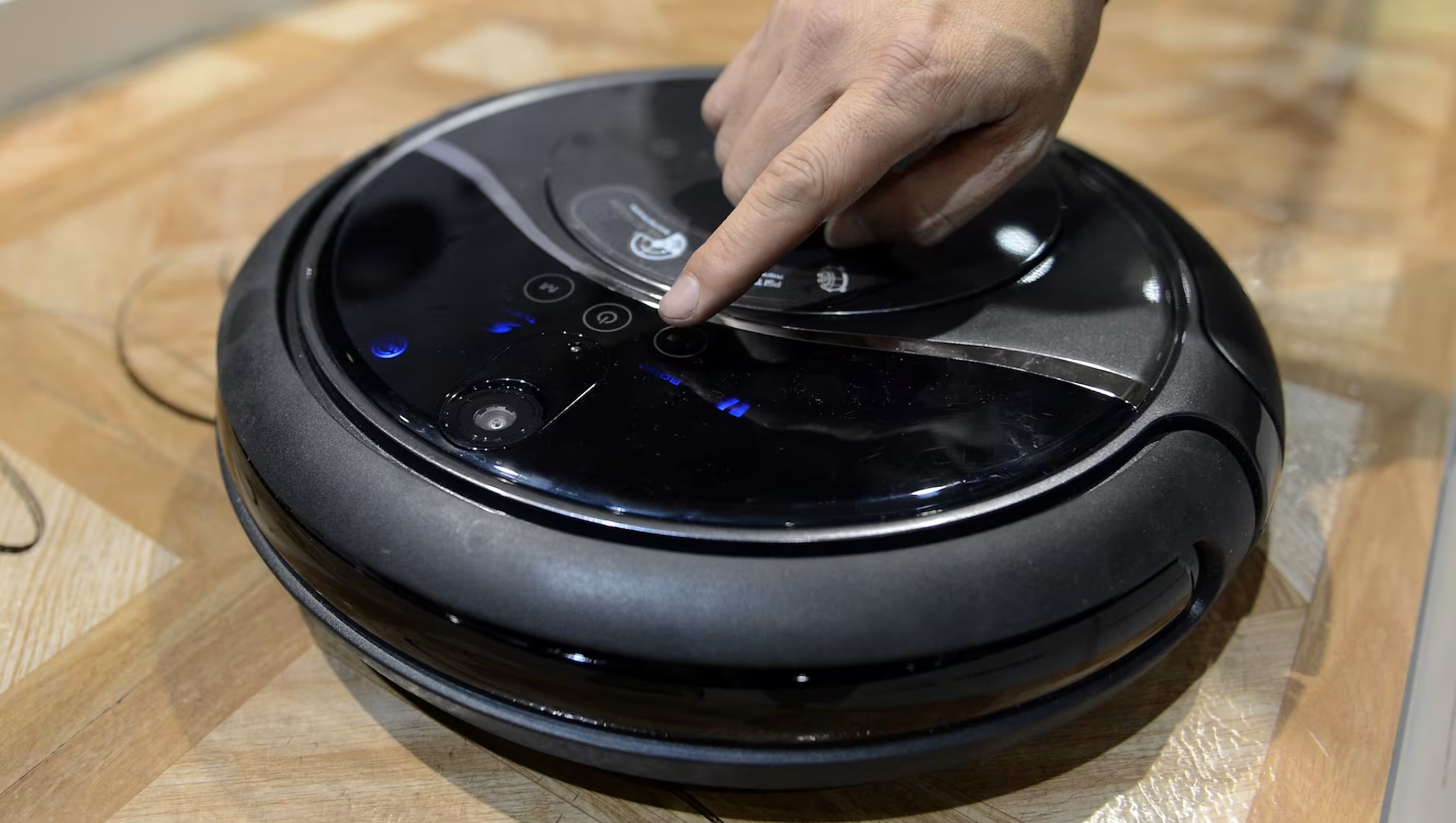
According to the South China Morning Post, the Taoyuan District Court found the husband, who's identity has been kept confidential, guilty of unlawfully recording private images on his robot vacuum's camera and sentencing him to five months in prison alongside a NT$150,000 fine (approximately US$5,000) on August 18.
It comes after a series of events that began in September 2023, when the man discovered a stranger's toothbrush at the couple's holiday home in Guishan, Taoyuan. He then reviewed parking garage surveillance and identified an unknown man who had previously driven his wife home, deepening his suspicions.
On December 24, 2023, he remotely activated the property's robot vacuum through its mobile app. He told the court he initially planned to use the device's built-in audio feature to speak with his wife. When the live camera feed showed another man inside the home, he began recording. The footage captured his wife changing clothes, embracing the man, and moving through the house unclothed.
He brought the recording to civil court, suing his wife and her lover for infringing on his marital rights and seeking NT$2 million in damages. The civil court agreed the relationship had crossed the line of ordinary friendship and ordered the pair to pay NT$500,000 (approximately US$16,000).
His wife then counter-sued over the recording itself. The husband argued that because the civil court had already accepted the footage as evidence, the recording was legally justified. The criminal court rejected that defense outright.
The court further noted that the husband had deliberately activated the recording function after spotting another man on the live feed, meaning the footage was not captured by accident. It ruled that the method of obtaining the evidence remained illegal even though the evidence itself proved the affair.
Under Taiwanese law, secretly recording or disclosing another person's private activities without authorization can carry up to three years in prison and a fine of up to NT$300,000 (approximately US$9,500). The five-month sentence falls well below that ceiling.




