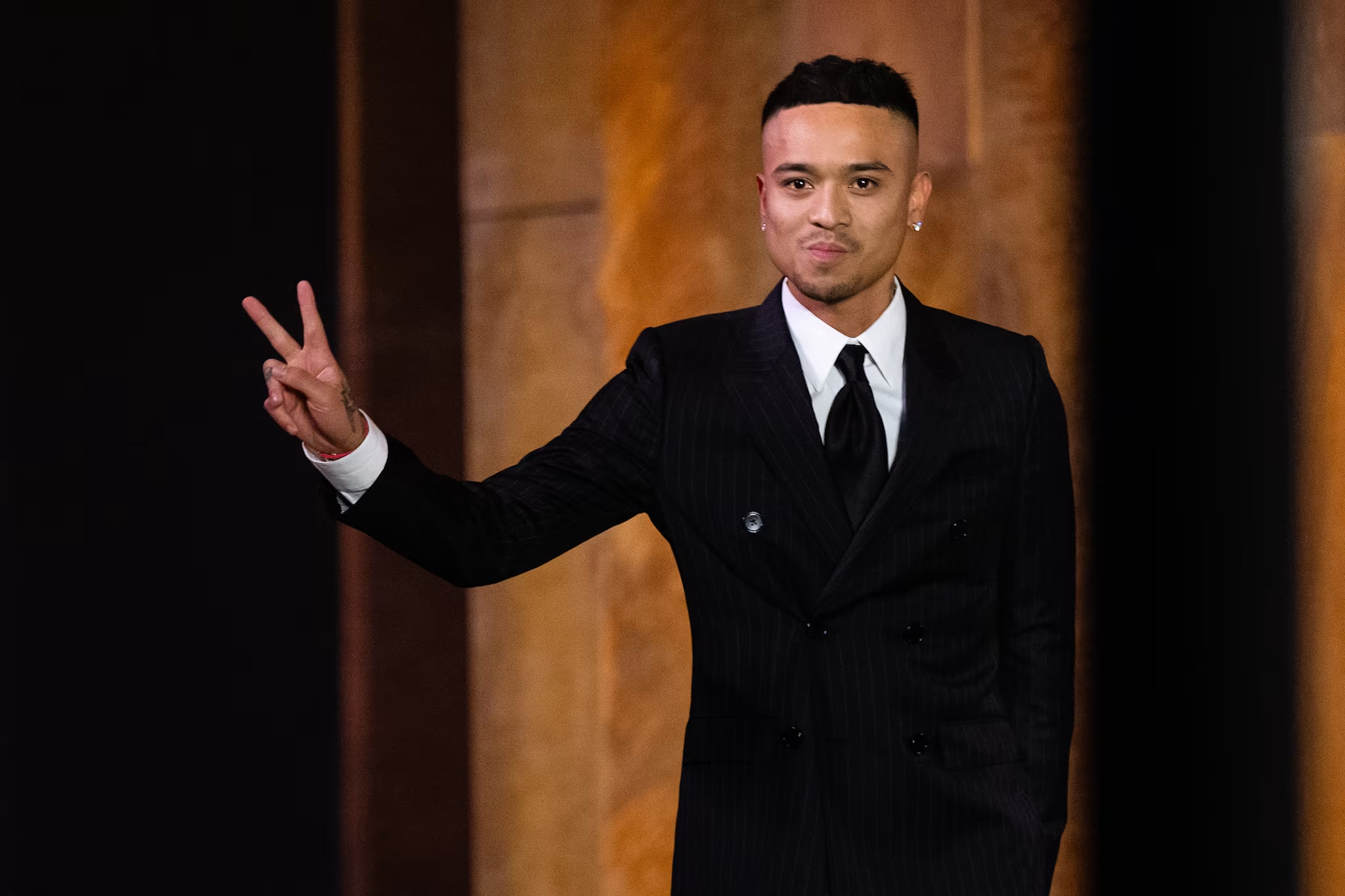
Image via Getty/Marco Mantovani
On Tuesday, Rhude founder Rhuigi Villaseñor and the 170-year-old Swiss luxury house Bally announced that their partnership has mutually come to an end. Villaseñor had only been the creative director of Bally since January 2022. At the time, Villaseñor was the first creative director hired by Bally in five years. He presented two seasonal collections while he was there. His debut in September 2022 was the first runway show Bally held since 2002. In January, Bally CEO Nicolas Girotto told Elle that he admired Villaseñor’s “multidisciplinary approach, with his background in art; his love for craftsmanship, music, travel, and designs; and his ability to engage and build community with his genuine positivity.”
So what happened?
While creative director positions cycle in and out, Villaseñor had a surprisingly short run at Bally. Like Virgil Abloh and Matthew M. Williams before him, Villaseñor was the latest example of a luxury brand tapping someone from the streetwear world to help reenergize itself. The difference is, Villaseñor was given much less time to execute his vision for the Swiss brand. Even though Villaseñor brought in a new logo, expanded on their womenswear line, and boosted Bally’s annual sales by 20%, it seems that wasn’t enough. Alternatively, he’s hinted at disagreeing with the larger Bally team at times, telling Vogue that his team advised him to “fuck up” his collections by adding sneakers into the line. At the same time, Villaseñor also told Elle that he wanted Bally’s brand identity to be so strong that “when you look at a flower arrangement, you think of Bally.” Respectfully, that didn’t happen within the past year he was there.
Here, we analyze Villaseñor’s time at the house and potential reasons why it didn’t work out as expected.
Villaseñor Didn’t Lean Into His Strengths
While many may categorize Villaseñor and his label Rhude as luxury streetwear, Villaseñor has grown as a designer since launching Rhude with a graphic T-shirt in 2012. Rhude’s recent menswear presentations in Paris stepped away from the graphic streetwear apparel that popularized the brand. Instead, Villaseñor honed in on elevated tailoring and even dabbled in womenswear. Despite his growth as a designer, Villaseñor’s graphic offerings have remained popular with Rhude’s core consumers. Jessica Ramirez, a senior research analyst at Jane Hali and Associates, believes Bally was following a play exhibited by other luxury labels: hiring a young trendy menswear designer to lead the house. By tapping Villaseñor, Bally also hoped captured the attention of a young audience and Villaseñor’s own niche following.
But instead of leaning into the styles that Rhude is popular for, Villaseñor envisioned building up Bally more on the womenswear end. “Menswear has gotten a bit crowded over the past, I would say, ten years,” he told Harper’s Bazaar before his first Bally show in September. “I truly think to really sell luxury, women are the ones to take the lead on it. Womenswear has the bandwidth to create something fluid. Something that can reinvigorate the brand, you know?”
Villaseñor’s drive to re-energize Bally as a luxury womenswear label was ambitious, but Ramirez believes Villaseñor needed to stick to what his audience was already familiar with.
“He wanted to reach a sophisticated and sexy customer with Bally so he went into womenswear, I do think his lines were good and were in line with what’s in trend. But it’s different from what he designs for Rhude itself,” says Ramirez “There’s not a strong logo, it’s not completely streetwear. While it highlights his ability to be versatile as a designer, which I think is a plus for him, there’s a lot of other moving parts the brand needs to be in order to have really made a bigger name for itself.”
By veering too far away from the aesthetic he’s known for, it likely made it difficult for Villaseñor’s fanbase to find an easy entry point into Bally—a brand that didn’t have much of an identity or presence to begin with. Instead of honing in on womenswear Ramirez believes Bally and Villaseñor should have focused more on speaking to the audience Villaseñor already had. While this was addressed to some degree by having Bally distributed through retail channels that lean toward a young men’s demographic, such as Kith and SSENSE, Ramirez felt more needed to be done to address them.
“You need to also tap into what your home base is and get the momentum behind that, Bally has very few followers on social media compared to all the other luxury [menswear] competitors,” says Ramirez. “It’s not like you can bring in a hot young [menswear] designer and it’s gonna fix all you need. You need marketing, you need social media, and you need retail strategy.”—Lei Takanashi
The Collections Were Too Referential
Because Bally is mostly known for accessories and not apparel, Villaseñor was essentially working from a clean slate. Previous Bally creative directors like Pablo Coppola and design duo Graeme Fidler and Michael Herz tried to refresh the house and make it a true lifestyle brand, but none of their efforts shook up the market or imbued Bally with any dominant signatures. This was an opportunity for Villaseñor to do that. It’s clear Villaseñor is well-versed in all things luxury. He studies it and has created a life for himself that reflects it—go peruse his IG account. But his efforts for Bally felt bogged down in other designers’ interpretations of luxury and not his own. He looked to designers like Tom Ford, who transformed Gucci from a sleepy accessories brand to a provocative fashion house, and Ralph Lauren, who has helped create a blueprint for American fashion. It’s not surprising he was inspired by their work, many designers are, but we didn’t get Villaseñor in the pieces. Being referential is commonplace in fashion. There are a slew of designers still eating off the aesthetic that Phoebe Philo pushed at Céline or the all over logo apparel that Dapper Dan created in the ‘80s. Also from a consumer standpoint, offering what feels familiar sells. But it becomes a problem when the design references aren’t tweaked and therefore the clothes aren’t in conversation with what’s current or modern. Maybe Villaseñor felt most comfortable doing what’s been successful for others, or he hadn’t fully fleshed out his vision (in his defense, he wasn’t given much time), but most brands bring in a splashy creative director to develop new codes, not to push old ones. He’s done that with Rhude and I presume the Bally execs expected the same with his efforts at the Swiss brand.—Aria Hughes
Lackluster Storytelling
What distinguishes luxury labels like Louis Vuitton and Balenciaga in recent years is top-tier storytelling from creative directors. While all luxury labels can make elegant products, a captivating story to sell to the consumer is what distinguishes one label from another. Demna’s Balenciaga runway shows have provided intriguing commentary on current events such as the war in Ukraine, climate change, and unhinged capitalism on Wall Street. While Virgil Abloh’s eight-season run at Louis Vuitton constantly riffed off the theme of boyhood and thus brought forth intriguing stories that piqued his childhood interests in underground subcultures, art, and hip-hop.
Villaseñor hinted that he would bring such storytelling into the design process. “For me to reference an era of hip-hop for Bally would be so…preliminary,” he told Business of Fashion. “It would be like the first layer of design. Hip-hop itself is deeper than that. It’s jazz, it’s rock-n-roll. It’s a reference to so many other things.”
Yet instead, the most that Villaseñor dove into hip-hop during his time at Bally was having Mike Dean create a soundscape for his second and last runway show. It seems remiss that a designer, whose own label is clearly influenced and celebrated by hip-hop, didn’t really expand on the Swiss label’s own prominence within the culture. Slick Rick and Doug E. Fresh popularized Bally sneakers on their album covers and on timeless anthems like “La Di Da Di.” Down South, Bally Animal sneakers were popularized by rappers from New Orleans in songs like Bust Down’s “Putcha Ballys On.” Granted that Bally worked with Slick Rick and Swizz Beatz in 2018, it’s interesting to hear that despite being urged by his team to bring sneakers to the runway, Villaseñor told Vogue that he declined to do so.
As for the story he sought to tell at Bally, it didn’t feel fully fleshed out. “Rhude is the story of an immigrant kid who had the American dream for myself. And Bally is my European dream of what luxury is,” he told Forbes. Yes, the clothes looked luxurious, but where was the “risk-taking” and “bold choices” that Bally CEO Nicolas Girotto said that Bally needed? The most ambitious creative dive during Villaseñor’s tenure at Bally was a campaign centered on Western cowboys picking up curling—a popular winter sport tied to Bally’s Swiss heritage. While it’s a quirky and fun campaign, it felt more like a basic mash-up between American and Swiss culture rather than a captivating story about an American immigrant discovering what European luxury is. —Lei Takanashi
Celebrities Reign Over Designers
Another potential reason why Villaseñor and Bally’s relationship expired early could likely be due to the luxury sector tapping widely-recognized celebrities to engage their audiences rather than fashion designers. LVMH has definitely leaned into that direction by tapping Pharrell to become the next creative director of Louis Vuitton rather than fashion designers who are less recognized within the mainstream, such as Martine Rose. In May, Versace announced that it would release a womenswear collection co-designed by Dua Lipa. Villaseñor is a recognizable name within the American fashion industry and has tons of celebrity co-signs, but he’s arguably not as recognizable amongst the masses as the Oscar-winning actor Adrien Brody. In March, Bally announced that Brody would make his debut as a fashion designer through a series of capsule collections.
“I think that makes sense because he’s in the moment, “ says Ramirez about Brody’s partnership. “I feel like [celebrity partnerships] have always been a thing but it has definitely blown up in recent years because of social media. I do think there needs to be a happy balance with some of it so you don’t bore the customer, but I do think that they play a key role in growth and in creating momentum and buzz around a brand.”
While luxury conglomerates like Kering are still elevating talent within the industry, LVMH’s recent decision to make Pharrell the first celebrity to ever lead a luxury fashion house certainly sets a precedent other luxury brands may follow.—Lei Takanashi
Bally Didn’t Give Rhuigi Enough Time
Villaseñor is far from being the first fashion designer to leave a major fashion label or luxury house as quickly as he entered. In fact, research conducted by WWD revealed that the tenure for creative directors at major labels has become shorter (usually less than five years). But when Villaseñor came to Bally, the Swiss luxury label hadn’t hired a creative director in five years and its last runway show was nearly two decades before. Ramirez believes the label needed more time with Villaseñor.
“A year to turnaround a brand that has already been dead is very little time. I don’t think it’s fair enough to just rely on a creative director to do that,” says Ramirez. “Within the year they brought this designer, they brought Bally back to the runway and some celebrities got behind it, but very little. That hype doesn’t instantly happen overnight. It does take a little bit of time and especially when you’ve lost an audience for a long time.”
While similar critiques about Villaseñor and Bally could be made about Matthew M. Williams and his work at Givenchy, time has certainly been in Williams favor. It also helps that Givenchy has previously had a popular run with creative directors like Riccardo Tisci. Ramirez feels that Bally doesn’t necessarily have that past to lean on.
“Givenchy has had its name and I think it’s a great example of a brand that’s hot and sometimes it’s not. So some of these names have had their ups and downs,” says Ramirez. “Bally, to be fair, I don’t know if they even know who their customer is. I feel like they’re starting from scratch.”




