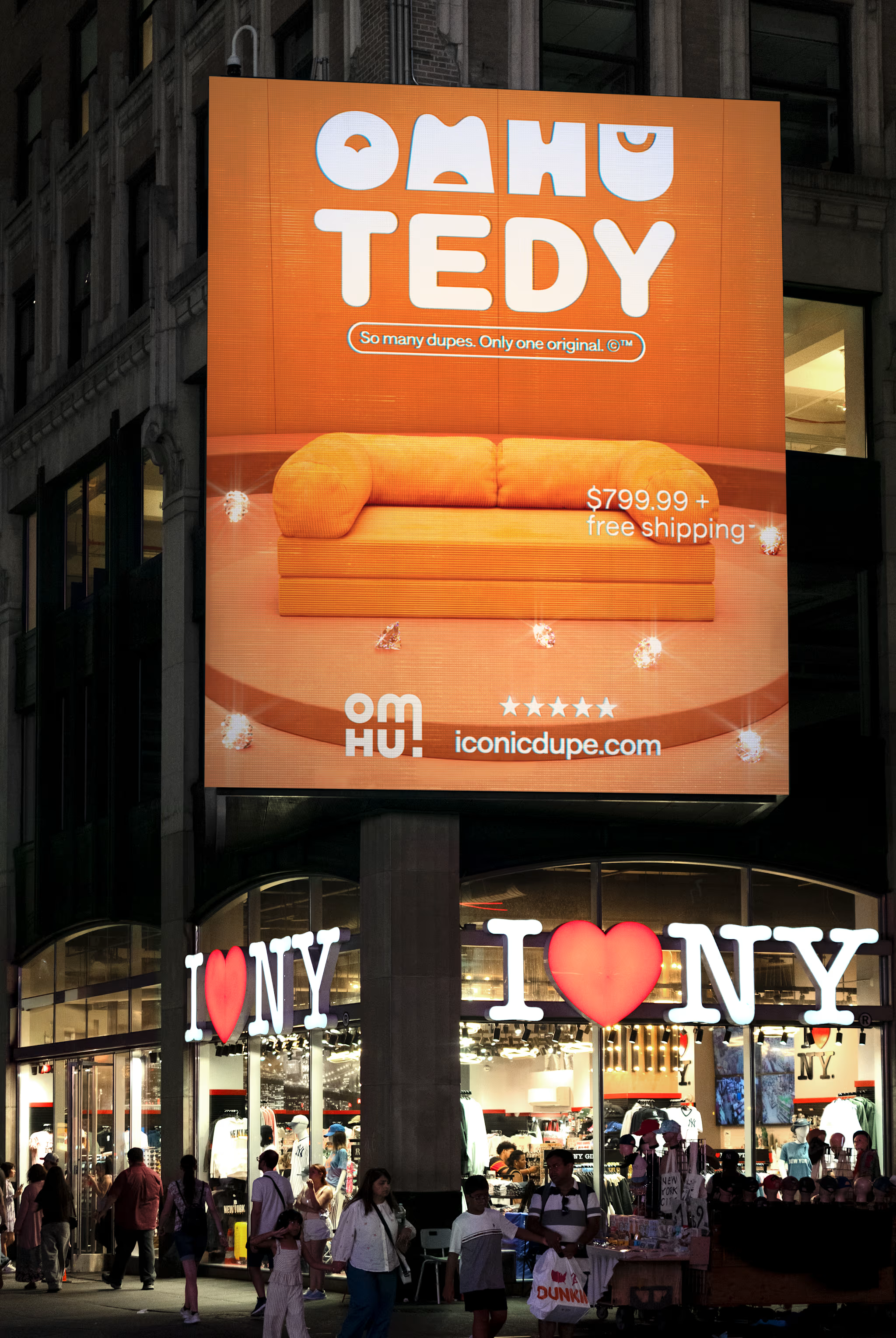
OMHU, the Copenhagen-based furniture brand, has just unveiled its new sofa, and they’re taking a bit of a left-field approach to the big reveal.
For their latest campaign, they’re fully embracing internet culture—specifically, the “dupe”—corner of online retail. Where most brands reject the idea of their products being copied, OMHU have gone the other way for the new Iconic Dupe campaign. The brand has watched its distinctive, legless, modular design appear across online marketplaces in countless cheaper iterations—different names, different price tags, same unmistakable silhouette. Rather than quietly sending cease-and-desist letters or pretending the copies don’t exist, OMHU has decided to beat the dupers at their own game.
For the new sofa, OMHU have created a limited edition version of the TEDDY sofa, dubbed the TEDY. Stripped of its second ‘D’ and rendered in bright “dupe orange”, its streamlined but still eerily similar. It is, in essence, “Temu aesthetic”, and exactly the kind of version you’d find scrolling through an unfamiliar reseller with unusually low prices. And instead of selling the TEDY sofa through its own website, OMHU has placed the limited run on Temu, Etsy and dupe.com, taking over the very ecosystem that has helped fuel the wider dupe phenomenon.
“If anything, we see this as a compliment,” says OMHU CMO Alexander Morabbi Wulsh. “Getting duped is iconic. Only icons get copied at this scale.” There is a point to all this, and it’s not just playing around with wordplay or trying to engineer a viral moment. The new TEDY gets to the heart of what it is people are looking for when they go for dupes. OMHU argues that the price of a dupe can obscure the costs involved elsewhere—from materials and manufacturing to working conditions and environmental impact.
“We want people to understand what they're actually paying for when they choose a dupe over the original,” explains Christine Smith, Creative Director at OMHU. “Cheap usually means someone or something else is paying the price, whether that's in working conditions, materials or the environment.” There’s also something inherently funny about a design brand opting to make its own bootlegs and then release it on the exact platforms where you’d expect to find the knock-off in the first place.
For a brand whose sofa has become synonymous with online design culture, it’s a fittingly chaotic way to make one thing clear: when everyone is copying the icon, sometimes the best move is to make the copy yourself.
For more on OMHU’s TEDY sofa, head here.




