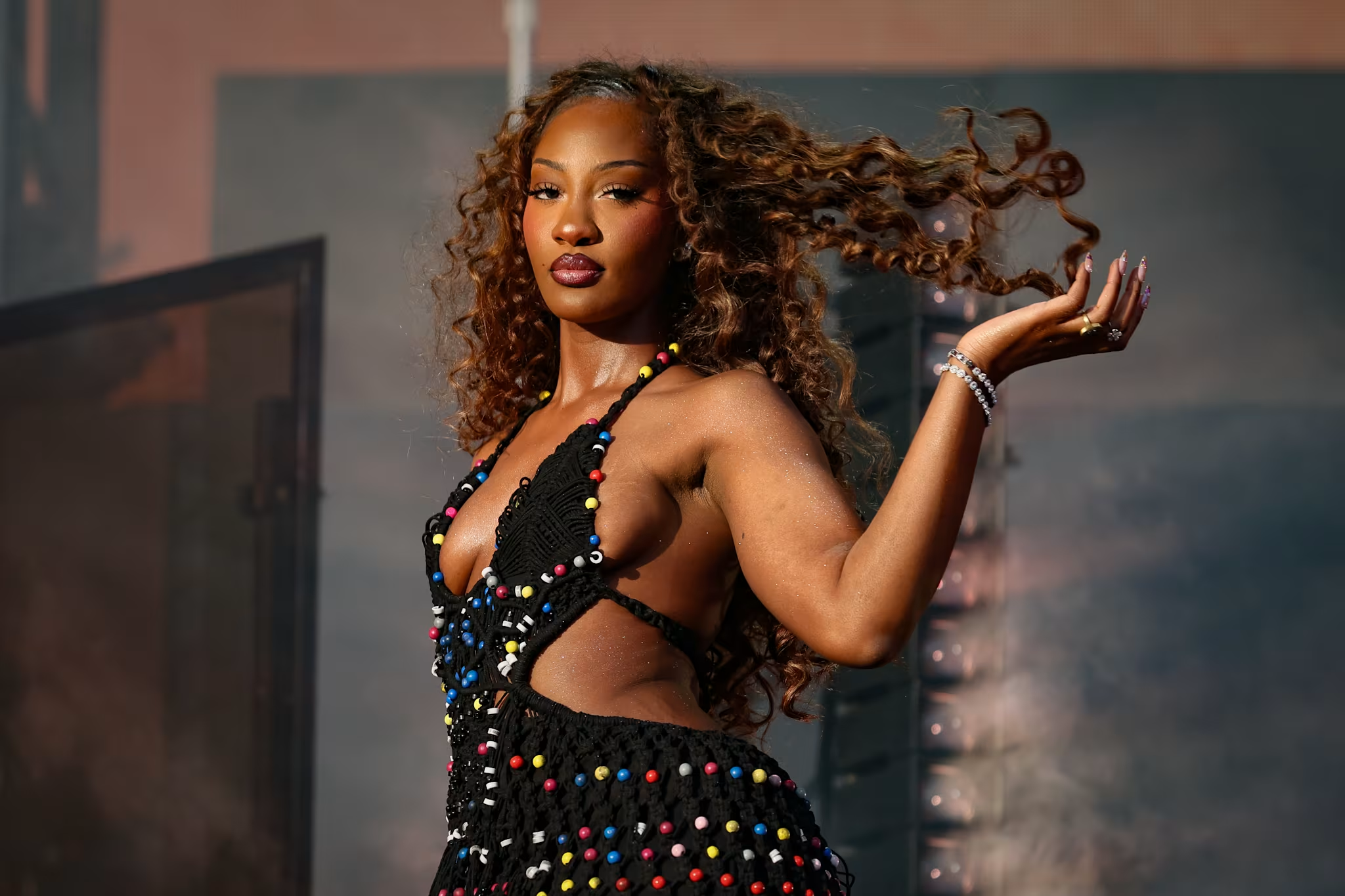
All Points East set the bar high with its first weekend (Aug. 21-23).
Since launching in London’s Victoria Park in 2018, the music festival has continued to strike a balance between global A-list stars and the vanguards of where music is heading next. Weekend 1 featured two star-studded days: a Friday line-up curated by Jorja Smith and her FAMM label, followed by a Saturday dominated by women artists across electronic, dance and pop, headlined by Lorde. While Friday’s line-up catered to R&B, Amapiano and Afrobeats lovers, the festival’s energy pointed to the growing importance of electronic and dance music.
Jorja Smith took us back to the days of UK funky, bringing out Kyla to perform the original “Do You Mind”, which found a new global audience after being sampled on Drake’s “One Dance” in 2016. She was also joined by Katy B for “Katy On A Mission”—a full-circle moment for Jorja, who was just 14 when she uploaded an acoustic cover of the track. The callbacks to British dance music continued throughout her set: AJ Tracey came out for “Ladbroke Grove”, produced by the self-proclaimed ‘Prince Of UK Garage’ Conducta, while junglist Nia Archives jumped on the decks for their recent collaboration, “Get Me Down”. Odeal also joined Jorja for the Afrohouse-inspired “Coming Home”.
Earlier in the day, Odeal delivered one of his most impressive sets yet. He entered the stage to the unmistakable refrain of Crystal Waters’ house classic, “Gypsy Woman”, before launching into “Bluey Vuitton”, the opening track from his latest project and a song anchored by strong house influences. Before moving into fan favourite “After The Club”, from For A Good Time, he nodded to the conversation that has followed the track, seemingly alluding to comparisons with Craig David’s “7 Days”, which sparked speculation that the song contained a sample (Odeal recently put those rumours to rest in my recent interview). Towards the end of his set, the crowd filled in for Leon Thomas, singing “Miami” word for word. Between his ability to command the stage, deliver near-flawless vocals and interact naturally with the crowd, it’s clear Odeal is becoming increasingly comfortable with the scale of the audiences now in front of him.
The excitement surrounding Nigerian superstars Tems and Ayra Starr captured the feeling around African music right now. African women are sitting at the forefront of global pop music, and for good reason. Tems took over the East Stage with songs including “Damages” and “Essence”, while the sunset felt like a paid actor, providing the perfect backdrop for “Love Me JeJe”. Shortly afterwards came the surprise arrival of UK rap star Dave for their hit collaboration “Raindance”.
Ayra Starr, meanwhile, occupied the North Arena as part of a line-up curated by Recess. The UK event brand’s co-founder, Jojo Sonubi, later confirmed its capacity at 10,000, yet even that proved insufficient for the sheer number of people hoping to catch a glimpse of the Starrgirl, fresh off the release of her third studio album. The overflowing tent was perhaps the clearest indication that the scale of her audience has outgrown the stages she is being given.
PinkPantheress faced a similar problem when she packed out the North Arena the following day. Huge crowds gathered around the perimeter, trying to watch from wherever they could. She has previously spoken about her preference for intimate shows and, despite the obvious logistical problems, there was something almost intentional about the setting and exactly like the way her Fancy That era is meant to be experienced.
From Uncle Waffles’ high-energy set to snippets of UK funky blasting from different pockets of Victoria Park, dance music felt like the thread pulling the weekend together. That energy reflects a broader shift across the industry: electronic music has emerged as one of the fastest-growing areas of global music consumption, with data from SoundCloud and Luminate pointing towards its continued rise.
But what All Points East captured particularly well was how those influences are increasingly bleeding into other genres. House sat comfortably alongside R&B and Afrobeats; UK funky classics resurfaced alongside contemporary pop; and the demand for new interpretations of dance music was evident when Ayra Starr performed her bouyon-inspired collaboration with Congolese Afro-fusion artist Theodora.
Dance music was no longer simply another genre on the bill; it felt like the thread running through the entire weekend. In many ways, that felt like the clearest indication of where global pop is heading: less confined by genre, and more driven by the movement of sounds between cultures, scenes and audiences.




