Key Takeaways
- Chick-fil-A CEO Andrew Cathy says the chain will keep drive-thru ordering human because personal hospitality creates a warmer customer experience.
- Unlike McDonald’s and Wendy’s, Chick-fil-A plans to use AI behind the scenes rather than replace employees who interact with customers.
- Its automated McDonough, Georgia, location uses an elevated kitchen and conveyor system to serve up to three times the usual vehicle traffic while employees still take and deliver orders.
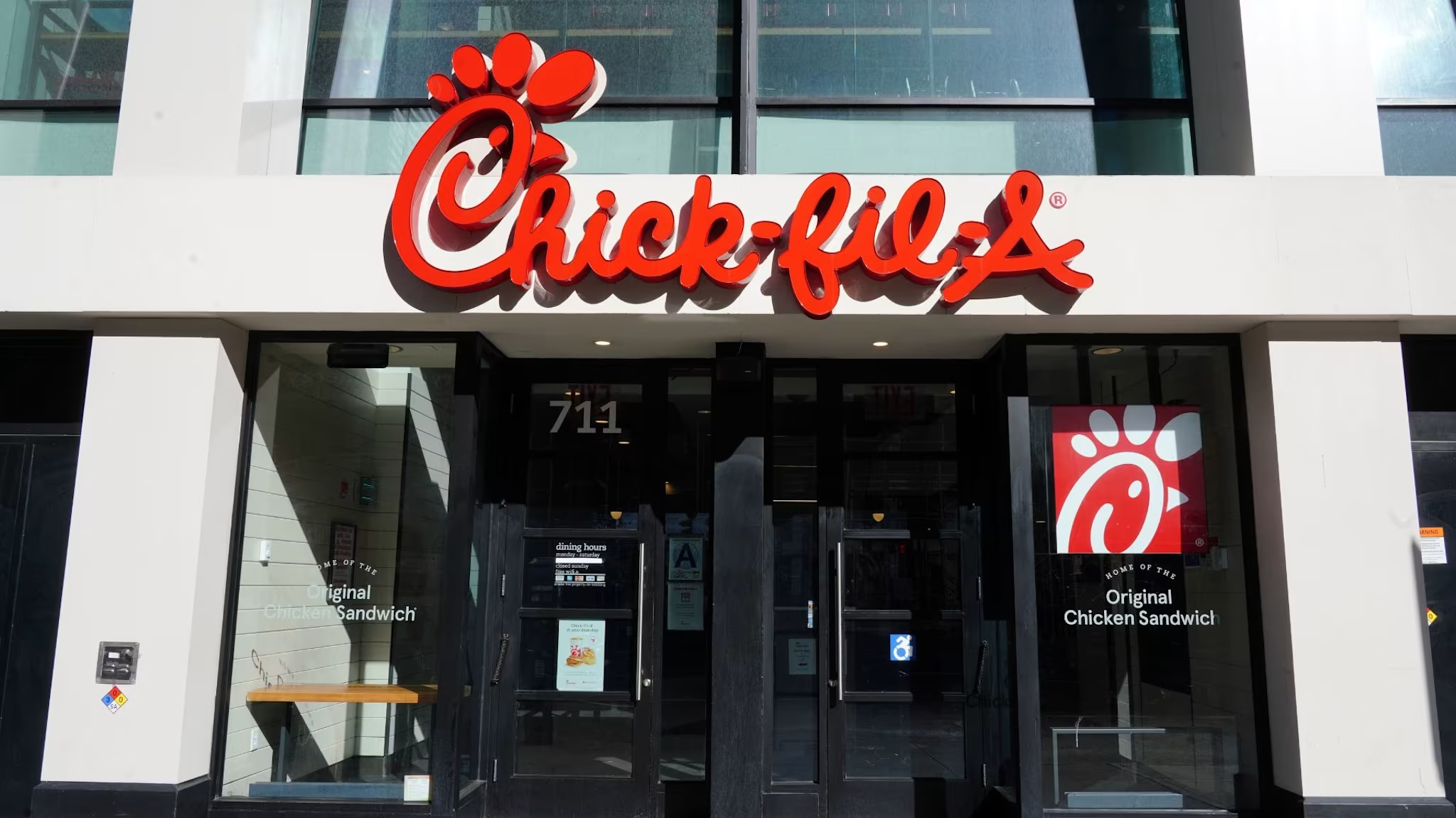
Chick-fil-A is drawing a line in the drive-thru: AI won't be taking customers' orders. While some of the biggest names in fast food are experimenting with artificial intelligence to replace the person on the other side of the speaker, Chick-fil-A CEO Andrew Cathy says his company has no plans to follow them.
"From our experience, we really want that hospitality to be human to human," Cathy told CNBC. "We're not going to substitute that interaction with technology, because we feel like that hospitality is so important to create that warm environment for consumers."
That puts Chick-fil-A on a different path from McDonald's and Wendy's as both chains push further into AI-powered ordering. McDonald's recently announced plans to test "Archy," a voice AI system that can take drive-thru orders in English and Spanish. Wendy's has been rolling out FreshAi, developed with Google Cloud, to make ordering faster and more accurate.
But Chick-fil-A isn't rejecting AI altogether. The company is looking at ways the technology can operate behind the scenes while keeping employees in front of customers.
That approach fits with a strategy Chick-fil-A laid out when it announced new restaurant concepts in 2023: technology could streamline the operation, but it should also "elevate the human touchpoints" rather than eliminate them.
The chain has already shown just how far it is willing to take automation without removing workers from the equation. Chick-fil-A's McDonough, Georgia, location opened with an elevated kitchen positioned above four drive-thru lanes.
A conveyor system can send a completed order to an employee every six seconds, while the restaurant can handle two to three times the vehicle traffic of a conventional location. Customers can order digitally, but those who don't still give their order to an actual employee.
"We think about all these new things into the future, about how will people want to receive food in the future?" Cathy told CNBC. "It's a fun time in the industry, to think about all the possibilities of what we can do to make a better experience for our guests."
The stance comes as Chick-fil-A has also been reconsidering another long-term company policy. Earlier in 2026, the chain acknowledged it may miss its decade-old commitment to source 100% cage-free eggs by the end of the year, citing industry pressures and bird flu.
Chick-fil-A originally announced that target in 2016 as part of its push toward more responsible food sourcing.