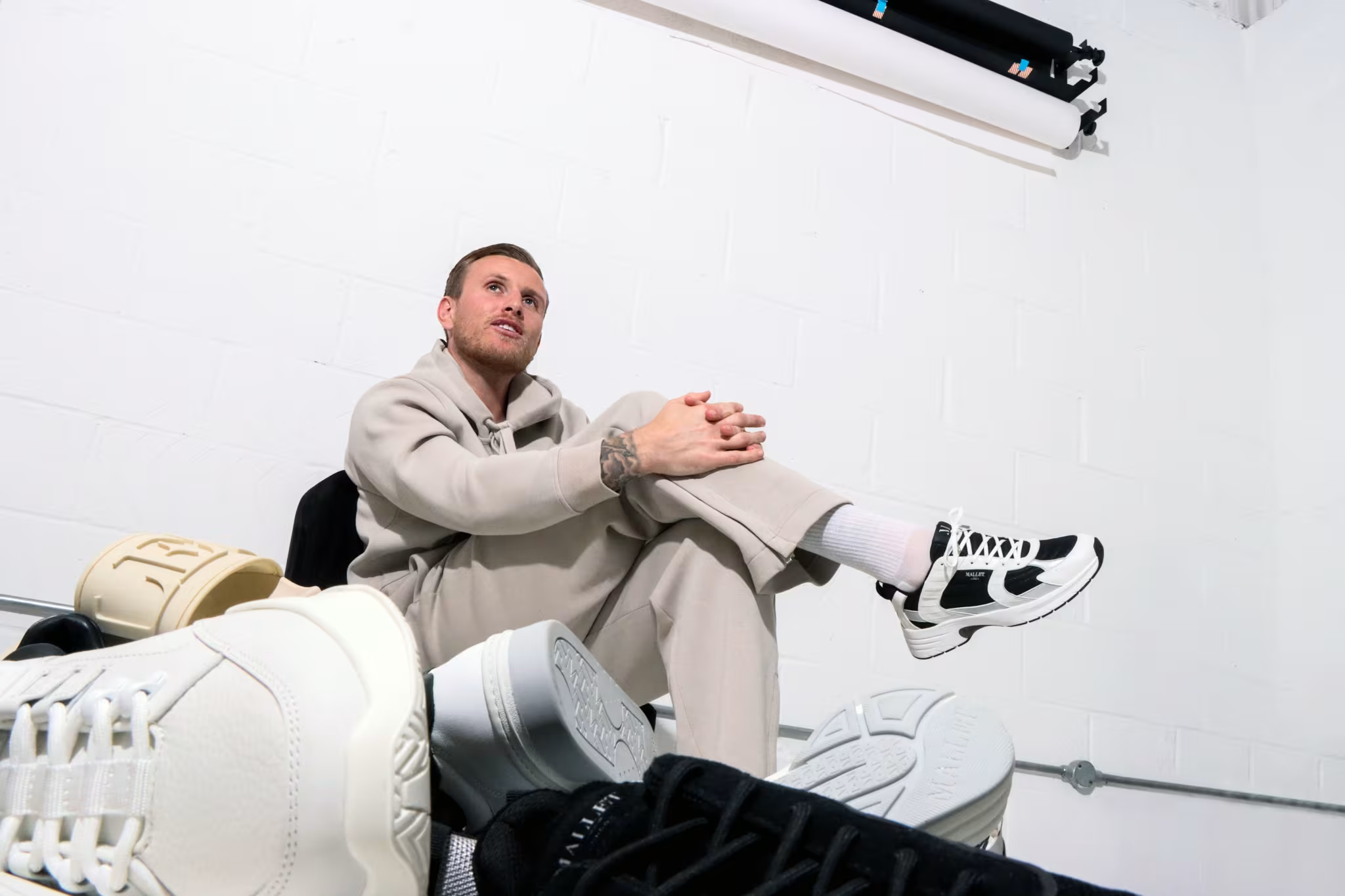
Since its launch in 2015, Mallet London has enjoyed unparalleled success. Designed with an overarching goal in mind—to represent the life of an everyday Londoner aspiring to be someone—the footwear and apparel brand was co-founded by Tommy Mallet, whom you may recognise from starring in ITV2’s hit reality show, The Only Way Is Essex. The Forbes co-signed brand, which now turns over millions each year, sits comfortably in between luxury and streetwear, filled with slick designs and a minimal yet bold aesthetic.
Since its launch in 2015, Mallet London has enjoyed unparalleled success. Designed with an overarching goal in mind—to represent the life of an everyday Londoner aspiring to be someone—the footwear and apparel brand was co-founded by Tommy Mallet, whom you may recognise from starring in ITV2’s hit reality show, The Only Way Is Essex. The Forbes co-signed brand, which now turns over millions each year, sits comfortably in between luxury and streetwear, filled with slick designs and a minimal yet bold aesthetic.
Endorsed by some of Britain’s biggest celebs, as well as rap stars such as Drake, will.i.am and Eve, the company has quickly risen through the ranks since its debut release, landing in some of the world’s largest retailers and expanding from sliders and a simple black sneaker to a plethora of clean, sports-inspired styles that rival some of the most desired names out there.
Boasting just under a decade of hard work, passion and resilience, it’s clear that the imprint has become a reflection of both Tommy Mallet’s beginnings and the development of his role within a now-rapidly growing team. From buttery suede designs to breathable mesh and flexible rubber, Mallet London’s premium silhouettes—including the “Cyrus”, the “Popham” and the “Kingsland”—and forward-thinking collabs with the likes of Tfl (Transport for London) continue to permeate the sneaker space in a way that goes way beyond “hype culture”.
We caught up with Tommy Mallet to hear more about the rise of the imprint, balancing life with ADHD, the future of his brand, and more.
“I’m not gonna lie: everything since 2014 has been a bit of a blur... I didn’t set out to do any of this stuff.”
COMPLEX: What initially inspired you to venture into footwear design?
Tommy Mallet: A few things, really. From day one, I’ve always been interested in shoes. I’ve loved them for years. I used to collect sneakers, but on a very low budget. There were so many shoes out there that I wanted, but I never had the money as a kid, especially going into my early 20s. The idea for Mallet London came to me when I was 23. I was at a photoshoot one day, wearing a pair of slip-ons that were worth £600; this was around the time shoes started getting really expensive. For me, I wanted to create something that I could wear every day that was still affordable and had a luxury feel to it. It literally just went from there, with me using a pen and paper to create a pair of one-off shoes, to then linking up with my business partner [Evren Ozkarakasli] and creating a brand out of the idea. From then on, we’ve gone on to build something that I think still speaks to my younger self. We’re delivering something that is of good quality, affordable, and on-trend. So yeah, that’s how the brand started and has developed, and now we’re in some of the best stores in the world alongside all those expensive shoes I used to want to buy.
Give us a bit of background on who Tommy Mallet is and where he’s coming from. Tell us about your climb to the top.
I’m not gonna lie: everything since 2014 has been a bit of a blur. I didn’t set out to do any of this stuff. I left school with no qualifications and tried a load of different things that I failed at. It wasn’t until I was 21 or 22 and I had a few offers to do different things that I went down the reality TV route. That’s when I really got my teeth into what was going on around me. I was on the show for about six or seven months when I realised I wanted to get something out of it, rather than being another one of those reality-type guys. From then on, I’ve just had this mad hunger to smash whatever I do. From 2014 to now, we have stores all around the world, and you can’t even ask how I got there because all I know is consistency throughout. I’ve never had any design training; I’m self-taught. But by learning everything myself, combined with my ADHD, I’ve been able to train myself in a way that works in my favour. My original design technique was just unbelievable. It took me two years to learn. I worked every single day for three hours on a tablet, which ultimately led me to where I am now. Today, I can design, run a business, and also speak to PR and marketing to some extent. It’s been a mad eight years, and I just haven’t stopped. I look back at TOWIE now and it feels like a lifetime ago, but it isn’t really. So much has happened, man.
Who and what were you inspired by during the brand’s early days?
I am the inspiration! I wanted to live in a world where I had access to all the good stuff that everyone around me had, but I didn’t really have the resources to get them. With Mallet London, I wanted to create something that could be worn and bought affordably, and to sit in a gap that didn’t really exist. I’m into big brands, but ones that have been around my whole life. They’re the sort of labels that I look at and aspire to be like. I’m not about catwalks and looking cool—that’s not what I’m here for. I’m here for my little boy and him growing up with a brand that can keep going.
How has the brand evolved since Mallet London’s first release?
Since its launch, more and more people have joined us, but for the first two years, we operated with just three staff members, and until 2018, we had only four. Even in the past two months, there has been so much change, it’s been a whirlwind. Although I usually don’t look back and focus on moving forward, with the help I’ve received for my ADHD, I’ve started to reflect on how far we’ve come. At our party in Paris last January, I was truly amazed. I used to focus on what’s next, rather than where we are now. Looking back, we never had any structure in the business. I would sketch something on a piece of paper, fly to a factory, make the product, get the shoe, and then release it. We didn’t have any PR until last year, so it’s only now that the brand is really taking off. All in all, we’re heading in the right direction, and it’s important to maintain that quality and message moving forward.
“It’s important that I spread the message that ADHD isn’t something to be ashamed of. I mean, I’m 30 now, and I’d like to think I’ve done well for myself and have helped a lot of people along the way.”
What qualities does a shoe or sneaker need to be considered a good design?
Everything down to the packaging. There isn’t anything I really miss when it comes to building the brand. When I was a kid, I always used to love the whole experience of buying sneakers, like opening the box and the dust bag, checking out the laces—all of that. I’ve basically taken all inspiration from my younger days and put it into these shoes. It has changed, though. Up until recently, we were considered quite a nighttime brand, for clubs mainly. But now, after COVID-19, everything’s all about all-day comfort. So now, I’m learning how to develop these styles and use different techniques to make our shoes both better and more accommodating.
How have you been able to navigate your way through the industry whilst balancing the demands of reality TV and being in the public eye?
I don’t really know the difference, to be honest. My whole adult career has been in fashion and on camera. In the space of six months, I was on TV and then started the brand. This is my life. I’m used to getting stopped in the street, and people checking out my sneakers, or vice versa. When I go away to Spain, for example, I’ll try and get a bit of peace, but after a while, I’ll miss the mayhem [laughs]. I live such an intense life. Day-to-day, I’m always heading to the office early to stay on top of things, but then there will often be times where my partner [Georgia Kousoulou] and I are launching a new show, so we’ll be filming that. It’s mad, but I wouldn’t change it at all.
Why do you think that Mallet London has become so big over the years?
I feel like with any brand, it’s the message behind their products that matters. For us, it was just the timing. Not only did we not take our foot off the gas when we got a bit of success, but we have literally been hell-bent since we started. We’re always looking for a new direction, and with me being so hands-on with everything, it’s easy for me to see things and to start looking at them from a business perspective. For Mallet London, it’s all about getting the customer back after they’ve bought something, and I think that’s where the success comes from. To be honest, we did sort of lose that for a little bit when we were navigating ourselves through the retail market, but now we’ve got it back, and seeing people wearing my product everywhere is insane.
How would you say social media has played a role in the brand’s success?
We’ve merged my personal social media with Mallet London’s, so every year we’re seeing a desire for the brand through our followers. I’ve documented the journey from the start, including the first shoe that we’ve ever launched, until now. I’ve got people that have followed me on social media since 2014 who saw my first-ever slip-on; it’s these followers who have created a die-hard community for the brand.
What are some of the lessons you’ve learnt as an entrepreneur?
I’ve got a team of designers who work under me now. However, I’d say I’m still in touch with 99% of the business. I get involved in everything—from sales and marketing to design and store openings. Every day I’m learning something new, and I always want to ask as many questions as possible. I drive myself mad trying to learn [laughs]. But if you take the last eight years, for example, I’ve gone from being unable to read and write properly to launching a brand of quite a large size and knowing that I could run it comfortably.
Mallet London’s recent collaboration with TfL (Transport for London) was really well done—the campaign was far from corny, which some might expect from such a random team-up. You seem to like telling stories through your footwear.
I think releasing anything with a story behind it is really important. Those places, for example—the map on the side—are all destinations I travelled to as a kid when coming up to London. Every part of my life and story, I’m either on a busy street, in a taxi, or on a train. So, for me, it was such a significant thing that I wanted to acknowledge. Even away from the TfL collab, I am exactly the same with every shoe. I have this crazy passion that means I apply myself to everything I do.
You’ve been pretty open about your mental health in the past. When it comes to running a brand, how important do you think it is to look after yourself, physically, mentally and emotionally?
I think it’s important to look after everything, to be honest, but with any business, the pressure obviously tests your head. For you to make the most of what you’re doing, you have to make sure that you’re always on form, and if you don’t look after yourself, the first thing that slides is your mental health. With my ADHD, I have to make sure I take care of myself by doing certain things, like training every day or eating the right things. I want to make sure I’m coming into my office with the right attitude because if I’m trying to lead something, people are going to be buzzing off my energy. It’s a hard thing to do, but I’m really open about it and think it’s important that I spread the message that ADHD isn’t something to be ashamed of. I mean, I’m 30 now, and I’d like to think I’ve done well for myself and have helped a lot of people along the way. For me to get the message out there, even if it’s to one or two other people, it’s a big thing for me. Because if you’re open about it, and people know that you struggle with a certain thing, then when you come into the office in a certain type of mood, at least people know it’s not you waking up on the wrong side of the bed. Now I’ve tackled my ADHD and come out the other side of it, I like to spread the word. I wouldn’t be me without it either; I’ve realised I’m not a normal person. I’m learning so much about myself and spreading my message.
Thanks for being so open with that. I’m sure you’re helping more people than you think! What advice would you give someone looking to start their own brand in today’s climate?
I think now is probably the best time to launch a brand. With businesses slowing down for a lot of people, many have put their brakes on and not invested in the same amount of marketing or development as when they were making big money. It’s all about consistency and being true to you. If you want to start a brand, you need to work out why you want to start it and then run with it. But also, don’t let people tell you differently because it will go against what you want to do. You have to act like someone’s gonna take everything away from you at any point, no matter what you’re achieving. If someone’s going to work 20 hours, then I’m working 48.
What can we expect from Mallet London in 2023 and beyond?
The world! I’m here now and I can honestly say I’ve firmly got my teeth into something that I love. At the moment, it’s all about scaling while also maintaining that high level of standard we want Mallet London to be. A lot of the projects we’re planning on doing in the next 18 months are based around collaborations and lots of new products, including apparel. We’re not aiming to have a year where we experience the biggest turnover, but we want to do some epic things that will build on our legacy.




