Key Takeaways
- Cathy Engelbert will retire as WNBA commissioner at the end of 2026 after seven years leading the league through major growth and mounting tension with players.
- Her tenure included two collective bargaining agreements, a $75 million capital raise, a roughly $3 billion media package and expansion from 12 teams to a planned 18 by 2030.
- Her successor will inherit player concerns over security, charter travel and league leadership while managing expansion and unprecedented attention around the WNBA.
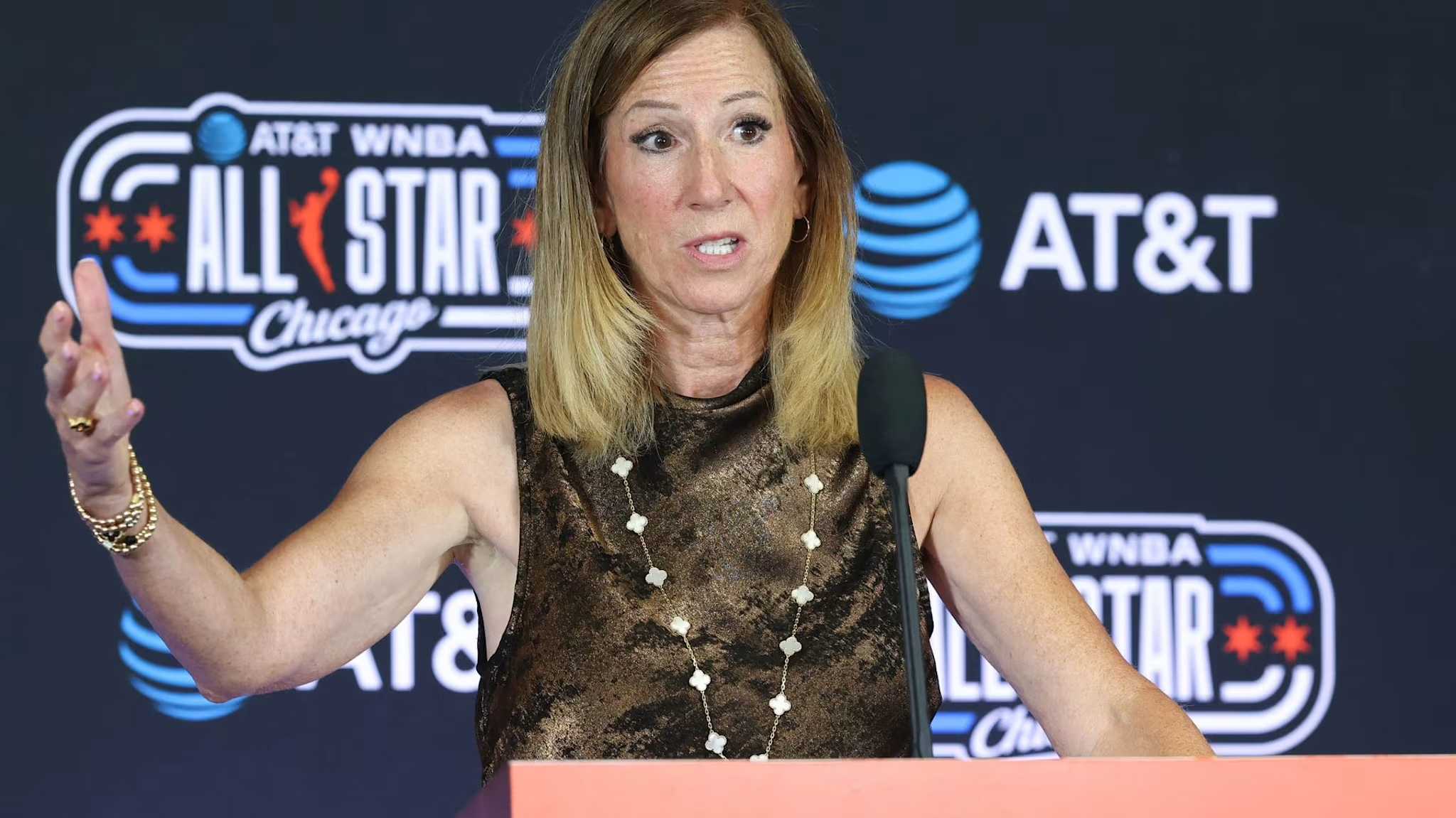
Cathy Engelbert is leaving the WNBA at the end of 2026, closing a seven-year tenure that transformed the league's business while repeatedly putting its commissioner at odds with the players driving its explosive growth.
According to The New York Times, Engelbert, 61, announced her retirement on Friday, September 4, saying she will remain through the end of the year as the WNBA prepares to choose its next commissioner. “I retire knowing we have built something bigger, stronger and more enduring than we could have imagined,” Engelbert said. “I retire with immense gratitude and tremendous optimism for the future of the WNBA, with the best yet to come.”
The numbers behind her tenure are substantial. Since becoming the WNBA's first commissioner in 2019, the former Deloitte CEO has helped steer the league through its pandemic season, brokered two collective bargaining agreements, overseen a $75 million capital raise, and helped expand from 12 teams when she arrived to 18 by 2030.
The league also secured a long-term media package reportedly worth roughly $3 billion.
But the WNBA's ascent came with an increasingly fractured relationship between Engelbert and its players. According to a 2025 ESPN report, that tension exploded publicly when Minnesota Lynx star Napheesa Collier called the league's leadership “the worst in the world” and detailed what she described as troubling private conversations with Engelbert.
Players rallied behind Collier, with WNBPA president Nneka Ogwumike saying at the time that her initial reaction was, “I agree.”
The criticism extended well beyond a single confrontation. Players questioned Engelbert’s handling of racist and abusive online attacks, security, charter travel, and the league’s discussion of its own success.
Engelbert acknowledged some of that tension in her farewell letter. “I am grateful for your advocacy and your willingness to challenge us to be bold, listen more closely, and think differently,” she wrote to players. “Those conversations were not always easy, but they were essential.”
Even Engelbert's final months have brought another extraordinary headache. Former NBA player Enes Kanter Freedom has spent weeks attempting to force the WNBA into a public debate over transgender eligibility despite no transgender woman having played in the league.
Then the dispute landed in federal court.
The Sky maintains Freedom became a threat after a courtside confrontation with Natasha Cloud. Owner Michael Alter previously said five security authorities agreed he should be removed.
That controversy now joins the considerably larger challenges Engelbert's successor will inherit: protecting players, managing unprecedented attention, overseeing continued expansion and maintaining the financial momentum of a league whose athletes have demanded a greater voice in how that growth is handled.
“I will run through the tape over the next four months,” Engelbert told players.
After seven turbulent and transformative years, the WNBA is preparing for someone else to take the ball.




