None
Not all great sneaker releases are overseas exclusives, but some of the best ones are. And it makes a pain in the ass to cop kicks. If you live in the USA, it's tough to set yourself apart from everyone who's just buying whatever is released at the local chain retailer, and the easiest way to do this is by wearing something that's not available in the States.
Buying sneakers from a boutique in Bulgaria isn't a seamless process, and it shouldn't be. But that's what makes receiving and wearing the sneakers a more gratifying process. Only the dedicated are going to score these limited sneakers, and it's stressful. If you've ever woke up at 3 a.m., paid way too much in conversion rates, or had your sneakers held up in customs, you know where we're coming from. Here are The 10 Most Annoying Things About Buying Sneakers From Overseas.
RELATED: 50 Things You Didn't Know About New Balance
RELATED: The 50 Best Euro Exclusive Nikes of All Time
The sneakers end up dropping in the USA.
Buyer's remorse strikes at the heart of anyone who's dropped serious bucks on a pair of sneakers. Especially if the sneakers--which were first believed to only be available in Switzerland--have now released at Bodega, Concepts, and every other top-notch boutique in the U.S. Not only did you overpay, but now all your sneaker-entushed friends have the same kicks, too.
No one notices how hard you're stunting because they don't recognize the sneakers.
Not everyone buys sneakers just to one-up the next man, but some people do. This becomes increasingly difficult when no one knows what the sneakers are on your feet. Everyone knows how cool a pair of Air Jordan Vs look on feet, but a pair of suede Sauconys will only garner respect from a select crowd, and definitely aren't snapping necks and getting attention from the ladies. Still, it's about exclusivity and the thought of obtaining a sneaker that isn't in the collections of every guy in the Tri-State Area.
Forget the color scheme, the model isn't available at all.
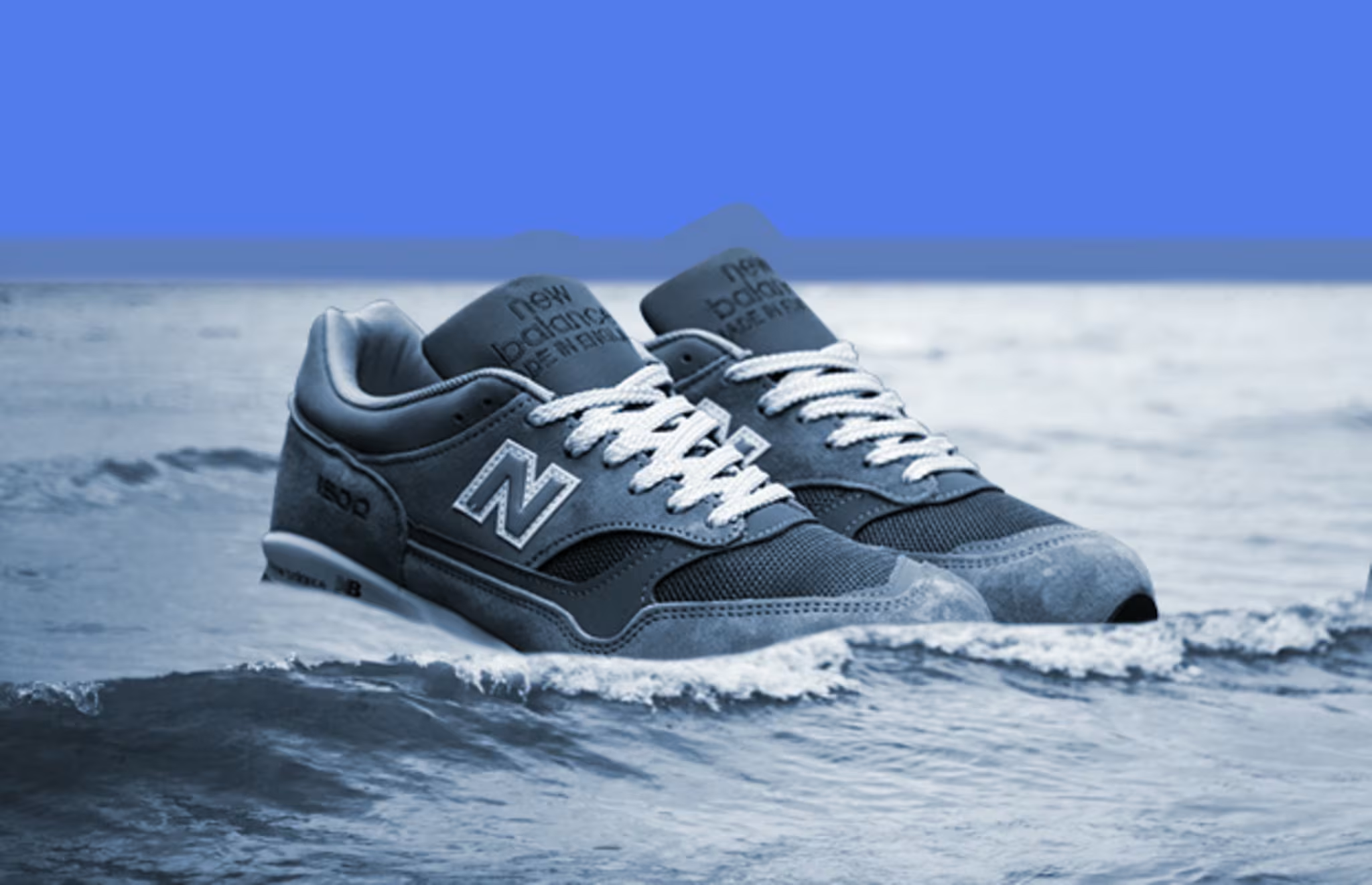
Sure, certain amazing color schemes are only available in Europe or Japan, but there are also international-exclusive models. Until five or so years ago, New Balance 580s couldn't be purchased in the U.S., and let's not even get started on the brand's Made in England sneakers, either. Things have gotten better, but ask anyone about trying to track down a pair of Footscapes in 2007. Like Biggie said, it was an everyday struggle.
Resale prices become astronomical.
The retail price can induce sticker shock on internationally-released sneakers, but the resale values can make people faint. It's a tough game, but it induces eBay wars of bidding with heads who have money that is worth more, and can instantly drive up the price on a pair of Air Maxes or New Balance 1500s into the $400 range. At this point, it's best to know when to fold your hand.
The fear of missing out is so much worse.
When a sneaker drops in the U.S. and you can't get your hands on them, it sucks but the situation can be remedied. Close affiliates can track down a pair, and there will be plenty of sizes floating around on the secondary market. If something is limited to a 100 pairs and only available in Berlin, then good luck finding them for sale. The true heads gobble these kicks up and don't let them go, which makes the fear of missing out all more painful.
There's no opportunity to check out the sneakers in-store.
It's still nice to go to a sneaker store and pick up the sneakers in person. This isn't a luxury with international-released sneakers, though. Although some of the online shops do have brick-and-mortar locations, they'll never be visited unless someone is on vacation, conducting international business, or so #influential that they get flown out on behalf of a shop or brand--and in that case, they're getting the sneakers for free. For everyone else, they'll have to stick to opening packages from Royal Mail.
If you can't read the website, you don't know what you're getting into.
Most international sneaker websites are either in English or have a feature that directs you to an English website. But some don't. Often these are the spots that have releases that randomly pop up, but the website is in Czech, and still translates awkwardly through Google. Granted, most people know what they're getting just by looking at the image on the website, but reading the shop's blog and figuring out release dates is a whole new challenge.
International shippinig can cost large sums.
To make buying things from overseas even more of a hassle, there's the added expense of international shipping. Some shops, like Tres Bien, have simplified this process, but other shops, not so much. If you're buying on the secondary market, the seller might charge as much $40 to ship a pair of sneakers to the U.S. of A.
Dealing with customs is a hassle no one wants to deal with.
It's one thing just to order from an overseas-based sneaker store, but it's a completely different animal when it comes to receiving the sneakers. Customs can have sneakers trapped for enormous amounts of time, and the package may become indefinitely detained. The latter scenario is highly unlikely, but it's nothing uncommon to wait a couple extra weeks just for the sneakers to make it safely to Iowa.
A 12 p.m. release isn't 12 p.m. on the East Coast.
Do you know what time it currently is in Sweden? When a shop says it's going to drop a pair of chicks promptly at 12 p.m., this doesn't mean they're releasing at noon. This probably means it closer to 5 a.m., and it will require setting a super-early alarm. People will turn into zombies just trying to keep up with different time zones and their freshest sneakers.
Conversion rates will leave you dead broke.
People get accustomed to the regular retail prices for a sneaker, but when buying an international-release sneaker, that can be thrown out the window. Conversion rates often make the U.S. dollar much weaker, and a sneaker that retails for around $150 has now ballooned to over $200. Better get your money up quick.




