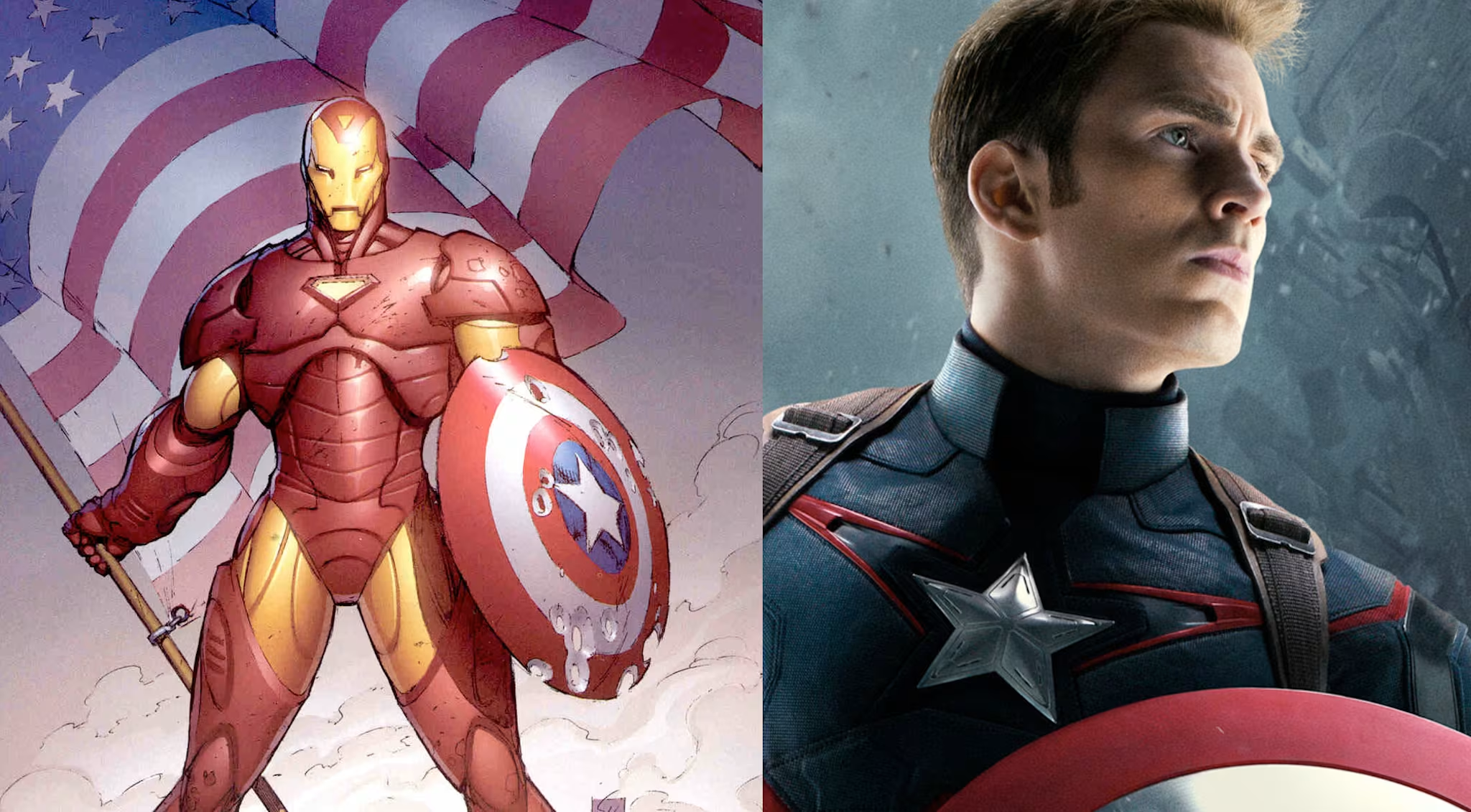
Images via Marvel / Disney
Captain America: Civil War differs from a lot of superhero movies in that it’s a direct adaptation of a single comic book storyline. Sure, Christopher Nolan’s Batman movies took plot points from The Dark Knight Returns and The Long Halloween, and The Winter Soldier loosely retold the characters origin tale, but generally most comic book movies just pick various characters and elements and mash them all together. Civil War however is the rare instance where it’s based almost entirely on Mark Millar and Steve McNiven’s 2007 limited series of the same name.
It’s not entirely faithful by any means—it’s not like it’s a scene for scene adaptation or anything—but basically sticks to the plot of the original comic. Superheroes are causing too much collateral damage, and the powers that be want them to be registered and controlled by law. Iron Man is down with it, and instrumental in bringing the legislation through. Captain America however doesn’t think governments should have that much power, and their independence is important. Various heroes take different sides, and they fight about it.
That’s the basis of both the comic and the movie, but they play out pretty differently. Here’s the major points of divergence.
(Spoilers for both the movie and the comic—y'all been warned, ok?).
What causes the war
In the comic, events are set in motion when a rookie superteam called the New Warriors—who are also stars of their own reality show—try to take down a villain called Nitro. As his name suggest, Nitro’s power is causing explosions, and they end up accidentally blowing up a school and killing hundreds. That’s the inciting incident which changes public opinion and causes the Superhero Registration Act to be pushed through. In the film, there’s not one big flashpoint. There are mass causalities in the opening action scene where the Avengers take down some terrorists, and the Winter Solider is framed for a car bomb, but it’s generally just the cumulative amount of destruction that has been caused across the various Marvel movies.
The scope is bigger…
One very big change that in the comic, the legislation was just coming from the United States Government (and was clearly a lowkey nod to the Patriot Act that George Bush initiated post-9/11). The film however has the collected countries of the UN wanting to crack down on superheroics. This massively widens the scope of the film, meaning that they can have action scenes all over the world (and target that ever-more-important international box office…). But it also changes the subtext, with several explicit mentions of American foreign policy being dropped into the script.
…But it’s over much quicker
The comic book series definitely has its flaws, but one of the things that made it so exciting when it was coming out it spanned a six month period (in the real world). All of Marvel’s comics tied into it, so it really felt like the Marvel Universe was experiencing life under wartime. Regardless of the main storyline, we got to experience how the likes of Daredevil or Luke Cage were affected. In the film, it’s all condensed to about a week or so. The plotting is tighter, but it feels much more like a big battle than a war, and we don’t get any of these side stories (apart from an Agents of S.H.I.E.L.D tie in, and nobody watches Agents of S.H.I.E.L.D any more).
The sides
In the movie, Cap and Iron Man’s teams balance up pretty evenly between the previously introduced heroes (plus one new player each). The comic however had the whole Marvel Universe to deal with, so obviously the film version has to cut things down. The most notable players missing from Iron Man’s side are the Fantastic Four’s Reed Richards, who doesn’t appear due to Fox owning the movie rights to the FF, and Ant Man (though Hank Pym, the OG played by Michael Douglas and not Paul Rudd’s Scott Lang). Both of those characters took somewhat of an out of character heel turn to hook up with Tony Stark, annoying many long-term fans. In the movie, Ant Man is on Cap’s side.
Spider-Man
Spidey only really has a cameo in the film. In the comic, he’s a much bigger role, being having been somewhat of a protege of Tony Stark in the months leading up to the event. He even goes as far a revealing his identity to the public in support of the pro-registration movement. Then however, he has a change of heart, and defects to Cap’s team. Then, in the storyline following Civil War, he ends up making a deal with the devil in order to make his secret identity disappear, which also erases his marriage to Mary Jane. Yeah, it’s weird, and a good thing they left that out.
The bad guy
When the original comic was coming out, a lot o Marvel fans presumed that it would revealed that there was actually a supervillian behind it all—like Dr Doom was actually mind-controlling Iron Man to fight Captain America or something. But no, they held their conviction, and it really was hero versus hero. The movie sort of holds to that, but also has Daniel Bruhl’s Baron Zemo also subtly manipulating Cap and Iron Man to hate each other even more—mostly just so Chris Evans and Robert Downey Jr can love each other really.
The ending
So the comic’s story is too sprawling too fit neatly into a movie, but for the first two thirds of Captain America: Civil War, it follows the same broad strokes, if not the ending. The legislation is put in motion, the heroes pick sides and Captain America goes rogue. Eventually both sides clash for a massive fight, and the anti-registration side suffer a causality (in the comics, third string Goliath is killed; onscreen, War Machine is servely injured) and the rogue heroes are put in a hi-tech prison. Then the third acts go very differently. In the movie, Iron Man learns about Baron Zemo’s plot, which isn’t in the comic, and him and Cap go to stop it, and end up going mano a mano in Alaska. In the comic book though, all the heroes end up fighting in the Negative Zone prison, and then in New York. Cap’s about to win, but the people of NY end up holding him back, urging everyone to stop fighting and end the carnage. Cap turns himself, and Iron Man ‘wins’ setting up a new status quo called ‘The Initiative’ with Tony Stark in charge of S.H.I.E.L.D., which Marvel ran with for a few years. On his way to trail, Captain America was assassinated by a gunman (don’t worry, he came back to life a few years later, because that’s what happens in comics).
So yeah, the ending is pretty different.
Captain America: Civil War is in cinemas now.