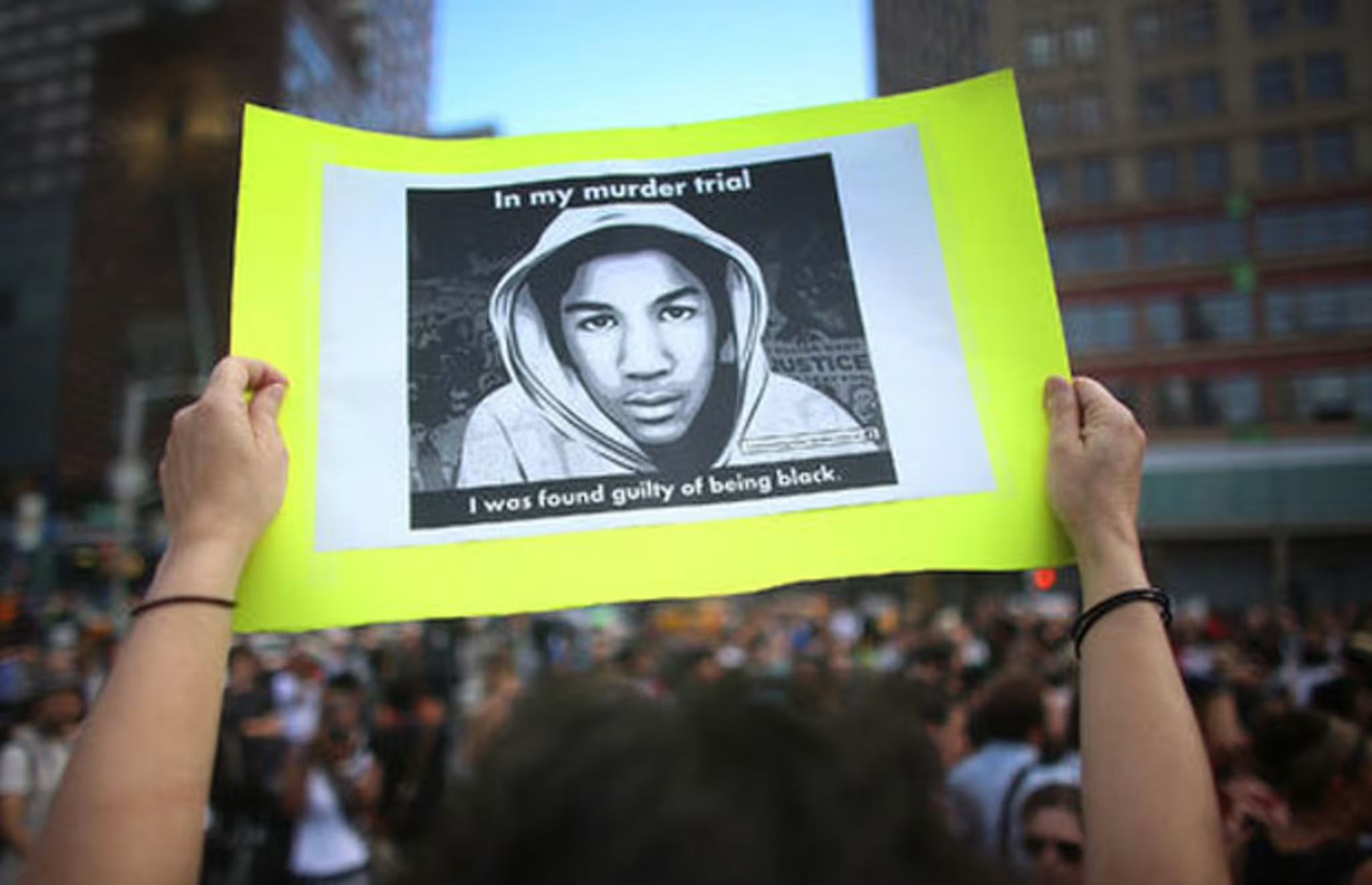
A look at how social media surveillance plays into the protests surrounding Trayvon Martin.
As news of the verdict in the George Zimmerman trial spread over the weekend, the disappointment and disgust many felt was followed by a powerful need to do something about it.
In these times "doing something" in reaction to injustice often puts people in either physical or philosophical opposition to law enforcement, and so these flashes tend to go closely monitored by cops. So it was this past weekend: As millions posted opinions and invitations via social media to turn them into public action, the cops were watching.
Alyssa Newcomb of Good Morning America reported that in the preparation for the reading of the verdict, the Sanford Police Department had been watching social mediato get a better sense of how volatile protests would be, and which specific groups of people might most likely be a part of it.
As has become boilerplate for many protests across the country, police are often waiting on the scene as demonstrators arrive, and in many cases they outnumber civilians. This forces every protest to take place within armed borders, across which protestors will not be allowed to move. Before one can safely protest, one must acquiesce to the limits prepared in advance for the event, agreeing to stay on one side of the street but not the other. Protests without these limits are more creative acts, volatile starting points where a group of people connected only through an agreement on what they won't tolerate join together to displace an old standard.
"It means that they are watching us," Sandy Nurse, an Occupy Wall Street Organizer, told the New York Times last year after experiencing preemptive police harassment for her involvement in political demonstrations. "They know who we are, where we live and where we are organizing."
Most of the time, the police practice of exploiting social media goes without objection. In 2008, Facebook was used to identify and catalog suspected gang members in Cincinnati, and police regularly sue to gain access to individual user's Facebook postings when they aren't publicly viewable. In another case a police officer tracked a robbery suspect through a string of check-ins and posted photos, followed him to a strip club, and arrested him on sight.
Many police departments have been open about their use of social media, using official Facebook and Twitter pages to spread the word about investigations and involve a wider group of civilians in the efforts to produce photos or videos. This week, Tampa police used social media accounts to help narrow the list of suspects and make an arrest after a shooting. Police in Columbia, Mo. have opened Twitter and Facebook accounts in hopes of soliciting evidence from the public and are working on building a phone app that will allow users to anonymously upload incriminating photos and videos. In the United Kingdom, the National Domestic Extremism Unit monitors suspects by scouring Facebook, Twitter, and geolocation data, which it then studies using "sentiment analysis" tools to determine the likelihood of future criminal behavior.
Similarly, police in Mumbai have just opened SocialAppsHQ.com, an Internet-based tool that allows them to monitor online "chatter" and generate alerts when a certain event or subject leads to potentially dangerous spikes in anger.
"This year in January, we informed the Delhi police about a group on Facebook that was going to organize a protest march on the first anniversary of the Delhi rape case. We tracked some members talking about stone pelting," Rajat Garg, SocialAppsHQ's CEO, told ZeeNews.com. "This helped police is preparing in advance to handle the situation."
Likewise, many police tactics have been designed around interrupting the ability of protestors to document any criminal behavior the police might commit when confronted with protesters. As protesters in Oakland marched through the streets Sunday night, one video shared over Twitter showed police attacking a protestor while other officers formed a human wall around him to prevent other protestors from clearly filming or photographing what was happening, a practice that has become common in recent years.
There has been much debate about social media's role in the uprisings and revolutions around the world in the last few years, and while it seems unquestionable that these new tools have allowed groups to amplify their messages and activities to a wider audience than would have been possible through corporate news media, the counter-revolutionary forces have come flooding into these new digital communities with equal fervency.
What once were social platforms of play, performance, and confrontation have become just another place where you have to behave or else get busted. They are now places where all forms of revolt and rebellion against the alien standards of those in charge have to be safely coded in ways that won't trigger the thorough surveillance mechanisms filtering through our friends list.
Even if you use social media only passively, you are still contributing to a baseline against which police can identify outliers, and watch them all the more closely. The moral of the social media generation will ultimately be the same as all those that preceded it: You can only ever do what they allow you to.
Michael Thomsen is Complex.com's tech columnist. He has written for Slate, The Atlantic, The New Inquiry, n+1, Billboard, and is author of Levitate the Primate: Handjobs, Internet Dating, and Other Issues for Men. He tweets often at @mike_thomsen.