Key Takeaways
- The NYPD denied a permit for Brooklyn’s first Trinidad & Tobago Independence Day Parade days before its August 30 debut, saying the Flatbush Avenue route “would substantially and unreasonably interfere with traffic.”
- Police also said staffing the celebration could strain emergency coverage, but invited organizers to discuss alternative routes, dates, and times.
- The cancellation came weeks after the same Brooklyn corridor hosted the city’s first Jamaican Day Parade, and organizers have not announced whether Trinidad and Tobago’s inaugural event will move or be rescheduled.
Brooklyn’s first Trinidad & Tobago Independence Day Parade was ready to roll down Flatbush Avenue this weekend—but days before the August 30 celebration, the NYPD denied organizers a permit, citing concerns about traffic, the proposed route, and the number of officers needed to police the event.
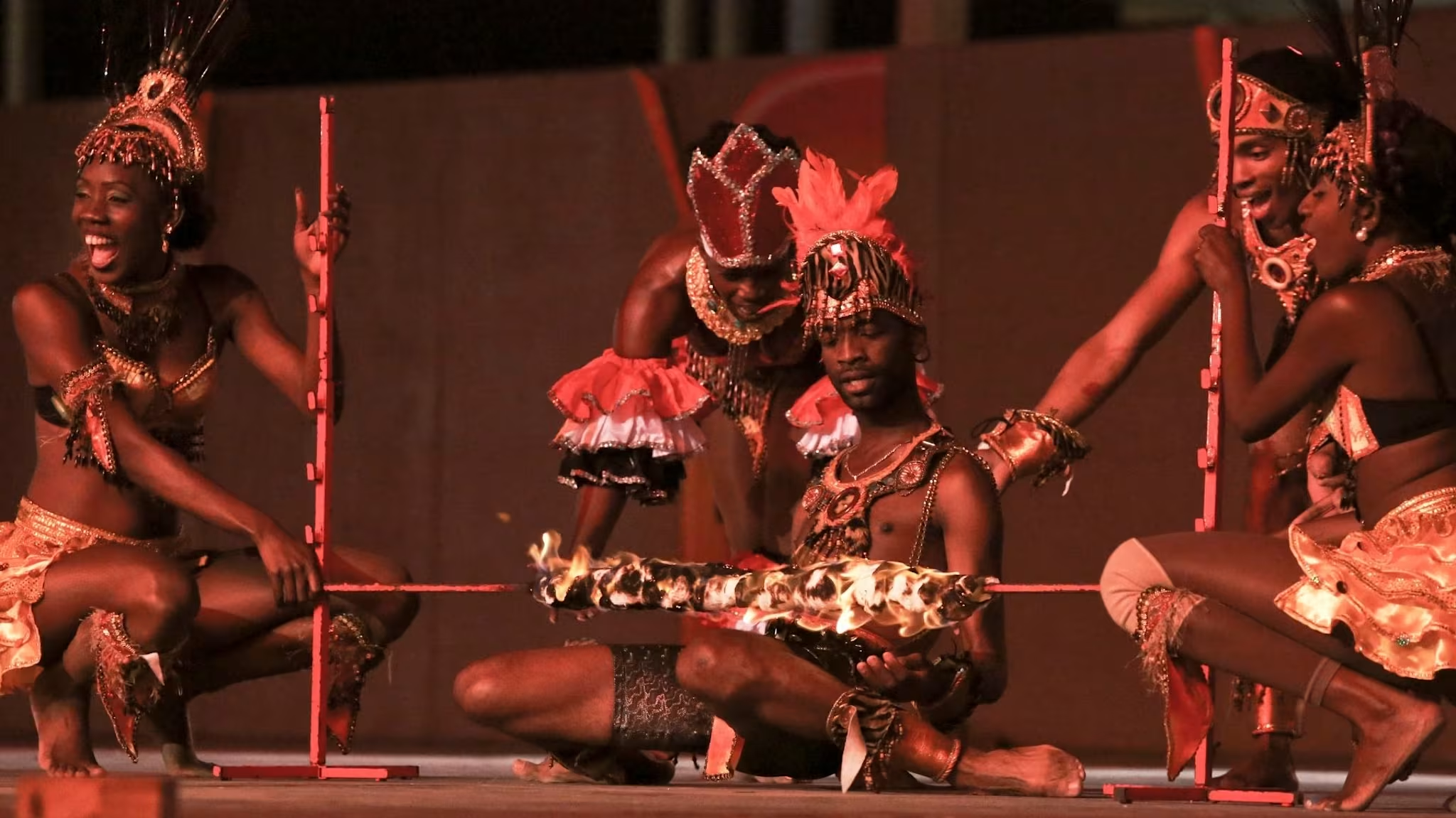
According to Time Out New York, the parade was supposed to step off at 2 p.m. from Church and Flatbush Avenues before heading toward Prospect Park, with steelpan performances, music, food, and a picnic carrying the theme, “Our Culture. Our People. Our Freedom.”
Instead, documents obtained by the outlet show the NYPD rejected the route on August 20. The department said its experience with previous events along the corridor suggested shutting it down for another parade would cause too much disruption to established bus and truck routes.
The NYPD was blunt in its denial, saying the parade “would substantially and unreasonably interfere with traffic.”
But congestion wasn’t the department’s only concern. Police said staffing the event would require resources that could compromise police and emergency coverage in the surrounding area.
The door isn’t completely closed: the department told organizers that alternative routes, dates, and times could be discussed.
That decision comes with an unavoidable bit of timing. Earlier this month, the same section of Brooklyn welcomed New York City’s first Jamaican Day Parade. That Aug. 8 event stepped off from Church and Flatbush Avenues—co-named Bob Marley Boulevard—and moved through Little Caribbean with marching bands, cultural groups, vendors, and performers celebrating Jamaica’s 64th anniversary of independence.
Three weeks later, Trinidad and Tobago’s diaspora was supposed to get its turn, with J’Ouvert International for Arts and Culture presenting a celebration centered on the country’s red, white, and black.
The Brooklyn parade was also supposed to lead directly into a milestone being celebrated more than 2,000 miles away. Trinidad and Tobago gained independence from Britain on August 31, 1962, under Prime Minister Eric Williams, following decades of labor activism and political reform. The islands became a republic in 1976.
What happens next is now up to organizers and the city. J’Ouvert International for Arts and Culture has not announced whether it will seek a new route or move the inaugural Trinidad & Tobago Independence Day Parade to another date.