Key Takeaways
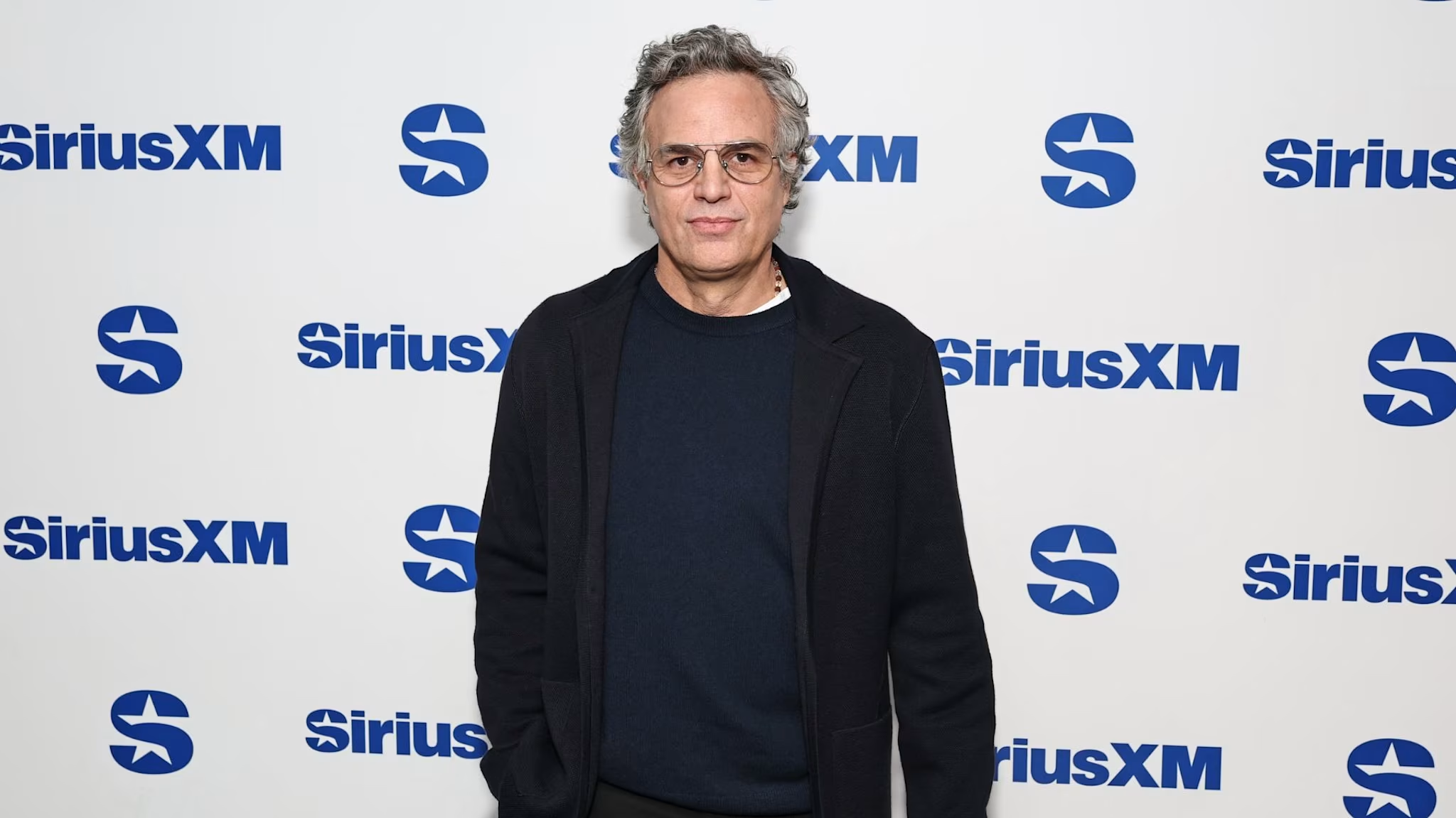
- Mark Ruffalo urged California Attorney General Rob Bonta not to approve Paramount Skydance’s $110 billion Warner Bros. Discovery takeover, writing, “Don’t you dare, Rob Bonta, do not cave.”
- Ruffalo cited 5,670 filmmakers and more than 75,000 petition signers who oppose the merger, arguing that its promises will not protect entertainment workers.
- The reported settlement would give CBS and CNN independent editorial boards and could fine Paramount $30 million for every film it falls short of its annual 30-movie theatrical commitment.
Paramount may have finally found a way around the legal blockade holding up its $110 billion Warner Bros. Discovery takeover. Mark Ruffalo, however, wants California Attorney General Rob Bonta to blow it all up.
Paramount Skydance has reached a settlement with California and the other states suing to stop the massive merger, potentially ending the antitrust case that has kept the deal frozen for months. According to Bloomberg, the agreement came together over the weekend after Massachusetts, New York, Connecticut and Minnesota—the final four holdouts—ultimately agreed to terms.
Those states extracted additional concessions before coming on board. Under the settlement, CBS and CNN would operate with oversight from an independent editorial board, while Paramount would face financial penalties if it fails to deliver on its commitment to release at least 30 movies theatrically each year.
And those penalties could get expensive fast.
Under the settlement, Paramount would be required to pay $30 million for every movie it falls short of the annual target. The company would also be required to divest Miramax if it fails to meet the film-output requirement in any year.
Ruffalo isn't convinced.
"Don't you dare, Rob Bonta, do not cave," Ruffalo wrote.
He pointed to the thousands of entertainment workers who have spent months opposing the combination.
"5,670 filmmakers put their necks on the line for you to fight this merger," Ruffalo wrote, adding that more than 75,000 people had signed a petition against a settlement. "You work for the people—the very people who will be hurt if you let this lousy deal filled with empty promises go forward."
The settlement would end the biggest remaining U.S. roadblock to a merger that has turned into a months-long Hollywood saga.
Paramount initially won Warner Bros. Discovery after a bruising bidding war with Netflix, which had struck its own deal for Warner's studio and streaming businesses. Paramount kept raising its offer until Warner accepted its proposal for the entire company. Netflix refused to go higher and walked away with a $2.8 billion breakup fee.
The Writers Guild of America launched a separate challenge, which it also settled on Monday, and thousands of Hollywood workers publicly opposed the deal.
Then the states scored their biggest victory: a federal judge stopped Paramount from closing the acquisition while the antitrust case proceeded. A March trial threatened to leave both companies stuck in merger limbo for months.
That uncertainty quickly spilled beyond the courtroom. Warner struggled to retain some talent, including Quinta Brunson, who moved her overall deal to Disney's 20th Television. Employees at both companies faced the prospect of thousands of layoffs, while contractual restrictions complicated some of Warner's long-term deals.
Paramount also faced an expensive clock. If the transaction remained unfinished into October, the company would begin paying Warner Bros. Discovery shareholders roughly $7 million per day in late-closing fees.
Settlement suddenly offers Paramount a way out.
Bonta had previously expressed skepticism about promises governing how a combined company would behave, saying he preferred structural remedies that could preserve competition rather than simply regulate Paramount after the merger.
Earlier settlement discussions reportedly included keeping the two movie studios operationally separate for a period, an approach his office characterized as behavioral rather than structural.
The final settlement puts more teeth behind Paramount's promises. Along with the theatrical-release penalties, the independent board for CNN and CBS would establish another layer of separation inside the combined company.
For Paramount, a settlement could finally turn a deal that has spent months trapped between regulatory approvals and courtroom challenges into an actual acquisition.
For Ruffalo and thousands of other Hollywood workers who fought it, however, the issue hasn't changed simply because Paramount is willing to put money behind its promises.
"Reject the deal," Ruffalo wrote. "The people don't want it."