None
Lead
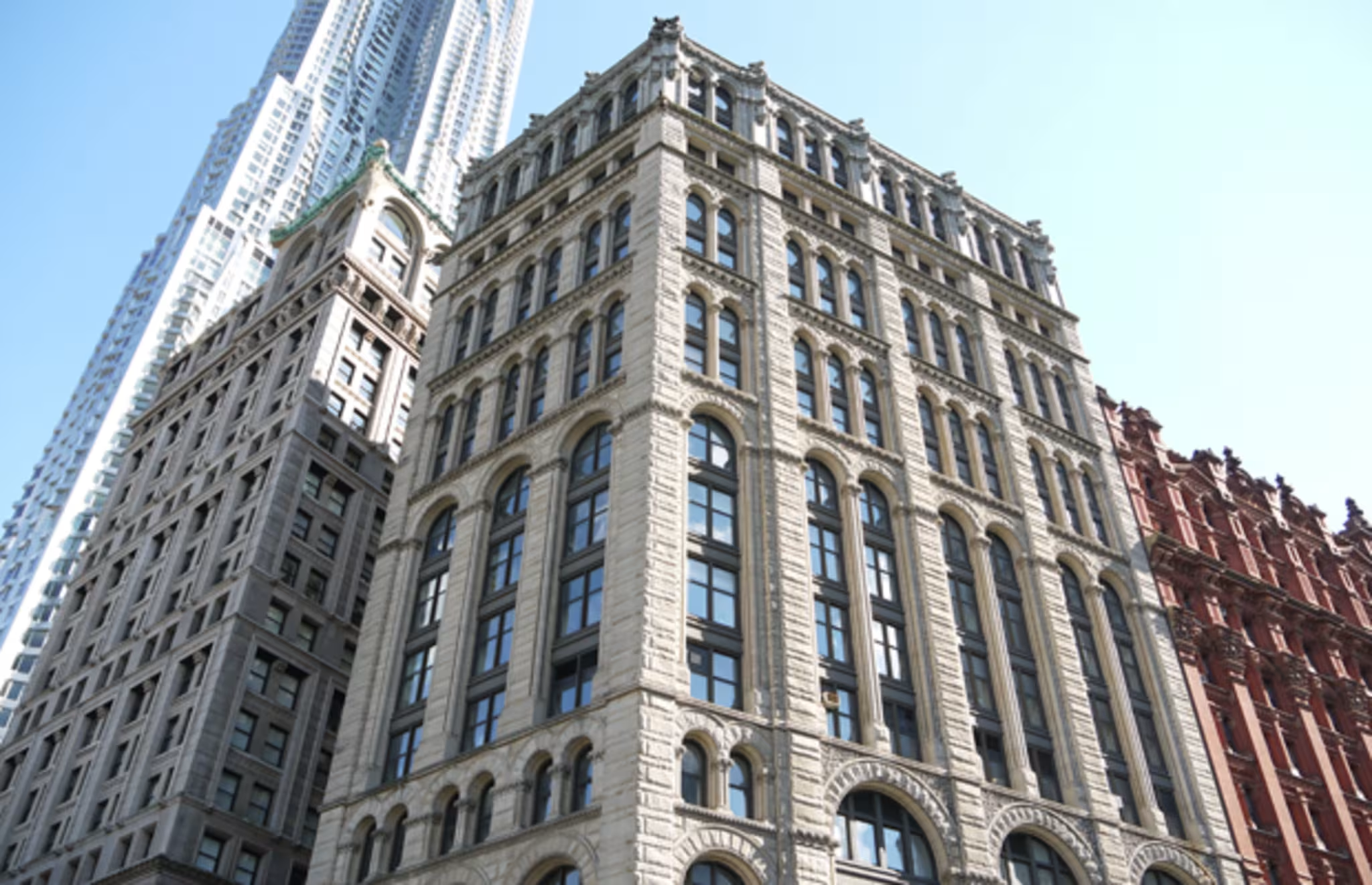
Long before the New York Times moved to its current location across from the Port Authority, and even before moved north to Longacre Square, inspiring the eponymous renaming of the area, the Times relocated from its first building at 113 Nassau Street to a custom-built structure at 41 Park Row.
gothic 2
The original building erected in 1858 was a five-storey structure designed by the architect Thomas R. Jackson in a Romanesque Revival style. The building dominated its environs and, located across from City Hall, it loomed large when the paper led its crusade against the corrupt ring of Boss Tweed.
gothic 3
That strip of Park Row was once known well as “Newspaper Row”; a statue of Ben Franklin holding a copy of the Pennsylvania Gazette still stands today in Printing House Square. The old five-storey Times building also dwarfed the home of its greatest competitor, the New York Tribune, until the 1870s when Horace Greeley commissioned a tower that outsized everything in New York, except the spire of Trinity Church. By 1889, the Times again took the lead in size, when it commissioned George Post to the design the even grander building at 41 Park Row. To keep the presses running, the new tower was constructed around the core of the original Jackson building. Less than ten years later, Adolph Ochs purchased the paper and commissioned Robert Maynicke to remove the mansard roof and add an additional three stories of offices, capping the building at 13 floors.
gothic 4
Although it is said to be in a Romanesque style, many of the building features are Gothic. The large round arches that once allowed abundant natural light to brighten the printing floors, now serving as the gym for Pace University, which bought the building in 1951, are certainly more Roman than Gothic. The finials that cap the slender columns are more likely to be found in Northern Europe.
gothic 5
The lack of any other classical orders to the columns and their capitals, and the diamond shaped protrusions near the roof cornice are equally Gothic. Not to mention the lone gargoyles at the corners and the odd haunted ghost faces staggered into the flowery dentils below the lower cornices at the 7th, 9th, and 11th floors. In 1999 the building was designated an NYC Landmark.
gothic 6
A closer look at the the diamond shaped protrusions near the roof cornice.
gothic 7
One of the building's gargoyles that contributes to the Gothic feel.