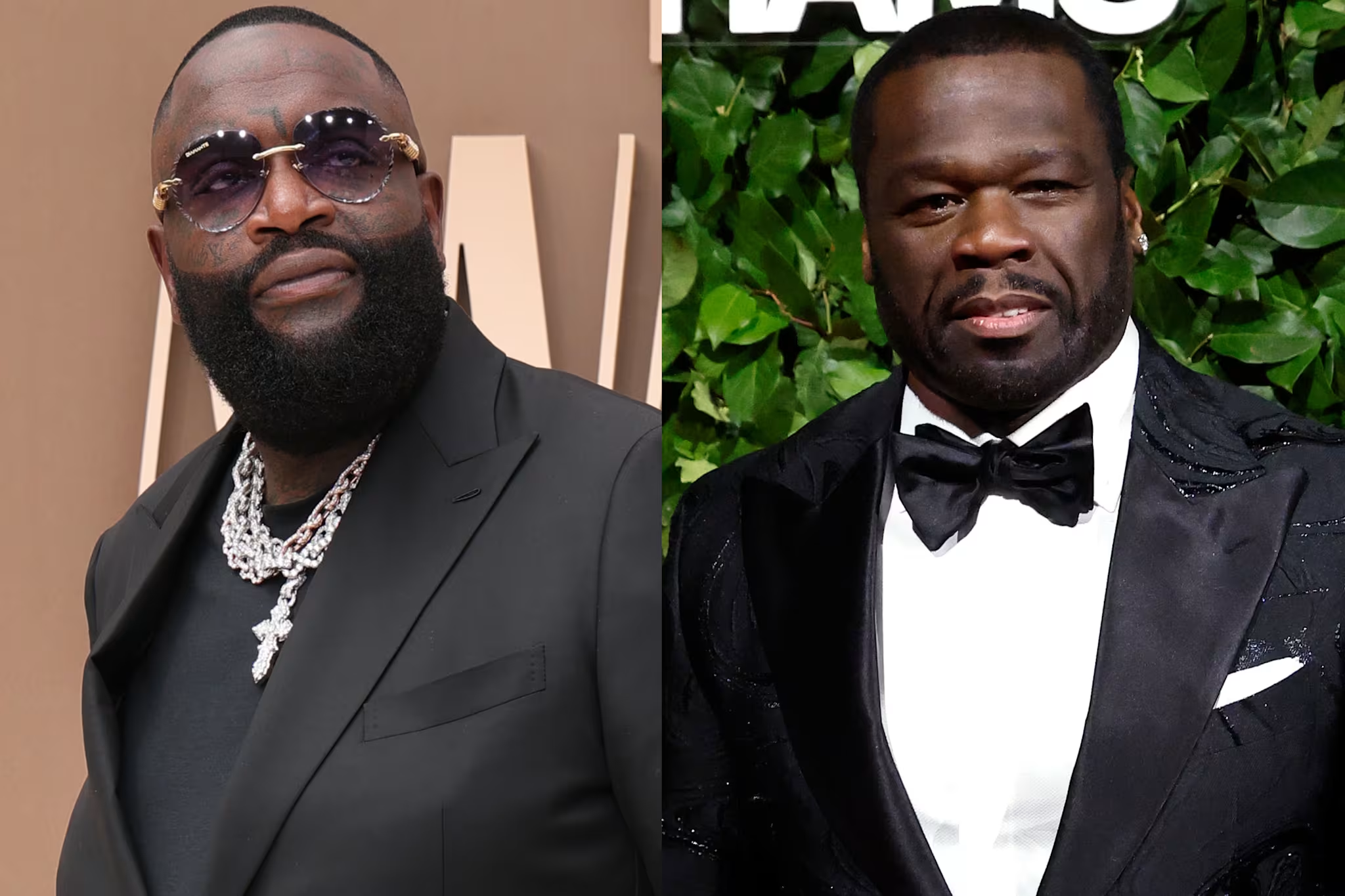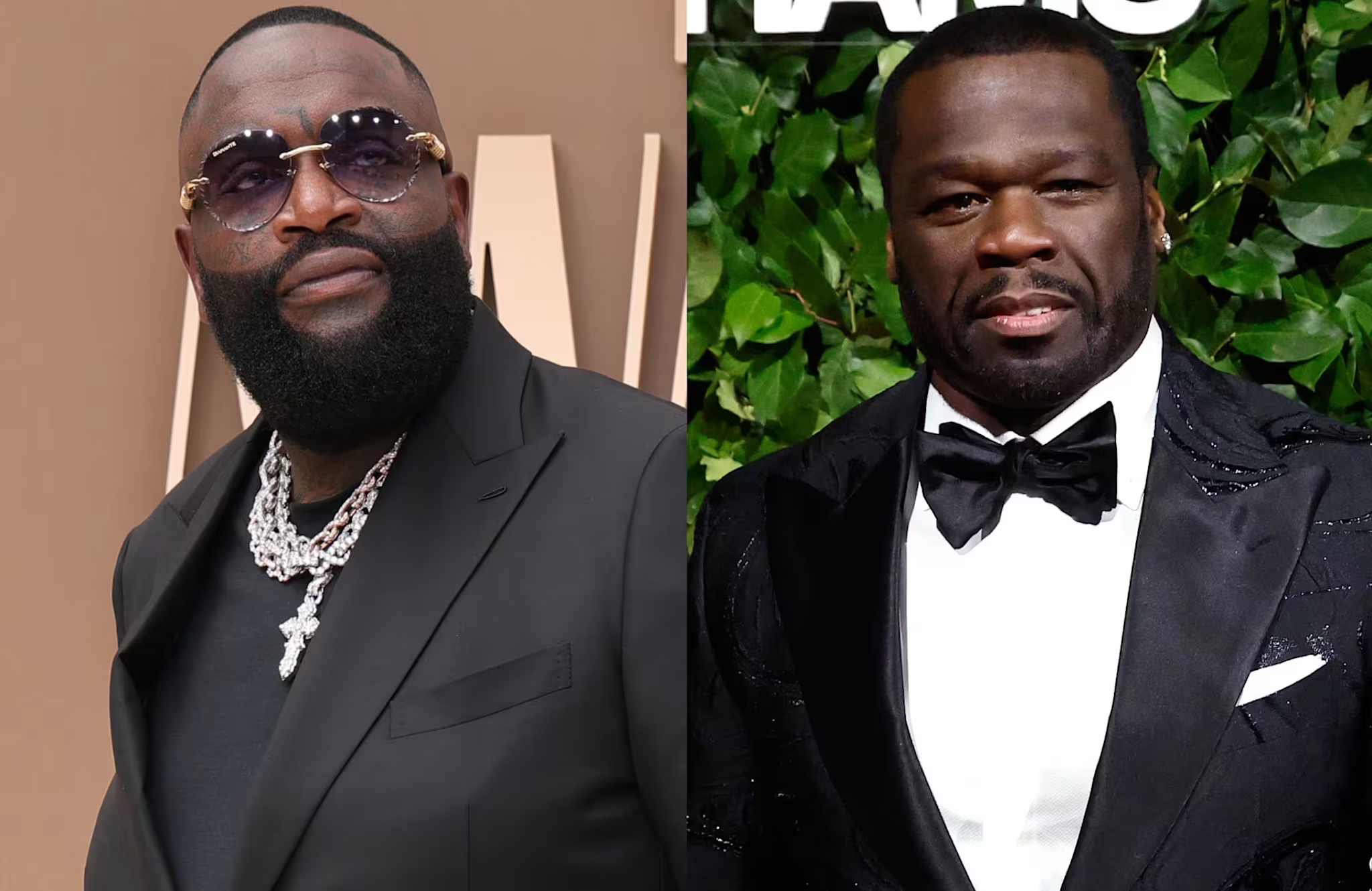
Rick Ross is pushing back against 50 Cent's argument that hip-hop is inherently a young person's game, and he's using two Southern rap legends to make his point.
Ross recently responded to 50 Cent's thoughts about aging in hip-hop, arguing that certain artists can continue making music for as long as their fans want to hear it.
"I saw Curtis Jackson say he ain't doing no music and it makes sense for the music he makes," Ross said, referring to 50 by his government name.
Rozay then turned his attention to UGK, arguing that Southern hip-hop fans would never tell Bun B to hang up the mic because of his age.
"But Bun B just hit the stage, the South won't let Bun B stop rapping," Ross said. "If Pimp C was alive we wouldn't let Pimp C stop rapping, they could put out albums til they're 85 years old."
Ross said an artist's connection to listeners should matter more than how old they are.
"When the streets love you and the culture needs you and you bring something that can't be duplicated, fuck what your age is," he added.
Ross' remarks were in response to comments 50 made while speaking with Ebro Darden at an Apple Music VERZUZ event. During the conversation, 50 argued that hip-hop's close relationship with younger generations makes it difficult for older rappers to remain at the center of the genre.
"Hip-hop culture is connected to youth culture," 50 said. "You are not supposed to be the hottest in nothing at 60."
The G-Unit mogul also took issue with veteran artists releasing albums that don't connect commercially and later framing them as deeply personal projects that weren't intended to compete.
"I'm not gonna tell you this was a personal album," 50 said. "I made this for this and that. And why do I hear it, bitch?"
50 acknowledged that his own musical output has slowed considerably as his attention has shifted toward television, film and other business ventures. He described his occasional appearances on songs as brief "entries" that allow him to demonstrate that he "still got it."
He did, however, make a distinction for R&B and "love music," arguing that those genres can have a timeless quality that doesn't necessarily apply to hip-hop in the same way.