Key Takeaways
- Suno pulled a promotional campaign featuring Mary J. Blige after learning that the person who brokered the deal lacked authorization to represent her.
- The studio video made Blige appear to endorse Suno’s AI-generated music, but the company said she never approved the campaign and felt “uncomfortable” with it.
- The mishap comes as Suno faces multiple copyright lawsuits and echoes Blige’s lingering frustration over her controversial 2012 Burger King commercial, which she blamed partly on “bad representation.”
Mary J. Blige is dealing with an advertising headache she apparently never signed up for.
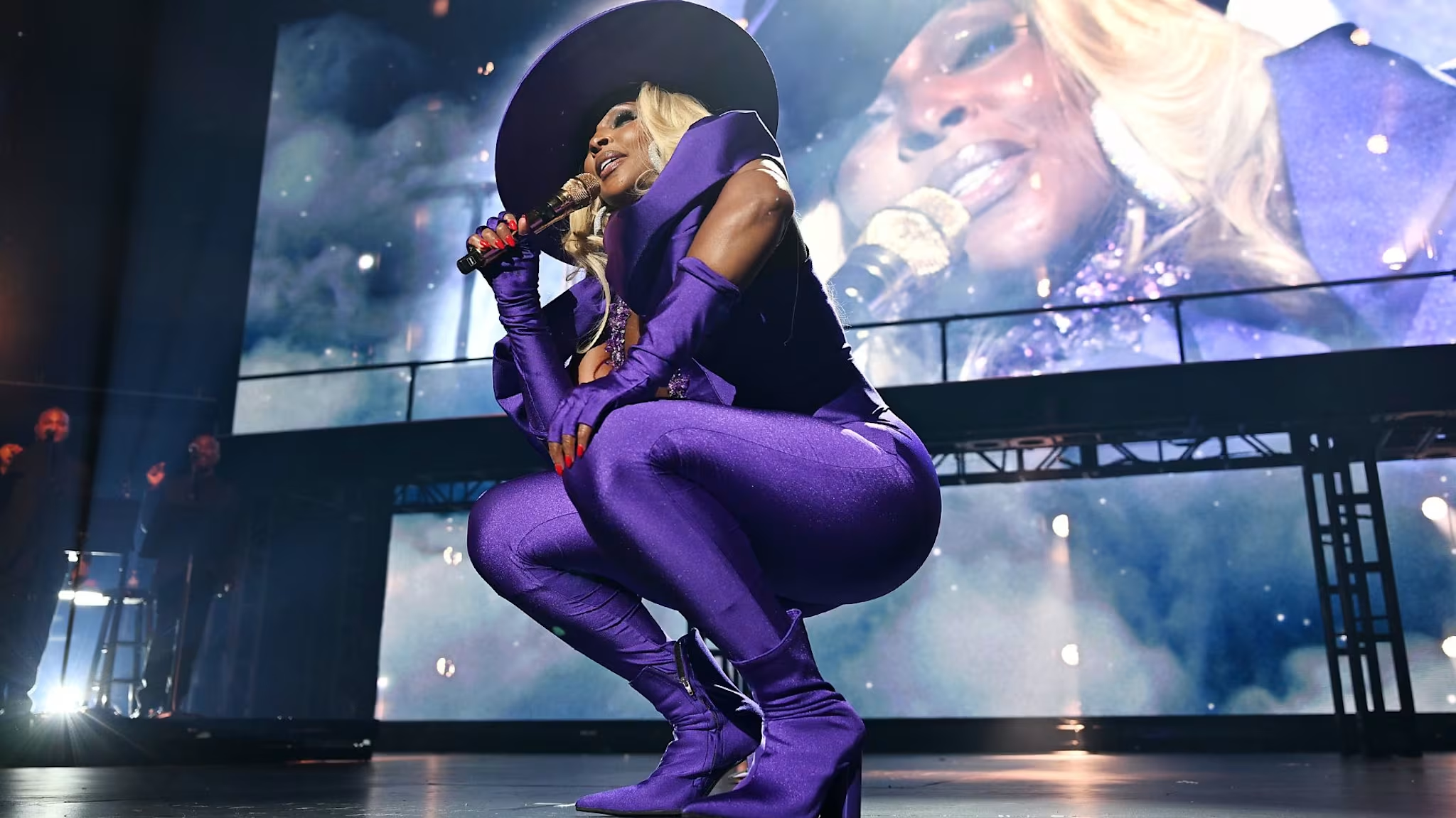
AI music company Suno has pulled a promotional campaign featuring Blige after admitting that the person who brokered the deal was not actually authorized to represent the singer. According to The Hollywood Reporter, the video made it appear that the Queen of Hip-Hop Soul was working with—and effectively co-signing—the controversial platform. Suno now says Blige never approved the campaign.
The video placed Blige in a recording studio with a producer, using Suno to generate music inspired by her catalog. As the track played, Blige appeared engaged and could be seen offering creative suggestions. Without any additional context, the footage presented what looked like a pretty valuable endorsement: one of R&B’s most recognizable voices experimenting with AI-generated music.
There was just one major problem.
“We entered into a business deal with someone who presented themselves as Ms. Blige’s official representative,” a representative for Suno told The Hollywood Reporter.
The company said it pulled the campaign “as soon as we learned this was not the case, and that Ms. Blige was uncomfortable.”
Suno also called Blige “an icon who we all deeply admire,” citing What’s the 411?, No More Drama, The Breakthrough and Growing Pains among the projects that made the company interested in working with her. Blige’s representatives declined to comment further.
Suno's explanation leaves one significant piece of the story unresolved: how a company entered into a business agreement involving Mary J. Blige, produced promotional footage featuring the singer herself, and released it publicly before determining whether the person negotiating on her behalf was actually authorized to do so.
The timing makes the situation even messier for Suno. The AI music platform is already fighting copyright litigation from Universal Music Group, Sony Music Group and Round Hill Music, while Jason Isbell filed a class-action lawsuit against the company this week. Suno has simultaneously moved deeper into the traditional music business through agreements with Warner Music Group and BMG.
For Blige, meanwhile, the whole thing comes with some serious déjà vu.
Earlier this year, she made clear that she still hasn't gotten over the infamous 2012 Burger King commercial that triggered widespread backlash over racial stereotypes. Blige told Scott Evans that the commercial audiences saw wasn't the campaign she thought she was making.
“The whole way that sh*t went down was wrong,” she said. “It’s still not a laughing matter to me.”
Blige said the episode left her “deeply, deeply affected” and blamed what happened partly on “bad representation, bad management, bad everything.” Her longtime fans were confused, she recalled, while she was left publicly absorbing the consequences.




