Key Takeaways
- Mary J. Blige says she chose not to have children after watching relatives struggle with “no freedom” and losing control of their time, a tradeoff she never wanted for herself.
- As she’s gotten older, she better understands the emotional value kids bring to her family but still doesn’t regret her decision, especially after seeing her mother give up a singing scholarship to raise children while she pursued the career her mom couldn’t.
- In the IMO conversation, Michelle Obama stresses that motherhood isn’t required to be “whole,” while Blige reflects on past industry blowups, her growth, and the autonomy of headlining her Las Vegas residency, Mary J. Blige: My Life, My Story.
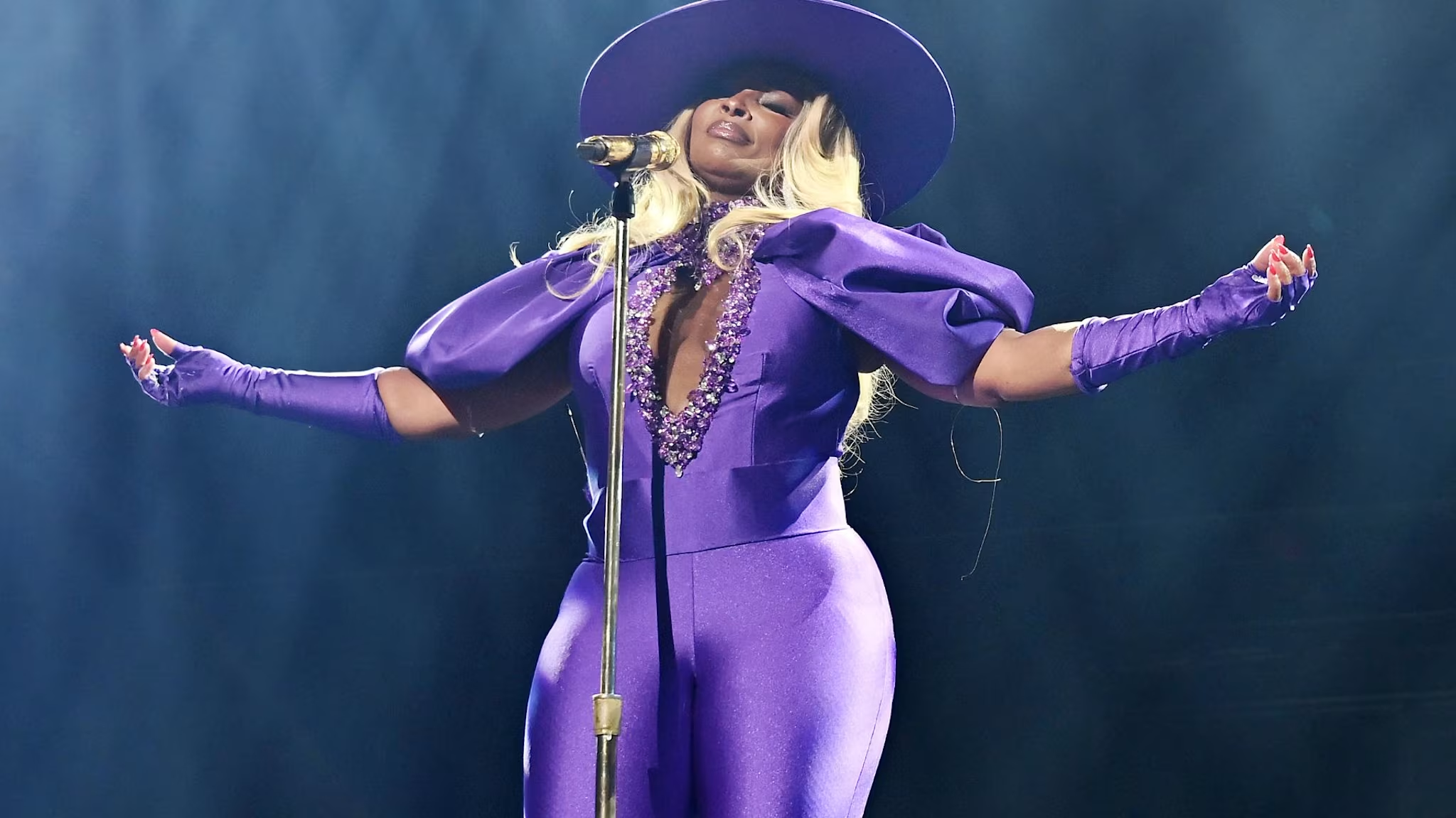
Mary J. Blige is opening up about why motherhood was never part of her plan—and how her feelings about that decision have evolved with age. During a candid appearance on IMO with Michelle Obama & Craig Robinson, the 55-year-old singer said watching people around her struggle with the responsibilities of raising children made her fiercely protective of her independence when she was younger.
Asked about her decision not to have children, Blige explained that what she witnessed within her own family played a major role. “I saw a lot of people struggling,” she said, recalling relatives who needed babysitters and appeared to have little control over their time.
What Blige saw, she said, was “no freedom,” leading her to a straightforward conclusion: “I don’t want any kids.”
Her perspective, however, is more complicated now. Blige admitted that getting older has allowed her to see another side of parenthood, particularly the bonds her relatives have built with their children.
“Then when you get older, you start to see how valuable their kids are to them,” she said. Still, Blige stopped short of expressing regret over her own choice.
Elsewhere in the interview, she recalled that her mother had a singing scholarship but abandoned her musical ambitions after having children, focusing instead on raising her family. Blige eventually followed the path her mother could not, discovering her own voice at seven before breaking into the industry as a teenager.
Michelle Obama broadened the discussion beyond Blige, arguing that women should not be made to feel that motherhood is a prerequisite for a complete life. “You don’t have to be a mother,” she said. “That doesn’t make you whole.”
Obama added that children should not be expected to fill emotional gaps in their parents, telling listeners, “You gotta be a whole person.”
That idea tracks with much of what Blige has been saying lately about the life she has built. In her recent conversation with Scott Evans, the Queen of Hip-Hop Soul reflected on everything from the infamous backlash to her 2012 Burger King commercial to her behavior during the early stages of her career.
Blige also admitted she once lashed out when records failed to perform as expected, before eventually taking responsibility and apologizing to people at her label. “I would go crazy on people,” she recalled of that period.
Now, Blige is entering another chapter on her own terms. The Rock and Roll Hall of Famer is enjoying the success of her first Las Vegas residency, Mary J. Blige: My Life, My Story, at Dolby Live at Park MGM, a show designed around the music and experiences that have defined her career.