Key Takeaways
- Sam Smith and Normani deny copying their 2019 hit “Dancing With a Stranger,” arguing that they created it independently with commonplace musical elements.
- A federal judge signaled that a jury should weigh competing expert opinions on whether the song copied the title, chorus, hook, and composition of a 2015 track called “Dancing With Strangers.”
- The plaintiffs must prove the songs are “strikingly similar” after dropping their access argument, while the defense says the alleged overlap involves only a handful of common musical elements.
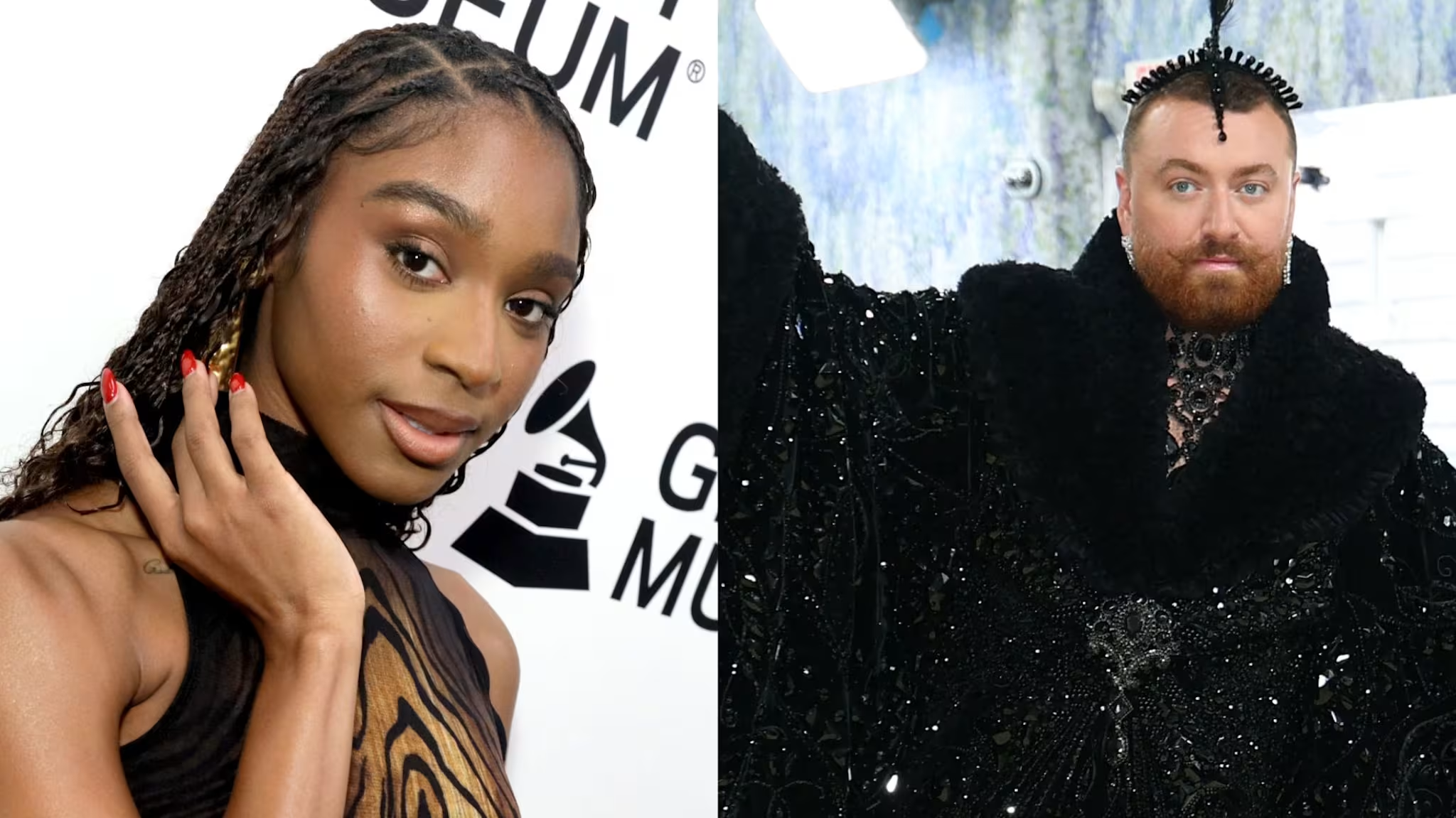
Sam Smith and Normani appear headed for a jury trial over “Dancing With a Stranger” after a federal judge signaled that he would not end the years-long copyright fight in their favor. During a hearing on Friday, September 11, U.S. District Judge Wesley L. Hsu said he was inclined to deny the artists’ latest request for summary judgment, indicating that competing expert opinions about the 2019 hit and an earlier song with a nearly identical title should be evaluated at trial.
According to Rolling Stone, songwriters Jordan Vincent, Christopher Miranda, and Rosco Banlaoi, operating through Sound and Color, LLC, sued in 2022. They allege that Smith and Normani’s multi-platinum collaboration copied the title, chorus, hook, and musical composition of “Dancing With Strangers,” a song they created in 2015.
Smith and Normani deny copying the track and maintain they created their song independently using commonplace musical elements that cannot be monopolized under copyright law.
The case has already survived one apparent ending. A federal judge dismissed the lawsuit in 2023 after concluding that the phrase “dancing with a stranger” and the musical components the plaintiffs identified were not legally protectable.
The Ninth Circuit reversed that decision in 2025, ruling that a jury should determine whether the songs are substantially similar. Smith and Normani returned with another attempt to dispose of the claims in July, but Hsu’s tentative ruling leaves the central musical dispute alive.
“I reject the defendants’ attempt to categorically exclude the testimony of the two experts from the plaintiff,” Hsu said from the bench. “While I don’t agree with the conclusions of the experts, that is not a decision for me.”
The judge said the experts had provided enough foundation for their opinions to be heard, adding that he could not conclude as a matter of law that copying did not occur. Vincent’s attorney, Alfred J. Fluehr, reduced the issue to its core: “This is a musicological dispute. That’s for a jury.”
Vincent still faces a steep evidentiary hurdle. After abandoning the argument that Smith and Normani’s collaborators had access to the 2015 song through widespread distribution, the plaintiffs must prove the works are “strikingly similar,” a higher standard than ordinary substantial similarity.
Defense attorney Peter Anderson argued that the supposed overlap consists of only four or five elements that are “commonplace in the musical world.”
He also challenged the older song’s copyright protection because it allegedly contains unauthorized samples of Masters at Work’s “The Ha Dance” and Lyn Collins’ “Think (About It).”
Hsu appeared unconvinced that the sampling issue automatically eliminated the claim, noting that the plaintiffs contend the disputed hook was not itself sampled.
The looming trial would place another major pop record under a microscope, with jurors potentially asked to separate protectable creative expression from familiar musical language.
That distinction is further complicated by older material: Cyndi Lauper released a song titled “Dancing With a Stranger” in 1989, while Regina’s 1997 track “Dancing With an Angel” contains a descending melodic phrase cited by the defense.