Key Takeaways
- Bad Bunny’s attorneys convinced Judge André Birotte Jr. to reject Steely & Clevie’s claim that copyright protects the dembow arrangement at the heart of nearly 2,000 reggaeton songs.
- The judge ruled that the duo built its case from an “abstract amalgamation” of elements across three recordings rather than a clearly identified copyrighted work.
- The decision protects more than 150 artists, including Karol G, Daddy Yankee, J Balvin and Drake, though narrower claims involving direct samples can continue.
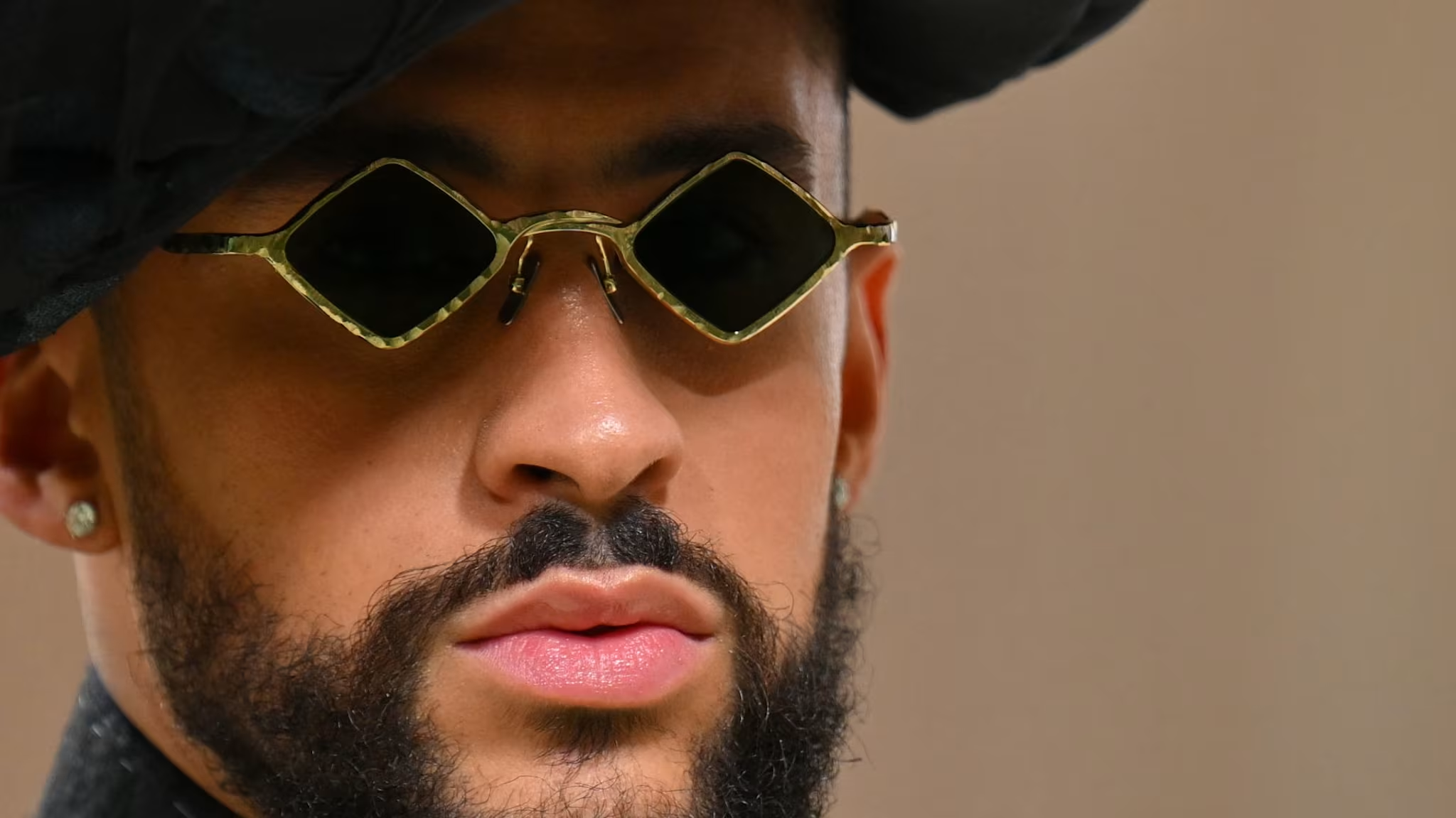
Bad Bunny just helped blow a massive hole in the copyright lawsuit that threatened nearly 2,000 reggaeton songs.
In a striking reversal, U.S. District Judge André Birotte Jr. has tossed the central claim brought by Jamaican production duo Steely & Clevie, ruling that they cannot claim copyright protection over the dembow rhythm used throughout reggaeton. Per Billboard, the decision comes just two months after Birotte ruled that a jury should decide whether the musical arrangement was protected by copyright.
What changed? Bad Bunny’s attorneys convinced the judge to take another look.
The defense zeroed in on a major problem with Steely & Clevie’s argument: the complete musical arrangement they claimed to own could not be found in any one copyrighted song. Instead, attorneys argued, the plaintiffs had assembled elements from three separate recordings to construct what Bad Bunny lawyer Kenneth D. Freundlich previously described as a “Frankenstein” copyright.
Birotte agreed. “Upon further review of the record, the court concludes that plaintiffs have not clearly identified what copyrighted work contains the allegedly protectable selection and arrangement they seek to enforce,” he wrote in his opinion.
The reversal delivers a major victory not only for Bad Bunny but for more than 150 artists targeted by the reggaeton lawsuit. Karol G, Daddy Yankee, J Balvin, Drake, Pitbull, Luis Fonsi and Justin Bieber are among the defendants accused of using a rhythm Steely & Clevie say originated with their work.
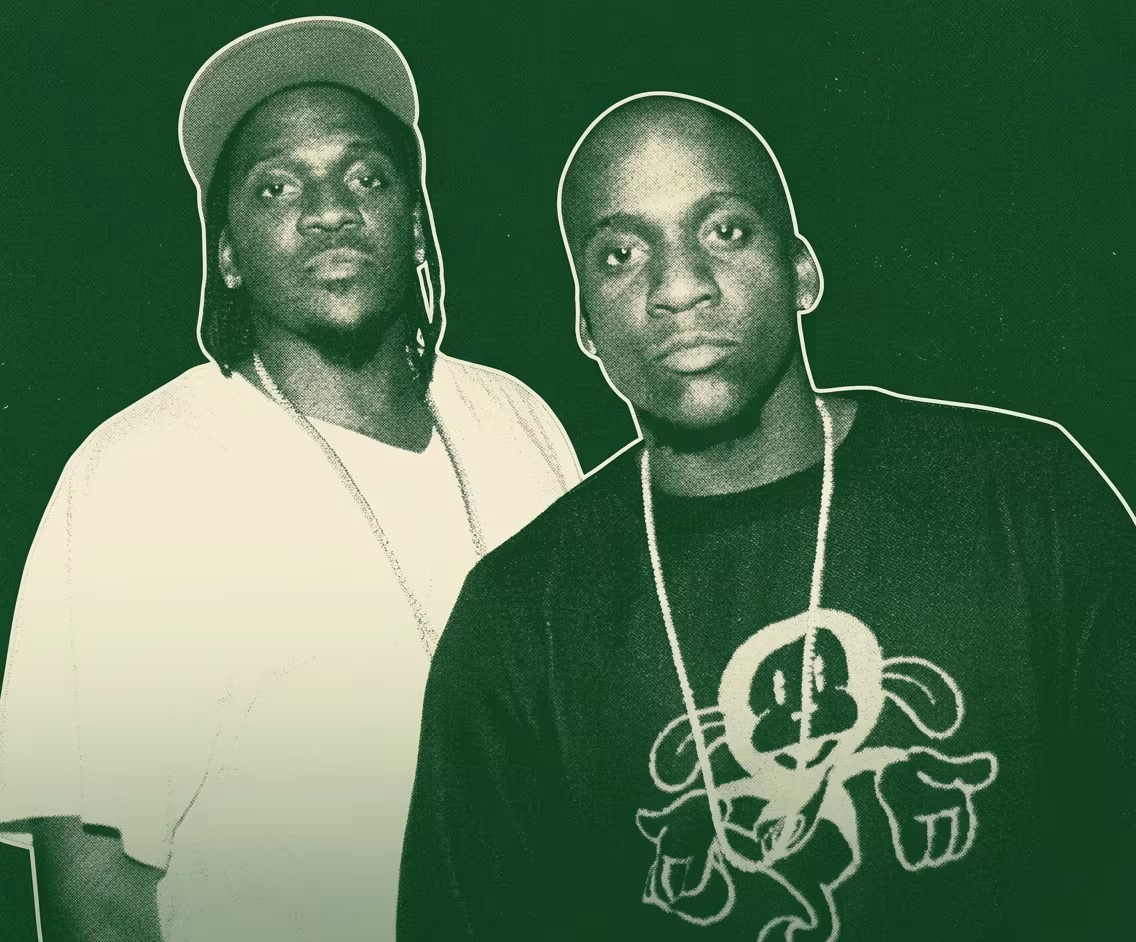
Cleveland “Clevie” Browne and the heirs of Wycliffe “Steely” Johnson filed a sprawling case, claiming that their 1989 recording “Fish Market” helped establish the dembow rhythm that would become a cornerstone of reggaeton. Their claims eventually reached nearly 2,000 songs, turning a dispute over several recordings into a copyright battle with implications across an entire genre.
Until this week, that argument appeared headed toward a jury.
Birotte ruled in July that dueling expert testimony created legitimate factual questions over whether Steely & Clevie had created a copyrightable musical arrangement.
But after reconsidering the case, the judge found the plaintiffs had a more basic legal problem: copyright protection cannot be built from what he called “an abstract amalgamation of elements extracted from multiple independently existing works.”
Freundlich put the defense victory more plainly.
“You cannot copyright a rhythm by reverse-engineering it from three different songs once you’re already in court,” he told Billboard. “Copyright protects what an artist actually created, not a collage assembled in litigation.”
The ruling guts the broadest—and potentially most consequential—part of the case. Steely & Clevie can no longer pursue their current theory that thousands of songs infringed their work simply by incorporating the disputed dembow arrangement.
Some of the lawsuit survives, however. Narrower claims involving songs accused of directly sampling Steely & Clevie recordings can continue.