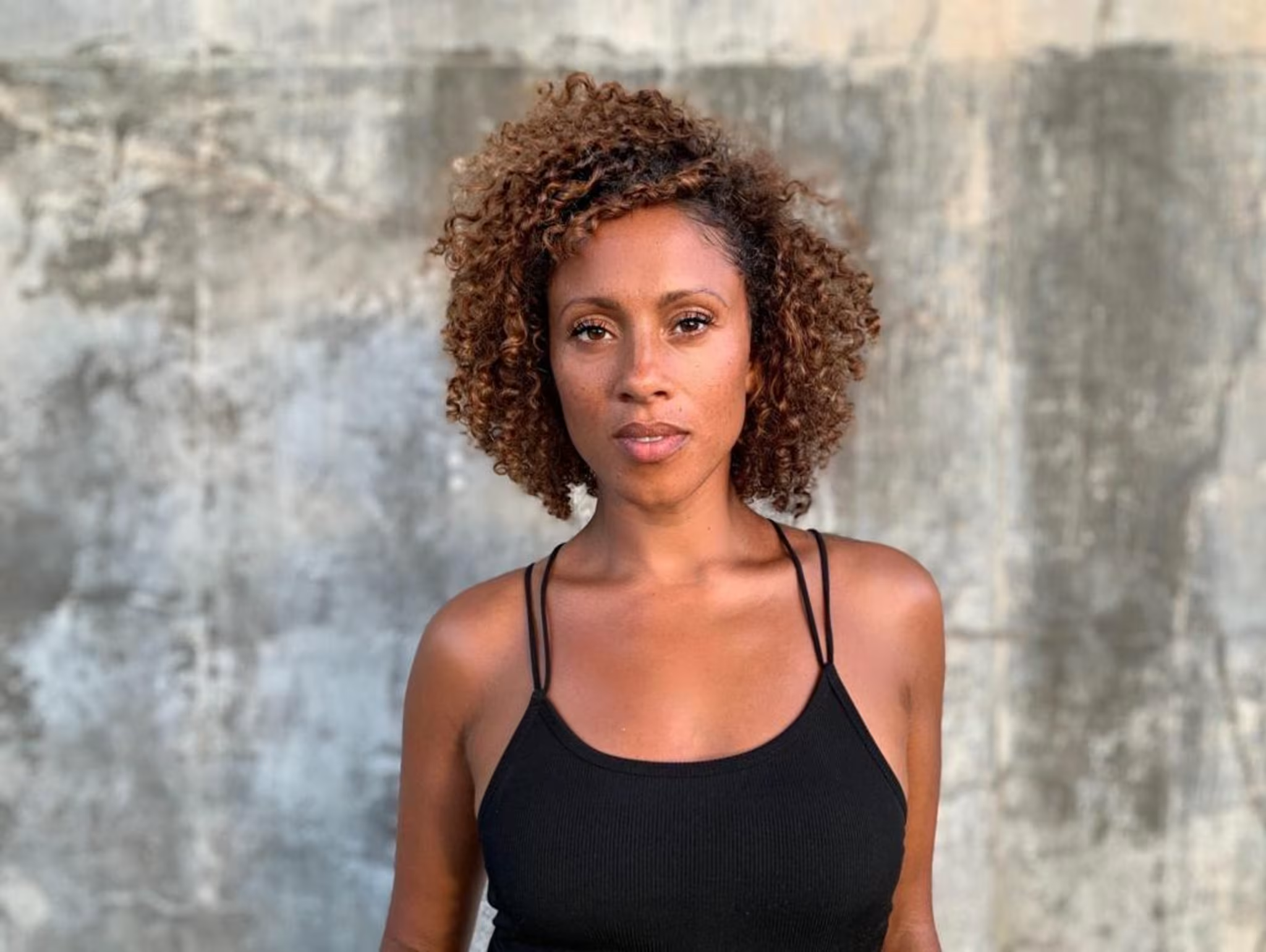
We’d be here all day if we had to write out all of Tiana Canterbury’s achievements. The 42-year-old choreographer and movement coach is a juggernaut in the Australian dance industry. She’s been the lead choreographer for some of Australia’s biggest shows across the last two decades, including Australia’s Got Talent, The Voice, and So You Think You Can Dance.
Canterbury has also been the lead choreographer for scores of musicians, including our own Sampa The Great, as well as numerous international artists among the likes of Macklemore and Janet Jackson. For the last couple of years she’s been Red Bull’s Australian Dance Scene Expert, working closely with them to deliver the annual Dance Your Style event—an international, all-styles street dance event.
One considers all her accolades and achievements, throws in the fact that she’s also a wife and mother of three, and wonders how on earth she has juggled it all for so long. The answer to at least part of that question is her immense, unrelenting drive—and a visceral love for dance she’s always had.
She spoke to Complex AU about her journey so far, career highlights, and how she still manages to move like a 20-year-old in her 40s.
First of all, I heard you had a birthday yesterday, happy belated birthday!
Aw, thank you so much! I’m very proud of my birthday—because I share it with Beyonce.
Of course, the famous September 4.
Yeah, so I’m gonna claim all her greatness!
So you’ve hit the big 42, but you literally still move like you’re in your 20s. It’s sickening. How long have you been dancing for, and what’s the secret to your longevity?
I’ve been dancing since I was young. My mum always said that ever since I could understand beat and movement, I was moving. It’s funny, because I only got what she meant when I had my own kids, because they’re exactly like that. When my son was little, he would hear the tap dripping and he’d be bouncing to the tap, (laughs).
I grew up in South Africa, so I didn’t go to a dance studio, so all the dancing [I was exposed to] was street dancing. When I was young, like 7 or 8, I’d be out with all the kids on the street putting them into different positions and making up moves. I didn’t know that what I was doing was formation or choreography. When we moved to Australia, I got noticed by an agent, and from there my career kicked off.
I always tell people that there’s never baggage with what I do, and a lot of people wonder what I mean by that. What I mean by that was that I never did dance with any expectations. It was just love from the get go—it was just me. Dance has always been a love, first and foremost.
I think as I grew older, and started going through the challenges of carving out a career, and getting into the ‘business’ of dance—that’s when doubts started to come in, and the baggage.
I sort of had a turning point, where I started to study the mind in dance and energy centres, and tapped back into that joy that I had dancing as a kid. So that’s what keeps me going, and that for me is part of my longevity—tapping into that energy and joy. For me it’s no time and no space—age doesn’t matter for me.
I think people working across a variety of industries would be able to relate to that sentiment—sometimes when you start off passionate about something and then manage to forge a career out of it, the business side of things can create a lot of internal noise.
How and when did you make that personal shift when you were overcome by doubts and ‘baggage’? And what exactly was that ‘baggage’?
So it happened for me after I had my third child. I was still dancing and teaching. With my first two [kids] I had a really good run, and physically I bounced back really well. But with the third one it wasn’t the same. I was also hit with the fact that now I had three humans to take care of, and I had to go straight into ‘So You Think You Can Dance’, because I was a choreographer on the show. I was on the show, and I had a great career, but I just wasn’t enjoying myself. And I noticed that it wasn’t the experiences that I wasn’t enjoying, but it was how I felt—that’s what I wasn’t enjoying. I wasn’t feeling my juicy self, I wasn’t feeling confident physically or mentally.
That’s when I came across Dr Joe Dispenza and his work on energy centres, and then I did his courses, and I started putting it into my training which was more so about getting back to my physical self.
I just let go of focusing on external factors, like my tummy becoming flat again or getting my abs back, and just focused on feeling a little bit more connected to my body. Once I felt that connection, I felt great, and when I felt great, my training became better. There was no time and no space. It really wasn’t about my outside appearance anymore, I just felt great.
You’ve said the phrase “no time no space” a couple of times. What do you mean by that?
No time, no space. What I mean when I say that is that there’s no rush, there’s no expectations. You step into life as a student, you’re open to life, and you don’t put constraints on time and space when it comes to developing and improving yourself. You’re just constantly learning and evolving.
I love that concept so much. Switching gears, you’ve had an incredible career. What’s been your biggest career highlight so far?
My biggest career highlight was getting to work with Janet Jackson, I got to be her body double. I remember saying when I was younger that I was going to work with her. There’s many sides to working with someone so elite. Just to see how genuine and loving she was towards anyone in her space, that was incredible. I mean, she came up and introduced herself to me! So often we get told that we can’t look at the celebrity or talk to them when we’re working with them, but for her to come up to me and make sure I was okay, make sure that her makeup artist was okay, that the people doing the lighting were okay—everyone—I was just observing it all. She was just so caring, and I took a lot away from that.
So, the Red Bull Dance Your Style National Final is coming up this weekend, and I believe you’re Red Bull’s Dance Scene Expert. What can we expect from the event?
Yes! So my job is to scope out the best dancers from each state across Australia, and invite them to this awesome dance event. The winner will get to go and compete in the world final in Johannesberg. The event in general is so much fun and I love watching it—it’s the ultimate display of showmanship and creativity. The event really emphasises bringing the community together, not just the dance community, but the wider public too—and that’s what we need in Australia. You can expect great music, and lots of different styles of dance—we’ve got Whacking, Crumping, Popping, Afrobeats, Dancehall, Voguing—so many styles.
To finish up, there are so many dancers out there—some who want to be professional dancers and some who just want to dance. Speaking to the collective, what advice do you have for the dancers out there?
Dance is all about joy, love, passion, and sharing. Whether you’re an absolute beginner, an advanced dancer, or somewhere in the middle—if you can keep your intention and energy focused on those things, man, that’s all we need. It’s all about enjoying and sharing, and once you find the love for it, share it, because honestly it can heal the world.