Last week U.S. Military Academy cadet Peter Zhu was pronounced brain dead, just days after the 21-year-old's vicious skiing accident fractured his spine and cut off oxygen to his brain. As a result of this horrific injury, understandably devastated parents Monica and Yongmin Zhu said, "That afternoon, our entire world collapsed around us."
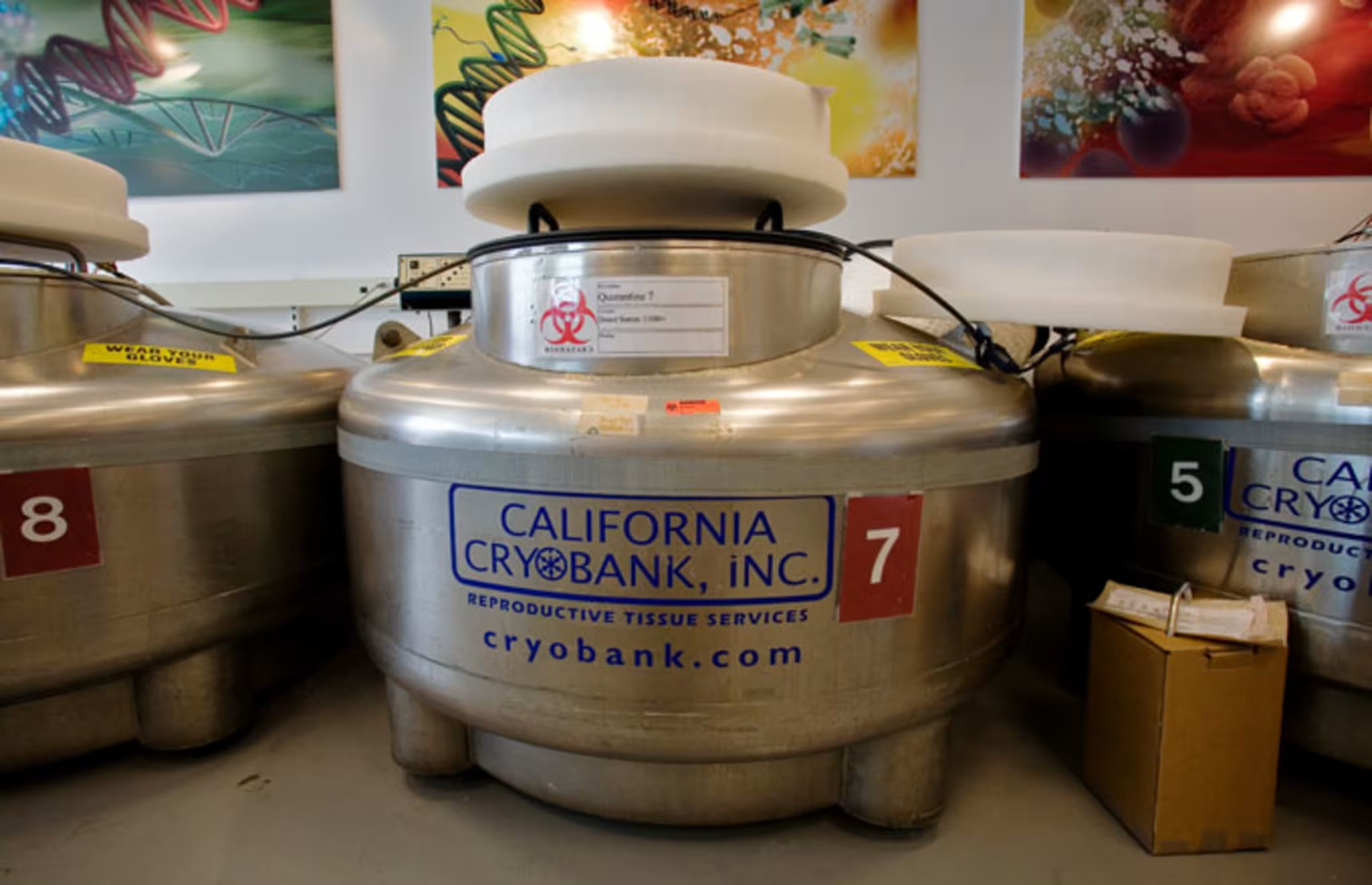
They also made the decision to get a judge's permission to retrieve their son's sperm for the sake of having "the possibility of preserving some piece of our child that might live on." His parents added that Peter had stated a desire to raise five children.
This past Friday, Monica and Yongmin asked a New York state court judge for permission to retrieve Peter's sperm prior to his organs being removed for donation. They also argued it was imperative that this be done quicky. "We are desperate to have a small piece of Peter that might live on and continue to spread the joy and happiness that Peter bought to all of our lives" said their court filing.
They further told the court Peter was their sole male child and that "it will be impossible to carry on our family's lineage, and our family name will die." Later that day the judge ordered a medical center to retrieve the sperm and store it pending a March 21 court hearing to determine the next steps.
Medical journals say that the first ever documented instance of post-mortem sperm removal occurred in 1980, with the first baby conceived from such a procedure being born in 1999. The person who ususally makes the request to acquire the sperm is a surviving widow. Requests from parents are rare, but have happened before.
Last year the American Society for Reproductive Medicine put out ethical guidelines on the posthumous collection of reproductive tissue for fertility centers, wherin they said that it was justified if agreed to in writing by the deceased. If not in writing by the deceased, they said programs should only consider requests if they're from a partner or spouse.
Related Stories


The 10 Craziest Sperm Donation Stories
If you think the Style Network's new documentary about a guy with 74 kids is wild, wait until you hear these real-life tales.

Fertility Doctor Arrested for Allegedly Using His Own Sperm 'Around 50 Times' to Impregnate Patients
Indiana fertility doctor Donald Cline was arrested for allegedly impregnating his patients "around 50 times" with his own sperm.




