Key Takeaways
- Cracker Barrel CEO Julie Masino will step down on August 10 after a turbulent year marked by a failed modernization push and will stay on as an advisor until October, while industry veteran David Deno takes over.
- Masino’s tenure was defined by a controversial logo and restaurant redesign that alienated longtime customers, forcing Cracker Barrel to quickly restore its classic branding even as same-store sales fell 1.8% in the latest quarter.
- Facing weaker sales and a roughly 4% stock drop following leadership news, the chain has tightened costs through layoffs, strict travel and meal policies, and new limits on alcohol reimbursements for employees.
Cracker Barrel is changing leaders less than a year after a botched rebrand triggered customer outrage, falling sales, and a full retreat from the company’s new look.
According to KMBC-TV, CEO Julie Masino will step down on August 10, the restaurant chain announced on Monday, July 27. She will remain with Cracker Barrel in an advisory role through October 9. David Deno, the former CEO of Outback Steakhouse parent company Bloomin’ Brands, will take over immediately after her departure.
Deno brings a long résumé in the restaurant industry to the job. He led Bloomin’ Brands from 2019 to 2024 and previously held senior roles at Best Buy and Yum Brands, the parent company of KFC, Pizza Hut, and Taco Bell. He now inherits a company with roughly 660 restaurants across 43 states and a brand identity that became a national talking point almost overnight.
The timing puts a spotlight back on Cracker Barrel’s rough year. The Lebanon, Tennessee-based chain has spent months trying to steady itself after a modernization campaign backfired with longtime customers and failed to deliver the sales boost executives were chasing.
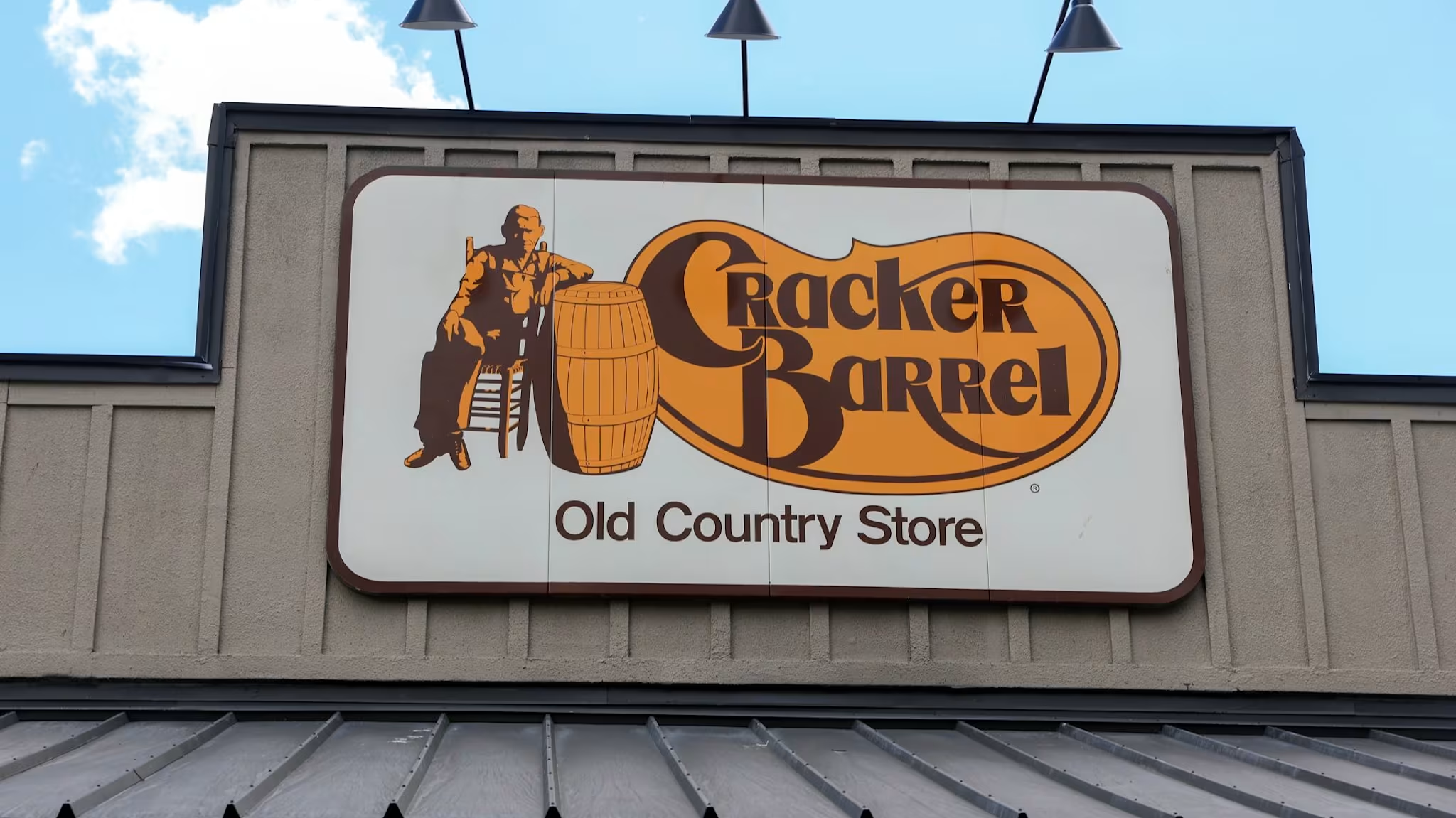
The controversy erupted last August when Cracker Barrel introduced a stripped-down logo featuring only the company’s name. The redesign removed the familiar image of a man seated beside a barrel as part of a broader effort to modernize the chain, refresh its dining rooms, and connect with younger customers.
That plan did not last.
Customers blasted the logo and updated restaurant designs, arguing that the changes erased the rustic identity that helped make Cracker Barrel recognizable. The backlash grew so quickly that the company abandoned the new logo and restored the original branding.
The reversal stopped the immediate controversy, but it did not fix the company’s larger problems. Cracker Barrel reported a 1.8% decline in same-store sales during its fiscal third quarter, which ended May 1. Shares also dropped about 4% after Masino’s departure was announced.
The company has already been cutting costs behind the scenes. Earlier this year, Cracker Barrel told employees to postpone nonessential work travel and directed those who still had to travel to eat most of their meals at its restaurants.
“Employees are expected to dine at a Cracker Barrel store for all or the majority of meals while traveling, whenever practical based on location and schedule,” the company wrote in an internal message.
Cracker Barrel also stopped reimbursing alcohol purchases unless an exception was approved in advance by senior leadership. Those restrictions followed layoffs and other belt-tightening moves as the company tried to manage weaker sales.






