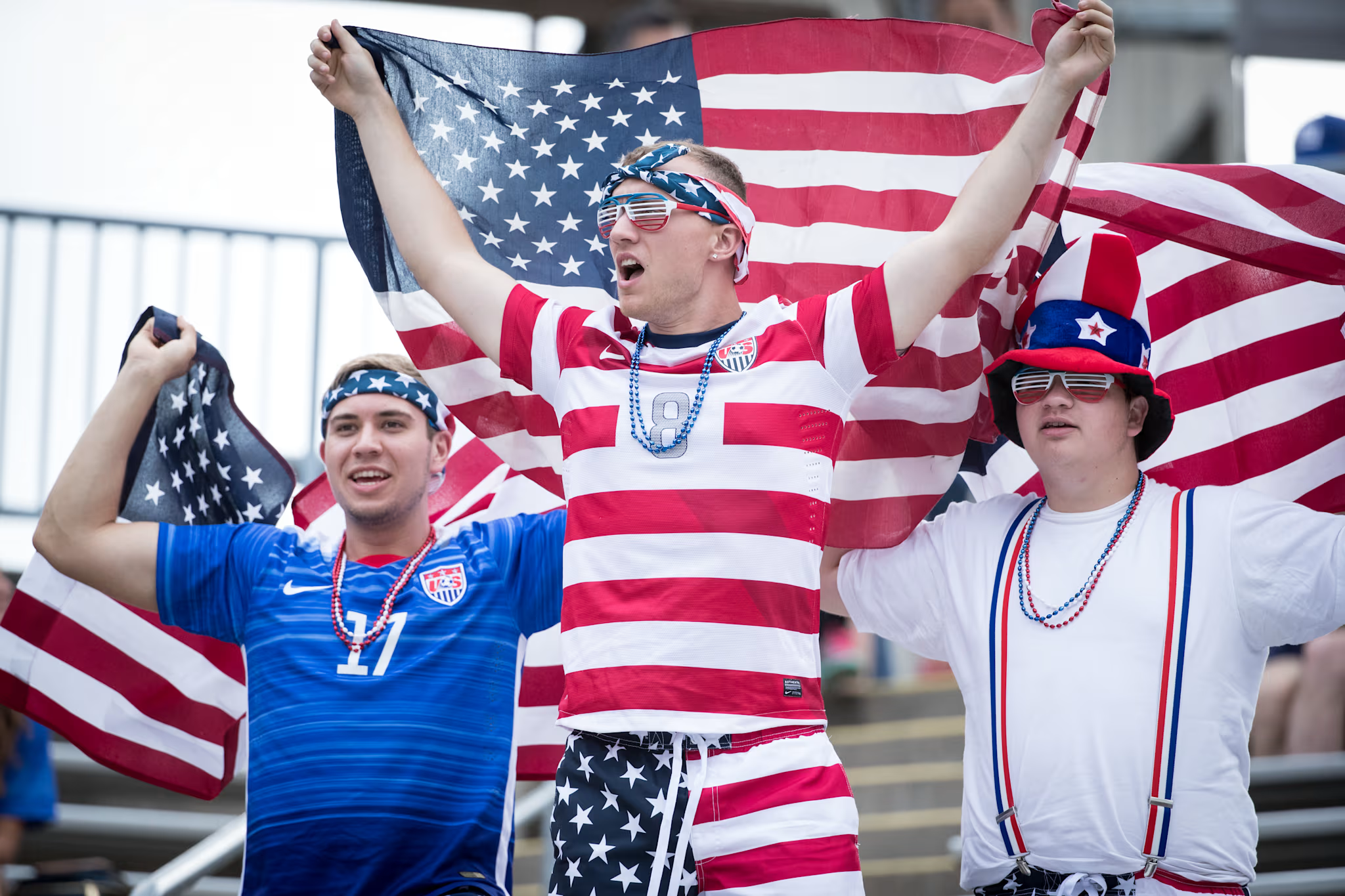
Supports of the US Men's National Team in 2017. Image via Getty
It’s a Tuesday morning at 9 a.m. at LIV and I’m sitting on a couch that’s been overrun with marks from high heels. I’m not at the famous Miami club after a long night of partying and blindly swiping my credit card. I’m here for the International Champions Cup, a tournament taking place primarily in the U.S. this summer, featuring clubs such as Real Madrid, Barcelona, Manchester United, Manchester City, Juventus, Bayern Munich, Liverpool, and more.
Past stars for these clubs—like Lothar Matthaus, who captained the 1990 West German National Team to a World Cup trophy, and Sami Hyypia, who played for Liverpool’s European championship from 2005—are here. So are American lovers of European soccer, who are getting hardons from Italian footballers, and big-money American sports moguls, who are, presumptively, looking to cash in on being associated with Manchester United playing Real Madrid on U.S. soil. I’m there as a modest New York Red Bulls supporters who just likes to follow his local club and has no interest in watching Messi or Ronaldo from the comfort of my own home on a Saturday.
I pissed a lot of people off when I said that Zlatan Ibrahimovic signing to the MLS’ Los Angeles Galaxy was a magnifying glass on what’s wrong with soccer in America. That people still ran to big names, preferred the European product on TV to watching a local club in person, and didn’t form meaningful, long-lasting allegiances with clubs in which they have geographic connections. I still feel that way, and no one can tell me any different.
A few hours after writing that story, I got an invite to hop on a plane a week later to attend this event.
I wanted to travel to the heart of the Euro snobbery that occurs in football in America to see how people viewed the sport. I kept hearing how a tournament that featured clubs that would play several times in states such as Michigan, New Jersey, and California would foster genuine, long-lasting connections for Americans who have an interest in soccer.
As champagne glasses clinked and you could see the execs counting up the expected money, I had the opportunity to talk to a handful of soccer legends. Except I didn’t talk about their careers, their former club’s chances of winning their league or landing a big-name transfer. Rather I just wanted to talk to successful European footballers about what they thought about the sport in America and what they thought American fans of the sport could do better and how they could better engage football. And, of course, whether having an affinity for a club thousands of miles away was the answer into becoming a bona fide football lad. Here’s what they had to say.
Lothar Matthaus, Bayern Munich, World Cup winner
You played in the MLS in 2000. How much has the sport changed in America since then?
The soccer has changed a lot in the U.S. since then. Now, almost 19 years later, I had my first MLS game here in Miami. We lost. The soccer has changed a lot [in America]. Especially the quality. The infrastructure of the clubs. The stadiums. You’re playing in a football stadium. More fans. What we’re having here today is helping to save U.S. soccer.
Do you think tournaments like this are good for the growth of the sport in the U.S.?
When they see the high-level soccer. They will go see U.S. soccer more and more. Soccer isn’t the number-one sport in the U.S. Here in America, you have baseball, American football, hockey, and basketball. It’s not easy for soccer to come become the number one.
Do you think that soccer is going to grow in the States?
I think the MLS is doing pretty good job here. I just think there’s too much competition. In Germany, you just have football, and then maybe it’s basketball and then handball. In America, soccer is in fifth place. But I think they’re doing a job and going higher and higher. Not only because of the level of play, but because of the interest, the media. What’s good about the U.S., you have a lot of influence from South America. David Beckham is going to start a club in Miami, and Miami needs a football club. You have so many Colombians, South Americans, generally here. They love soccer. You have to give them something special, like L.A. with [Zlatan] Ibrahimovic, maybe with an ex player from South America. Maybe James Rodriguez can play here. In years, yes? Now, he’s too young. Now he’s looking for the highest competitions.
What was it like playing in the MLS almost 20 years ago?
It’s different now. We were playing in Giants Stadium 20 years ago in front of 20,000. We couldn’t make an atmosphere in this big stadium. Now they have Red Bull Arena. Same stadium like they have in Salzburg. It’s a 1 to 1. Look at the difference. Now they have 20,000 spectators inside and they make a great atmosphere. It’s good for the football. It’s good for the soccer. It’s good for the atmosphere. And I think this is what you need in the U.S.
Sami Hyypia, Liverpool
What do you think of football in America?
I think there are more traditional sports in America, like ice hockey, basketball, baseball. Getting fans from these sports is very difficult. I remember when MLS first kicked off. They spent a lot of money to really develop it. The past few years have been kind of standstill. It’s not developing as quickly as people would like [it to]. There’s a lot of people in North America. There are football fans. However we can get a good experience for fans in football, we get more and more fans. Word goes around that there’s great atmosphere, a good game. I think the International Champions Cup is a good way. Bring those experience to the people.
Do you think it’s more important for Americans to support a local club or watch international football?
I think it’s good that they get the experience of football. I don’t know how many people know the rules of football. When I look at American Football, I don’t know every rule, and it’s difficult for me to follow. When you know the rules, it’s always easier. Maybe that education comes from something local. It doesn’t have to be an MLS team. It can be something smaller. If you know football, go onwards from there. But I think the local support for the teams is very important. I think it’s great for them to see the worlds stars come in here and play. It’s great to see it live. Because on TV, everything looks slower. To be there when Messi or Ronaldo come to play, you can really see the speed of the game. Football is getting quicker and quicker every year. I find what's more important is the local support. I know Liverpool has many fans all over the world. But local, local support is so important.
Liverpool supporters made news from them throwing smoke bombs at Manchester City’s bus and causing a huge atmosphere. Is there something Americans can learn from that?
I think you can learn from it. I don’t accept that kind of behavior. I don’t think it belongs in football at all. I have no problem when people are passionate, but there’s a limit to everything. You can be a passionate fan without doing those things. That went over the limit. But, yeah, passion is very important in whatever you’re doing.
Michael Essien, Chelsea
What do you think of football in America?
I think it’s a very good competition. Football in America is growing every year. They want to make their league very competitive, and it’s good that the competition is coming here.
Do you think the International Champions Cup is good for football in America?
It’s important. European clubs love to come to America and play. It’s good. They always have a big fan base here, and it’s good to play in front of fans from outside your country.
What do you think of MLS?
The MLS is growing. People are talking more about MLS. I do follow the MLS, and I’m happy with how things are going. It’s growing every year.
Would you have ever played in the MLS?
I would have loved to go to the MLS, but I think it’s too late now. It’s not about money. I love playing football.
What do you think of the football culture in America, are there things they can learn from Europe?
When I watch MLS, I see the fans singing and screaming. Similar to Europe. They’re more into the soccer now than before. So it’s good to see.
Joleon Lescott, Manchester City
What do you think of football in America?
It’s growing. It’s getting the crowds, which is the main thing. They find it entertaining, participating in the games. There’s also been a passion here, and it’s just keeping it that same way for them. At first, when they saw 0-0 draws, they couldn’t see the hard work that goes into that draw.
Do you think the International Champions Cup is important for football in America?
I think it’s just important to create soccer for them. When the NFL come to England, there’s no NFL teams there, but it keeps us in tune with players and teams. The bigger the names, the more fans are going to pay attention to the games.
What do you think of the MLS?
Very athletic. Had some friends playing here, some still do. Tactically, I think, they’re not as advanced as we are in Europe. But that will come over time. As more generations start to watch football and start playing at a younger age, they’ll get a better understanding of the game. The younger generations need time to develop, and I’m sure they’ll be a dominant force in football.
The U.S. Men’s National Team didn’t make the World Cup, do you think it was because of the older players?
Every team, whether it’s national or domestic, goes through transitions. Unfortunately, it came at the wrong time for the U.S. I’m sure they won’t make that same mistake again.
I don’t know what I was looking for on this trip. I really want to see football grow in the States. I want to see packed stadiums, I want people to realize that the sport isn’t just an international game, and I want genuine rivalries and passion to bloom and to read headlines about Orlando City supporters getting into a fracas with Atlanta United. I want there to be a unique, distinctly American version of what the rest of the world views as football culture.
I don’t think I found that at the Fontainebleu Hotel in Miami. There is, however, value in bringing these big clubs over to the States. Everything needs a starting point. A 14-year-old kid might need to go see Juventus play Benfica at Red Bull Arena this July to get their passion sparked for the sport. From then on, hopefully, they don’t view the sport as something that’s watched strictly in HD, rather it’s something you experience and live out in person. I’d be dumb to say this isn’t a massive deal. Seeing the world’s best footballers in your own country is a huge draw, and it’s the same reason people get excited to see Zlatan, David Beckham, or Thierry Henry play in the MLS.
But the questions that remain: How do you get Americans to care about soccer once these big clubs have traveled back to Spain, England, or Italy? Once El Clasico gets played in the States, how do you get us Yankees to genuinely support a local football club? Is watching international football on TV, singing songs about places we’ve never been, and chanting in faux accents the American version of football? I hope not. But let’s view things such as the World Cup and International Champions Cup as vessels to get people onto the soccer train. Maybe those people will eventually turn up at your local ground.




