None
Signature sneaker are some of the best-known sneakers of all time: think of the Nike Air Jordan, the adidas Stan Smith, even the Converse Chuck Taylor All Star. And for a long time, a signature shoe was an athlete's crowning achievement (off the field of play, of course) as only the best of the best saw their names stamped or printed on leather or suede.
Somewhere along the line, though, that changed. As the sneaker industry exploded in the '80s, new companies got involved, and a signature shoe became just another way to attract would-be endorsers. Athletes who wouldn't have even gotten paid to wear sneakers in the previous decade received signature models, and superstars received new models every year. There was a signature glut.
So it's not surprising that there are signature sneakers from days past that simply don't have the same caché as some of their more legendary brethren. Check out 20 Signature Sneakers That You Forgot About and reminisce.
RELATED: 20 Signature Sneakers That Need to Be Retroed
RELATED: The 25 Greatest Signature Sneaker Lines of All Time
FILA Jeter
Player: Derek Jeter
Year: 1998
FILA didn't just do basketball in the '90s, they also made a splash in the baseball market. There were the ill-timed decisions to ink Barry Bonds and Sammy Sosa, but those were preceded by a deal with Yankees youngster Derek Jeter, who made the jump to Jordan in 1999. As it turned out, they should have kept Jeter even if it cost them shots at Bonds and Sosa-but who knew?
Nike Air Alonzo
Player: Alonzo Mourning
Year: 1997
There was a period when Nike seemed to be turning out signature shoes for every NBA star on their roster, from Michael Jordan all the way down. Like Heat teammate Tim Hardaway, Alonzo Mourning got one of his own, the high-cut, boot-like Air Alonzo. And like later Heat teammate Gary Payton, Mourning received new colorups of his signature model long after it was disappeared from shelves. At least he doesn't have to feel entirely left out when he hangs out with Patrick Ewing and Dikembe Mutombo.
adidas Arthur Ashe
Player: Arthur Ashe
Year: N/A
Entirely rightly, Arthur Ashe is far better remembered for his legacies in tennis and humanitarianism than he is for his legacy in sneakers. But that's not to suggest he didn't have one. And while his Le Coq Sportif models recur regularly, it seems that his adidas have been all but forgotten.
Nike Air Max Super CB
Player: Charles Barkley
Year: 1997
It's hard to believe that a Charles Barkley shoe could be overlooked, but with most of the attention paid to his Phoenix-era product, it's actually easy to forget that he had signature shoes in Houston as well. The "Super CB" was the last great Barkley signature-the capstone to a killer line.
Duffs Kareem Campbell
Player: Kareem Campbell
Year: 1996
The best signature skate shoe ever? Maybe not quite, but the Duffs KCK (later revived by Kareem Campbell's own Axion brand) paved the way for many other Reebok-inspired skate designs, including Reebok's own collabs with DGK and Palace.
PONY McAdoo
Player: Bob McAdoo
Year: 1975
Bob McAdoo was a player without precedent, an MVP-level talent (1975) and prolific scorer who would wind up playing for seven different NBA teams. Not the ideal mold for a sneaker spokesman, but his hard-to-find PONY kicks made noise back when even having a signature model was a huge deal.
DC Danny Way
Player: Danny Way
Year: 1994
There is no DC shoes without Danny Way. His brother, Damon, co-founded the brand with Ken Block, and Danny had the first signature model and was featured in the company's first ad. At 39, he's still skating.
FILA Mashburn 2A
Player: Jamal Mashburn
Year: 1995
FILA famously gave Jamal Mashburn a Ferrari as part of his initial contract. And while neither he nor his shoes would wind up having the same impact as Grant Hill, they equally showed off FILA's mid-'90s tech and design.
Reebok Lobo
Player: Rebecca Lobo
Year: 1997
Rebecca Lobo was one of the first WNBA stars, becoming one of the initial members of the New York Liberty in 1997 following an All-American career at UConn. Sneaker companies were quick to capitalize on the women's game, and Lobo also became one of Reebok's first female basketball endorsers. At 40, she's already a Hall of Famer. Can a retro be far behind?
Nike Air C14
Player: Cynthia Cooper
Year: 2000
Cynthia Cooper is 50, which makes her the same age as Michael Jordan. Her impact on the women's game was similar, as she won Olympic gold and multiple championships. And the WNBA allowed her to display her talents professionally in her native country-despite joining the league at 34, she still managed to pile up two MVPs, three scoring titles and four chmpionships (complete with four Finals MVPS). Her signature Nikes may not be as well-remembered as Sheryl Swoopes', but they should be.
And1 Marbury II
Player: Stephon Marbury
Year: 1997
Neither of Stephon Marbury's And1 signature shoes have been retroed, and that's a shame. The 1 was significant as it marked And1's entry into the sneaker market, but the II's sleeker, Air Max 97-like design gave it the aesthetic edge. Forget Starbury, find these.
Etnies Natas Kaupas
Player: Natas Kaupas
Year: 1989
Natas Kaupas was a street skating originator, and Etnies rightfully designed him a signature skate shoe back when no one was getting them. Virtually everything Etnies has done since all came from here.
Spot Bilt X-Press
Player: Xavier McDaniel
Year: 1986
The Spot Bilt X-Press was a great basketball sneaker for its time, and was only better due to it's being the signature model of a guy who shaved his eyebrows to look more intimidating and once tried to strangle a guy on the court. Well, at least once. Long live the X-Man.
Apex Mailman
Player: Karl Malone
Year: 1998
Apex never quite reached the heights their name implied, but for a brief run in the 1990s they were making uniforms for the best teams in college basketball (including Arkansas and Kentucky) and signature shoes for the best power forward in the game. Karl Malone may be better known for his L.A. Gears, but these Apex joints actually weren't that bad.
PONY Retton
Player: Mary Lou Retton
Year: 1989
Back in the '80s, Olympic gymnasts who won gold medals became superstars. Mary Lou Retton was on everything from talk shows to Wheaties boxes, and while gymnasts don't even wear sneakers while competing, that didn't stop PONY from giving her some signature love.
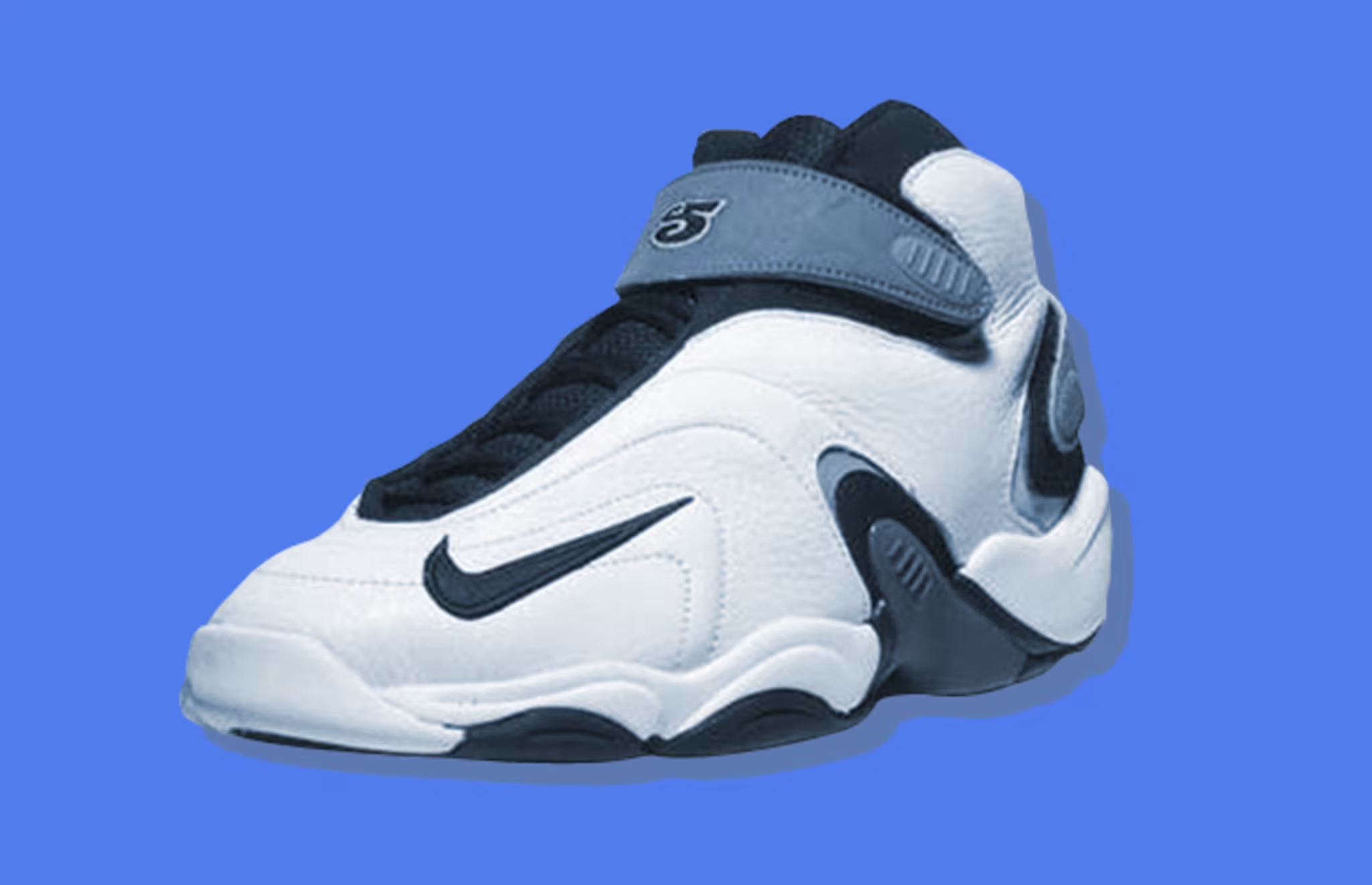
Nike Air Zoom S5
Player: Dawn Staley
Year: 1999
Apologies to Allen Iverson, buct back in the late '90s Dawn Staley was the coldest PG out of Philadelphia. And her S5 can go up against virtually any shoe in the Iverson line, let alone anything else Nike was putting out in the late '90s. If it was released in men's sizes, this would have been another killer crossover.
adidas Robert Haillet
Player: Robert Haillet
Year: 1964
Before they were re-named for Stan Smith and became one of the most popular sneakers on the planet, adidas's initial foray into leather tennis shoes was named after Robert Haillet, a lesser-known French player. Would they have become as well-known if the Haillet name stayed? Alas, we will never know.
Nike Air Max Duncan II
Player: Tim Duncan
Year: 2002
Tim Duncan was a Nike guy back when Mr. Robinson still made the paint his neighborhood, even into the early 2000s. His signature Nikes were inspired by his history as a swimmer, and their Kukini-ish lines deserve a comeback. Maybe when (if) he retires?
Karl Kani Sport
Player: John Wallace
Year: 1996
Stephon Marbury and Allen Iverson weren't the only rookies to get signature shoes straight out of the 1996 NBA Draft. There was also John Wallace, Syracuse star and 18th overall pick of the Knicks, who signed on to be the face of Karl Kani's new basketball sneaker division (along with some guard from Arkansas-Little Rock by the name of Derek Fisher). Do you even remember that Karl Kani made sneakers?
Air Buds
Player: Air Bud
Year: 1997
Yeah, well.