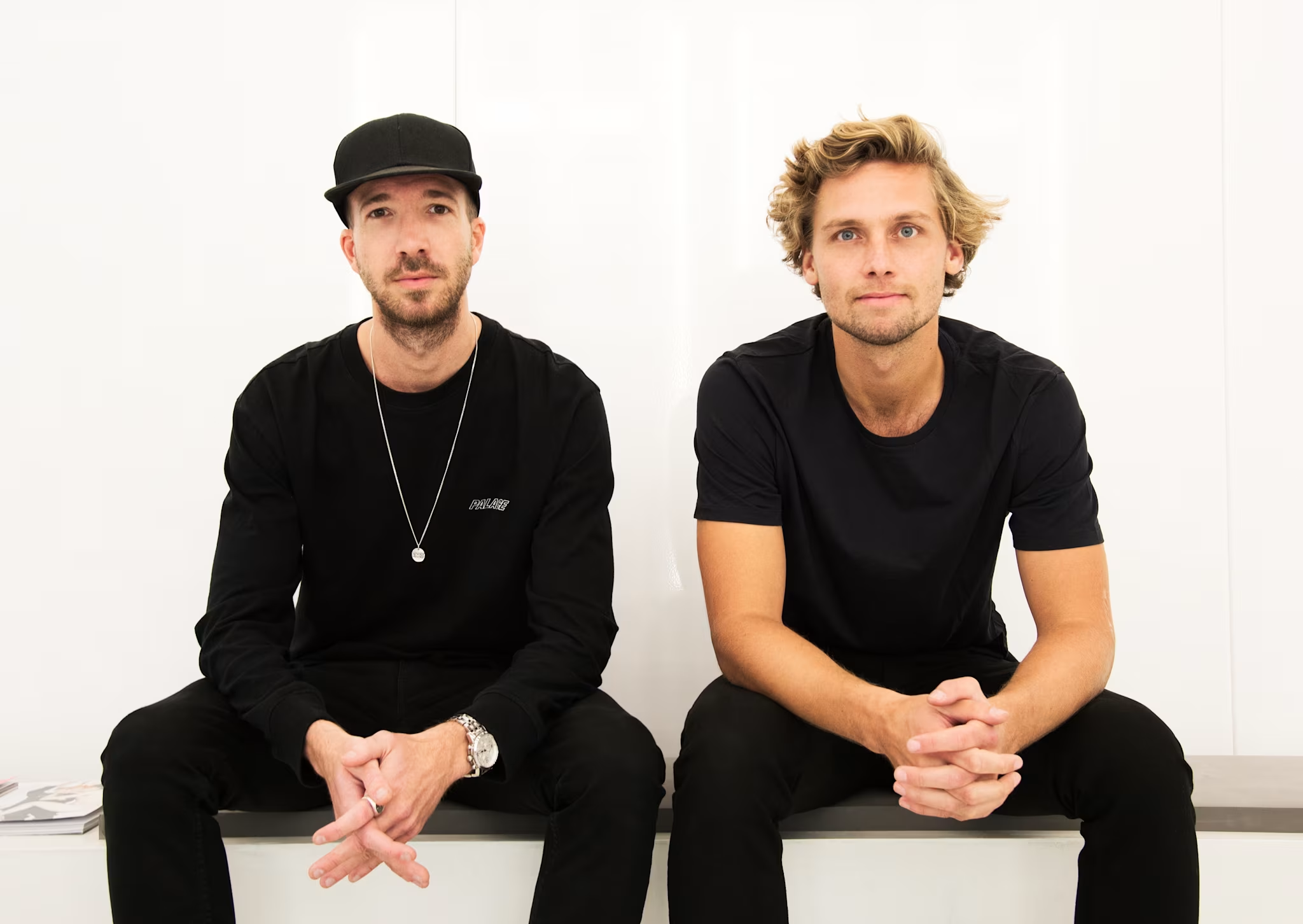
It’s been a pretty quick route to the top for Axel Arigato. Since they started making minimalist sneakers two years ago, they’ve built a social media empire, sold to over 100 countries and now, finally, they’re opening a bricks and mortar store in London.
The store is an extension of the ethos at the heart of the Swedish brand. It’s minimal décor and marble pedestals wouldn’t look out of place in an art gallery, while the Japanese magazines and books on show are a nod to one of Axel Arigato’s biggest influences. To mark the launch of their store, and to look back on their crazy past two years, we sat down with the brains behind the brand, Max Svardh, the creative director, and Albin Johansson, the CEO.
It’s been a pretty quick route to the top for Axel Arigato. Since they started making minimalist sneakers two years ago, they’ve built a social media empire, sold to over 100 countries and now, finally, they’re opening a bricks and mortar store in London.
The store is an extension of the ethos at the heart of the Swedish brand. It’s minimal décor and marble pedestals wouldn’t look out of place in an art gallery, while the Japanese magazines and books on show are a nod to one of Axel Arigato’s biggest influences. To mark the launch of their store, and to look back on their crazy past two years, we sat down with the brains behind the brand, Max Svardh, the creative director, and Albin Johansson, the CEO.
Why do you think having a physical store is important when you as a brand have really proven how useful the internet can be?
AJ: For us as a brand, it’s not only about the product; the visual aesthetic is very important to us. We have a big online and social presence, however - by going offline that we can show our true identity and the DNA and what we stand for in terms of the pedestals, the walls, the interior, the ceilings, lamps, everything is so important for us.
I think also there’s this idea of stores as destinations. A store you like to go to not just for the clothes or the shoes but the experience.
MS: Exactly, and I think today you need that otherwise you’re doomed. If you don’t think of it like that, you’re just a hole in the wall. You need to give the customers a reason to enter your stores today, much more than you did ten years ago. Today you really need to deliver in terms of visuals and the promise of the experience.
AJ: We have books, magazines, if they have time we have coffee, we have water, we will have beers as well. They can charge their phones; have the wifi if they want to. Come to us between meetings instead of going somewhere else. We want to create a real connection with our customer and offer an experience that stays with them long after they have left the store.
With the architecture and the furniture that’s in the store, are you trying to curate an Axel Arigato lifestyle?
MS: We really like that Colette type of feeling where a customer can come in and buy something for £10 up to £500 and it doesn’t have to be a sneaker or a tee, it can be anything. We want to create this interesting environment where customers can find everything, from small things, to big things, to clothing. That is in line with the whole package and creating something new and fresh that is constantly changing.
You’ve touched on it a bit; the architecture of the store is a big thing. The size of the store, the steps, and the tables you’ve built. Why is that?
MS: From the beginning, the whole idea behind the store was actually not to have it look like an ordinary sneaker store where you have shelves all over. We wanted to create the gallery feeling, that’s why we wanted to use these stone podiums and create a lot of open space, with products given more than enough room to breathe.
Social media is a huge thing for you, and you did really well off the back of that. What was your strategy behind that?
AJ: When we launched a bit more than two years ago, it was only me and Max so we pretty much had to just concentrate on one thing and by that time we knew that social media was already a big thing and that Instagram was very popular and growing a lot. We just thought “ok let’s go big on this” and see how it works. We don’t like to do traditional things, we want to do untraditional things because that’s how we see the brand overall, and that’s how we are as people. We don’t care what others are doing. If we had a feeling that we think this is right then we’ll do it. It’s the same thing with the drop of the week concept. Two years ago; no one was doing what everyone is talking about now, direct to the market.
I think that’s the really interesting thing about drop of the week, that’s such a big break from the traditional collections model. And now that’s the big thing.
AJ: With the drop of the week thing, one thing was that we wanted to be a global brand and we don’t want to be seen as a Swedish brand, we’re one world with one globe: we’re one brand. And since we’re selling to Australia, South America, as well as Canada, Sweden, Europe, the seasons are different. But now also people are wearing sneakers in the winter and the summer. So why should we actually change the collections when people want to buy whatever they want to whenever they want to?
MS: The idea of Axel Arigato started with us just questioning how and why you make things. The way we work is not traditional and I think that’s one of the reasons why people enter our brand.
Why did you decide to expand to stocking other brands, like Matthew Miller, in the store?
MS: Nowadays, you need more. That goes back to the Colette feeling where you can find a lot of things. Look at Dover Street Market; they do it. If you have some clothing, you have merch, you have books,at least for me, makes it. I can go in and buy a pair of sneakers, but also a tee, or a book, or a chair, or a skateboard.
AJ: Yeah, many brands or people are complaining about retail, and that's because they are not changing. They are working the same way as they have been doing for years and consumers want something new today. We are different than we were ten or twenty years back. We as a brand or as a business need to adapt to that and offer the customers what they want. And what they want is to be a part of something and not just buy like a pair of shoes or a sweater or a car. It needs to be something more; being a part of a movement.
It seems to me that, rather than just buying sneakers because they like sneakers, people more than ever want to buy into an identity. I think that’s a huge thing now.
AJ: It’s not everyone that buy’s a Tesla, right? The person who buys a Tesla, they buy a Tesla because they want to stand for something. Like I’m taking care of the environment as well as being cool. If you buy Nike, it’s one brand. Or Patagonia, I love Patagonia personally, why? Because they stand for something else, it’s more than just a t-shirt. It’s what they’re doing for the environment. That’s what we want to do as well but in a different way. So the best brands, they are not suffering with retail. They are doing really well. But the brands that don’t have like a history or a story or are doing something else, they suffer. It’s no more difficult than that. It all fizzles down to the culture and the lifestyle that our products and brand suggests, that people want to be a part of.
One of the things you’ve kind of touched on, with the price point and with social media, is that the brand is quite accessible. Why is that accessibility such a big thing for you guys?
AJ: Pretty much everything we’re doing goes back to ourselves. Before we started Axel Arigato we did buy shoes and we did wear sneakers that were quite expensive. We thought, “do they really need or have to be this expensive? Why not take down the price point, have a different business model and make it more accessible?” I will never say that our shoes are cheap, because they’re not; there are much cheaper shoes out there in different stores. But it’s a very good price in terms of the product that you get, they’re all handmade, premium Italian materials, a high end sneaker sole, calf leather lining and so on. It’s very difficult finding a shoe with that quality for this price. For ourselves, we couldn’t buy ten pairs of expensive sneakers per year; I had to pick and choose like one pair a year. So for guys like us that could maybe buy two or three pairs, if they like our brand, then they can actually buy our products.