Image via Complex Original
There’s an elephant in the sneaker room and its name is Kanye West.
Over the last decade, ‘Ye has steadily built up a footwear resume that’s become just as prolific as his musical output. But much like his latest album, there’s been a noticeable shift in the interest—or at least the conversation—around his shoes. What were once must-have sneakers worthy of pulling all-nighters, recruiting friends and family for raffles, and scouring overseas sites in hopes of a retail come-up have become pairs that can literally be picked up days after the drop. Adidas is even now putting marketing dollars behind sneakers that once sold themselves.
In theory, this is very much a good thing. It fulfills West’s infamous promise of everyone who wants Yeezys having a chance to get them, and it provides access to people who legitimately want to wear the shoes. But at what cost? Not only are the newest Yeezys having trouble moving at retail, but resell profits are down too, both of which play into the sneaker’s perceived “cool” factor—whether we want to admit it or not.
As it turns out, there’s likely not one singular cause for the shift in Yeezy mania. A number of factors have contributed to the current climate, and only time will tell if ‘Ye and Adidas can turn the tide. Scroll down as we break down the biggest reasons Yeezys are slowing down.
They're Too Expensive
Yeezys are fucking expensive. $300? No thank you. It doesn’t matter if there’s a resale value at the end of the retail rainbow. Asking a 16-year-old to fork over all they might make in a month is a lot. We’ve seen in the past what happens when prices of sneakers go up: people don’t buy them as fast, and it certainly makes it harder to tack on another $75-$100 to make a profit on the resale. The greatest example is when Jordan Brand dropped its remastered program in 2015, raising the price from roughly $170-$180 to $190-$220. People stopped buying them. The thing a lot of people don’t realize is how much resellers influence the retail market. No one is running to the store five times a week to shell out money for every sneaker release—a lot of that is influenced by the people who are looking to make money off of shoes. The resale price on Yeezys has continued to decrease as Adidas makes more and it doesn’t feel as special to the cool guys and girls. People in suits have even been spotted wearing them lately. As that continues to happen, and the only people who can afford them have jobs that require suits, they can be expected to move slower and slower every release.
Kanye's Politics
Michael Jordan was once attributed to saying, "Republicans buy sneakers too." That statement may be true and whatever your personal politics are, there's no denying that the political climate today is way different than it used to be in 1990. We've seen sneaker brands like New Balance and Under Armour take heat in the past couple of years for just being loosely connected to the current administration.
As anecdotal as the evidence may seem, it's safe to draw the conclusion that if the man behind some of today's most hyped sneakers is sitting in the Oval Office with a MAGA hat on and talking about how Adidas and President Trump made him a billionaire, there may be some blowback from at least one big group of buyers on the next sneaker release. Democrats buy sneakers too.
Adidas Lost Its Juice
There was a time when Adidas was selling out multiple random colorways of general release NMDs on weekday mornings, but that time certainly isn’t now. Even re-releases of some popular Ultra Boost models have failed to generate much excitement thus far. Boost still reigns supreme at the top of casual cushioning ladder—it’s widely known, instantly recognizable, and often imitated. But Adidas has been largely complacent when it comes to building on the success it brought to the brand a few years back.
The Ultra Boost, the brand’s most popular non-Yeezy model in recent memory, has remained mostly unchanged since it’s 2015 debut. There have been updates to the upper pattern, cageless variations, different cuts, and countless colorways, but it’s still basically the same old Ultra Boost that the sneaker world fell in love with three years ago. And the world wants something different to love in 2018.
New models that the brand has tried to push have fallen on def ears. The Prophere, Deerupt, and POD System have all been met indifference. Consortium drops that were instant sellouts a few years back are now hitting sale racks. Even Pharrell Williams’ collabs have lost the clout that they once held. The sneaker world was ready for something new when Adidas began capturing long lost market share over the past few years, but has been offering more of the same ever since.
Too Many Yeezys
Fresh off releasing his debut sneaker with Adidas in early 2015, West stopped by Ryan Seacrest’s radio show and made a bold proclamation: “Eventually everybody who wants to get Yeezys will get Yeezys. Adidas has promised me that because there's so many kids that have wanted them that couldn't get them and I talked to the heads at Adidas and they said we can make them.”
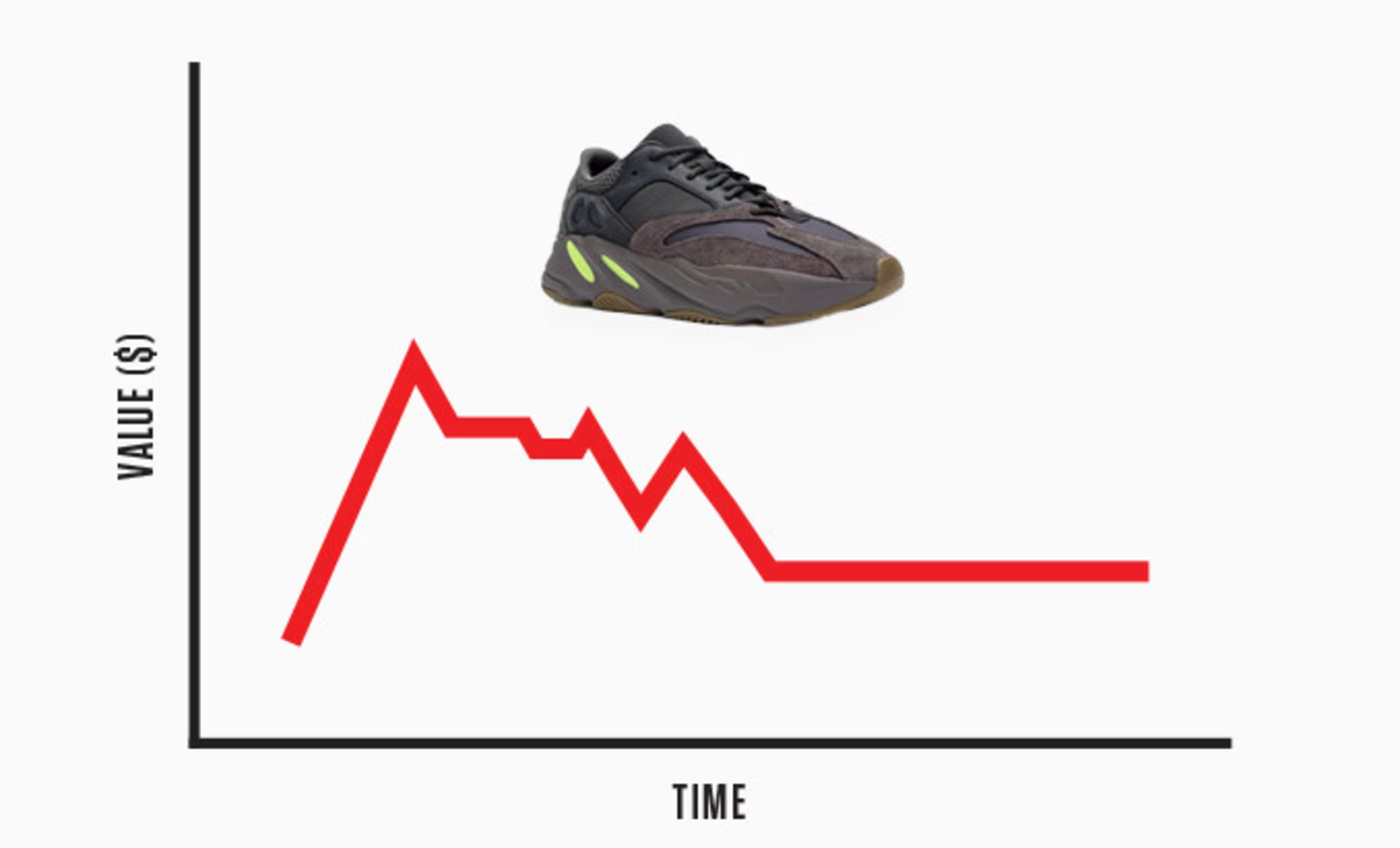
It took awhile, but Kanye eventually made good on his promise. For better or worse, Yeezys have steadily become more and more available with each release. Styles that were once scarce like the “Zebra” Yeezy Boost 350 V2 and the “Wave Runner” Yeezy Boost 700 have been restocked multiple times, causing the shoes to not only saturate the streets but flood the secondary market. The “Zebra” colorway took an especially notable hit, dropping from steady sales of over $1,000 following its initial run to its current market value of sub-$400 after a major restock—with yet another on the way next month.
But the biggest shift in Yeezy production came last month, when Adidas allowed preorders for the “Triple White” Yeezy Boost 350 V2 for what it dubbed the “most democratic drop in Yeezy history.” Exact numbers were not made public, but there was much talk about the figure surpassing the million-unit mark. With this mass drop fresh in the memories of fans and resellers, it’s conceivable to see why one of its immediate follow-ups would be met with less enthusiasm.
When it comes to numbers on the “Mauve” Yeezy Boost 700 specifically, there were plenty to go around. Leak account py_rates reported that Adidas’ online stock for the U.S. alone was just shy of 100,000 pairs, while September’s “Wave Runner” release included less than half as many pairs online. With this many pairs in circulation, the sneakers are not only easier to get than ever, but they end up losing much of the mystique that came along with the more limited styles.
Trends Are Changing
What once seemed like an impossibility is becoming one of the biggest problems for the Adidas Yeezy line right now—the hype around it is dying. This has never seemed more relevant than with the release of the “Mauve” Yeezy Boost 700 this past weekend. While the OG “Wave Runner” colorway is considered one of the best Yeezy releases to date by many fans, the dark-toned “Mauve” pair never felt as special. Brown sneakers have just never been very popular aside from the various “Wheat” iterations that have hit stores over the years and are harder to pull off— they can't be thrown on to match just anything.
The “Mauve” 700 also suffers from being part of a fading trend. When the 700 debuted, the “dad shoe” wave was still climbing to its apex behind models like the Balenciaga Triple S leading the way. People under the age of 50 even started wearing Nike Air Monarchs unironically. While not completely dead, the chunky sneaker trend is certainly not at the level it once was, at least in terms of mainstream style—which hurt the anticipation around the “Mauve” 700s.
Yeezys just aren’t the sneaker anymore. Sure, they are still popular, but oversaturation of models like the 350 V2 had already dimmed the excitement a bit. Virgil Abloh’s work with Nike seems to have overtaken Ye at the top of the hype food chain (although Nike is oversaturating that right now too) with every release selling out in mere minutes and flipping for hundreds over retail on the resell market with ease.