None
Lead
In the final few hours before what seems like an eternity of anticipation for the next iPhone finally comes to a close, those of us in the tech community have suddenly found ourselves facing some hard realities and one simple, but consistently elusive, question: Will there even be a next iPhone?
The debate over whether Apple will introduce a full-fledged successor to the iPhone 4, or merely an incrementally upgraded follow-up called the "iPhone 4S" has gone back and forth for the better part of the year. Up until last week, most had agreed that essentially both propositions were true: Apple was going to unveil both an iPhone 5 featuring a new design, and an iPhone 4S with boosted internals.
But then inventory listings from Apple partners started leaking, and the iPhone 5 was nowhere in sight.
It now looks like either Tim Cook and Co. have done an amazing job keeping their true plans under wraps, or we really won't be getting an iPhone 5 this year at all. Read on to find out the case for both arguments, and what we think they mean for Apple's future.
Pros
Scenario 1: Tim Cook Unveils An iPhone 5
If at One Infinite Loop tomorrow, Apple's new CEO Tim Cook and the usual cast of lieutenants (iOS chief Scott Forstall and Marketing head Phil Schiller among them) take the wraps off an iPhone 5, Apple will likely take back the smartphone conversation from competitors at Android and Microsoft, thereby meeting admittedly high expectations. The company did it before last year with the iPhone 4, wowing audiences with a suite of new features, like FaceTime, and pairing them with gorgeous new hardware.
Expectations that Apple has an all-new iPhone planned date perhaps as far back to the iPhone 4's antenna issues of last Fall, and the subsequent firing of Apple's senior hardware chief Mark Papermaster. From there, we've heard persistent talk that the next iPhone would feature a new design, and that this design would incorporate, among other things, a larger, edge-to-edge screen in order to compete with the growing displays on Android devices.
We've also heard that the company has been working to make the iPhone slimmer, engaging in a contentious back-and-forth with carriers about shrinking the sim card, or getting rid of it entirely, so that it doesn't take up as much space.
And then there are the reports that Apple will reconcile the next iPhone with the design of its latest non-iPhone devices, introducing a new, aluminum, unibody enclosure. Joshua Topolsky at Thisismynext created a widely disseminated mock-up that painted the iPhone 5 essentially as a smaller iPad 2.
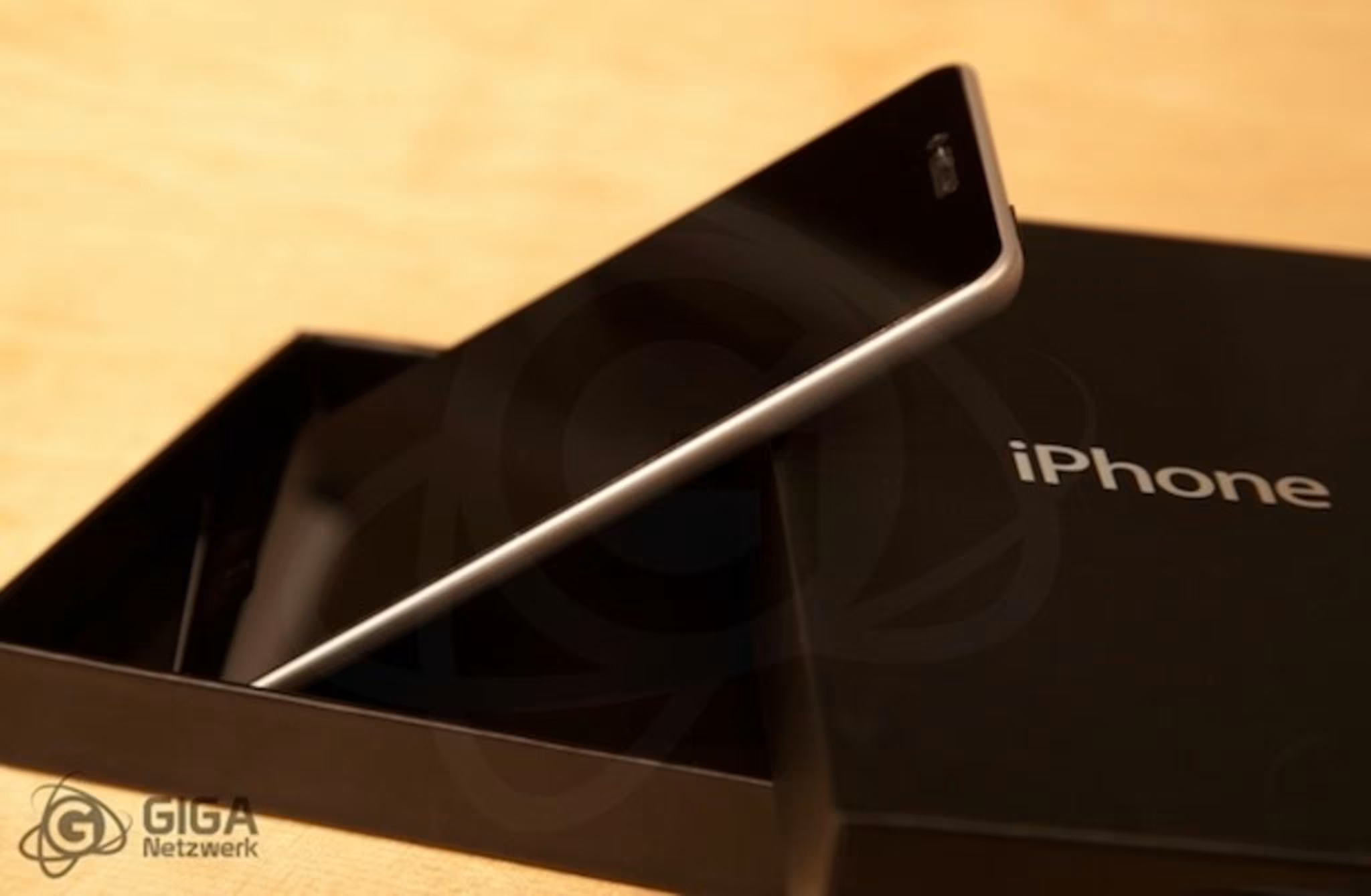
Leaks from case manufacturers, including the one above from CaseMate, lent credence to the belief that the new iPhone would indeed have a new design. Eventually, ideas of what the iPhone 5 will look like had become so crystallized that a few enterprising Germans beat Apple to the punch and built the phone themselves.
Cons
Scenario 2: Tim Cook Introduces the iPhone 4S and an 8 GB iPhone 4
At this late date, you would think concrete evidence of a global, highly anticipated product like the next iPhone would have to exist somewhere... and you'd be right. On Friday, a beta release to developers for a new version of iTunes leaked from Apple itself, and embedded in the code is an explicit reference to an "iPhone 4S." An iPhone 5, however? Not mentioned.
Also last week, a product label for the next iPhone leaked from China. The label is explicitly for an "iPhone 4S, White, 16GB" and was associated with Apple's official codename for the next iPhone, "N94." A similar iPhone 5 product label? Nowhere to be found.
Finally, today an inventory listing from the major European carrier Vodafone, which owns a 45 percent stake in Verizon, clearly lists several models of an "iPhone 4S" (the usual 16GB and 32GB a long with a new 64GB version). Another new iPhone is mentioned, too, but it's not the iPhone 5. Instead, it's an 8GB version of the iPhone 4, which Apple will almost certainly sell at a discount. Gizmodo even snapped a photo of the cheap iPhone 4 at the Foxconn manufacturing plant in Brazil.
Wrap-Up
Final Thoughts
It's been 16 months since Apple last revealed a new iPhone, an unusual length of time for the company. As Android has continued to expand its lead in marketshare with a slew of new hardware devices that offer next gen capabilities even the most optimistic Apple enthusiasts don't expect (4G, NFC, etc.), the iPhone faithful have rightfully been anticipating a true successor to the phone that, in Apple's own language, "changed everything. Again."
If Tim Cook and Co. don't deliver an iPhone 5 tomorrow, it's fair to say that disappointment among consumers and the market will be palpable. The company is at a pivotal moment right now, and if it ducks the opportunity to fundamentally change the conversation with a new iPhone on Tuesday, the only people with cause for celebration will be its enemies.