Permanent Midnight is a weekly Complex Pop Culture column where senior staff writer, and resident genre fiction fanatic, Matt Barone will put the spotlight on the best new indie horror/sci-fi/weirdo cinema, twisted novels, and other below-the-radar oddities.
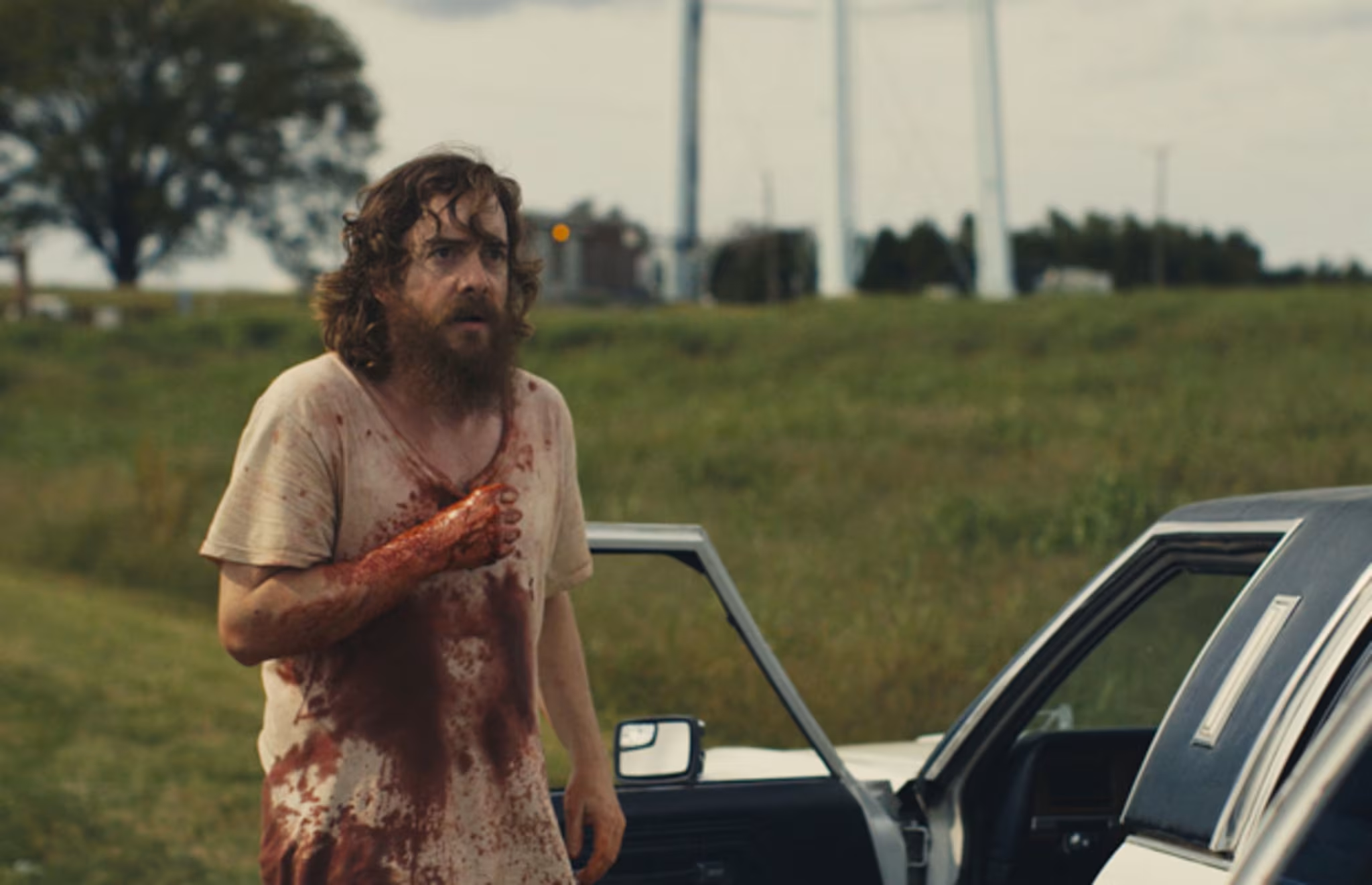
There's a scene more than halfway into the excellent Blue Ruin that includes my favorite line of dialogue in any 2014 movie so far. The film's main character, Dwight (Macon Blair) has just been saved for a lonely, helpless execution by his old friend, an ex-military grunt named Ben (Devin Ratray, the actor formerly known as "Buzz" from Home Alone—remember him?). Looking at the guy who's just had half of his face blown off, Dwight, both bewildered and morbidly curious, mutters, "His head?" To which Ben, who's killed before and knows too well how it looks and what it feels like, replies, simply, "That's what bullets do."
It's such a smart, precise, and multi-layered line, courtesy of Blue Ruin's writer and director, Jeremy Saulnier. A lean, mean film that has a classic revenge premise but is decidedly anti-revenge, Blue Ruin presents violence as a destroyer. Dwight, an aimless and grungy drifter coping with his life's fallout following his parents' murders, is out for blood, seeking fatal vengeance against the man who he believes offed his mom and dad and has just been released from prison. But Dwight is no badass—soft-spoken, not physically fit, and gentle in his movements, he's a one-time nice guy driven to despair and trying to survive his self-administered destitution and depression. Thus, when it's time for him to confront his parents' killer and return the favor, he doesn't have a plan. He's probably never even harmed a fly before the start of Blue Ruin's events.
He doesn't have a clue what bullets do, nor how to react to splattered brains and a half-ripped-off face. But that's the road he's chosen to go down. Next stop: a dead end.
Made for a humble $425,000 and shot around Saulnier's and Blair's native Virginia stomping grounds, Blue Ruin is the self-made, rough-and-tumble product of two lifelong best friends' shared love of dirty and brutal genre cinema. In the sixth grade, they bonded over their mutual affinity for films like Aliens; in 1988, when Saulnier was 11 and Blair was 13, they put their common filmmaking aspirations to use by home-making a movie called Megacop. "It was a sleazy, cops-versus-cocaine-dealers action film," Blair told the New York Times, "shot in sequence on Super 8 because we had no editing capabilities. For the blood, we had all these Ziploc bags of paint." In high school, they revisited that "sleazy" world in a sequel, Megacop 2000, prefacing their first feature film together, the gory 2007 horror-comedy Murder Party, about a guy whose trip to a Williamsburg, Brooklyn, Halloween party turns into a knowingly absurd fight for survival against self-obsessed hipsters trying to kill him for their "art."
All of those earlier projects sound like good fun, sure, but they're all playful larks. Blue Ruin, however, is something else entirely. Within an American indie genre film scene that too often favors wink-wink reverence to the '70s and '80s or intentionally silly bloodshed, sometimes both at the same time, Saulnier's second release as a writer-director is admirably refined. Through minimal dialogue and without any flashbacks or insecure exposition, Saulnier develops a full-bodied protagonist in Dwight—he's an everyman forced to become Charles Bronson even though he's really Ned Flanders. The "ruin" half of the film's title, presumably, represents what Dwight does to himself. As Saulnier's pic escalates towards its corpse-filled and perfectly staged ending, Dwight is no more satisfied than he was while driving around, and living, in the 1990 Pontiac Bonneville seen during Blue Ruin's opening moments.
Payback via homicide always seems euphoric in movies of this kind. When big-deal movie stars like Jason Statham terminate the bad guys who wronged his family, you're expected to applaud and smile. There's none of that secondhand joy in Blue Ruin. You're repeatedly rattled, and then, in the end, left to sift through the wreckage in search of meaning. The kicker, though, is that, sometimes, despite its seemingly noble intentions, death is just meaningless.
Dwight learns that the hardest possible way. Near the end of Blue Ruin, he finds himself face-to-face with the equally bloodthirsty family of his target:
One of them: "We're gonna fucking kill you!"
Dwight, somberly: "I wish you would've."
Much of the credit for the character's impressiveness goes to Blair, for whom Saulnier wrote the part, and it shows. Blue Ruin thrives on their sharp chemistry as actor and director. Blair's practically in every scene—the film's emotional and visceral impact rest on his mostly slouched-down, non-threateningly hangdog shoulders. From start to finish, though, Blair exudes a tremendous amount of soulfulness and vulnerability, giving Blue Ruin's quieter moments a deep resonance and its many bursts of grisly carnage a devastating truthfulness not typically conveyed in out-for-blood revenge cinema.
Shortly after Dwight's startling lesson about what bullets do, Ben preps him for what's potentially a suicide mission, one Dwight feels he needs to do if he's to ever do right by his late mother and father. Ben hooks his buddy up with the necessary firepower. Then, before sending him on his way, Ben says, "No speeches, no talking—you point the gun, you shoot the gun."
As they say, revenge is a dish best served cold. In Blue Ruin, it tastes bittersweet.
Blue Ruin opens in limited theatrical release and on VOD today.
Written by Matt Barone (@MBarone)
RELATED:The Best Movies Complex Saw at Fantastic Fest 2013
RELATED:Permanent Midnight: An E.T. Scarlett Johansson Represents for Single Men Everywhere in Under the Skin
RELATED:Permanent Midnight: Getting Nasty With the Ultimate Terminator/Fire in the Sky Fan Film




