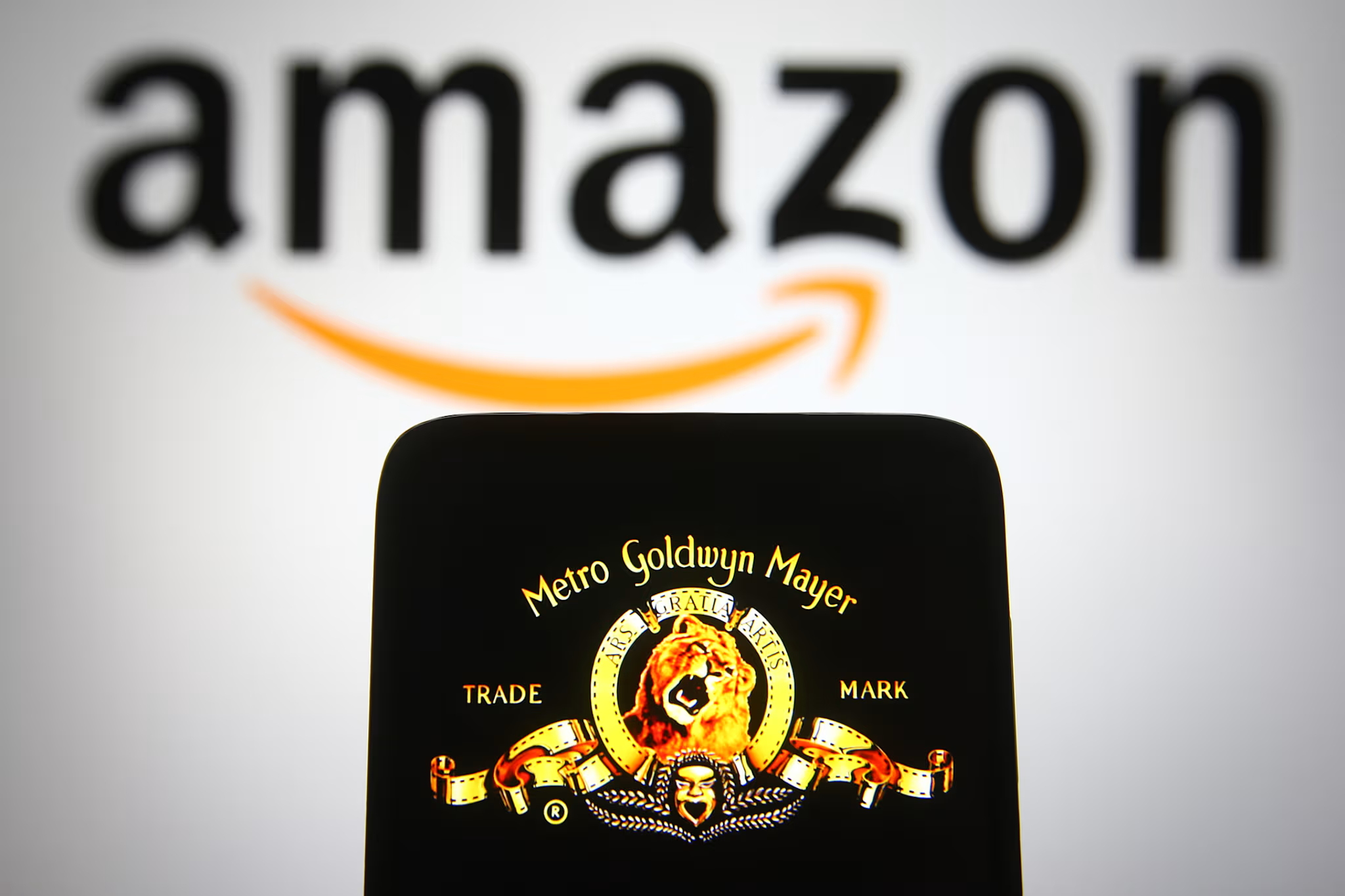
Image via Pavlo Gonchar/SOPA Images/LightRocket via Getty Images
When it comes to keeping consumer’s eyeballs glued to your streaming service, content is king. Perhaps that’s why news this week that Amazon is acquiring MGM for roughly $9 billion dollars wasn’t a surprise. After all, Discovery and AT&T recently just merged—offering more potential content for both Discovery Plus and HBO Max—and Disney+ has a massive library of new and nostalgic content to keep streamers happy for years to come. If Amazon Prime Video is worried about being outpaced by their competitors, an aggressive move like this nets them a lot without too much effort outside negotiations.
So, after a week of speculation, it’s now official: the Amazon/MGM acquisition is happening. What exactly does that mean for Amazon’s Prime Video streaming service, and the larger war between streaming platforms? For fans of some major movie series, this could be good news. However, for consumers who are increasingly concerned about the conglomeration of media companies, this deal certainly doesn’t bode well. Here are a few takeaways.
MGM is a major player
The fact that I don’t have to tell you that Metro-Goldwyn-Mayer’s mascot is a lion is probably a big enough indicator, but in case you didn’t know, MGM is huge. One of the oldest movie studios in the country, MGM has been around since 1924. In the 1920s and ‘30s, they were responsible for making some major household names such as Greta Garbo and Joan Crawford, and they also worked with other big names of the era like Buster Keaton. While they resisted leaving the silent film era longer than other big studios of the time, when they finally did release their first “talkie” in 1929, The Broadway Melody was a critical and commercial success, winning the Academy Award for best picture.
In the decades that followed, MGM continued to be a powerhouse studio, exporting dozens of films that would later become recognized as classics. In the late ‘60s, Kirk Kerkorian acquired 40% of the company, and later Kerkorian sold MGM to Ted Turner before later buying it back. Even as MGM was being bought and sold (Kerkorian would wind up buying and selling the company three times in total), it still maintained steam as one of the big five movie houses, acquiring smaller studios and libraries as well over the years.
MGM has old and new franchises
Due to its status as one of the oldest movie and television companies in the industry, MGM has an impressive library of films and franchises. While a lot of headlines have focused on the fact that MGM owns major franchises like the James Bond, Creed, Rocky, and Pink Panther films, individual releases from MGM are just as noteworthy. From classics like Singin’ in the Rain, The Wizard of Oz, and Ben-Hur to more contemporary films like Barbershop, The Silence of the Lambs, and Legally Blonde, MGM has produced or distributed a ton of films you’ve heard of (and a ton you might not have...no offense to 1942’s Jackass Mail).
MGM itself has also acquired a lot of different companies over the years. Some of the major libraries the company has acquired include studios and production houses like United Artists, Orion Pictures, 21st Century Film Corporation, and Dimension Pictures, known for exploitation pictures like Dolemite (1975), Invasion of the Bee Girls (1973), and Kingdom of the Spiders (1977).
Media companies keep getting bigger
In the last few years, media acquisitions have become more and more common. Partly fueled by a need for ever-growing libraries of content, companies like Disney have acquired Fox, while other mergers like Comcast’s acquisition of NBCUniversal in 2013 had more to do with cable television. Certainly, mergers seem to be increasingly normalized, with consumers worrying less about the power large media conglomerates might wield and more about what streaming app they’ll need to download next to enjoy their favorite movies and TV shows.
That being said, some users on Twitter expressed concern for the acquisition when it was still just a rumor. There is some hope for those who oppose such media empires, though: AT&T, who previously acquired TimeWarner in 2016, is spinning off the media company and merging it with Discovery. While that decision ultimately involves yet another merger, it does show that some companies have the self-awareness to realize when a merger may have been more of a power-play than a sound business decision.
Amazon’s acquisition sets the tone for a bigger focus on streaming and theatrical content
Connecting the dots about recent headlines involving Amazon Studios shows that streaming is obviously a major component of Amazon’s business moving forward. Prime Video just released Barry Jenkins’ critically-acclaimed adaptation of The Underground Railroad, and is spending $465 million dollars on one season of its The Lord of the Rings series, making it the most expensive season of television ever produced.
Spending four times as much as one season of Game of Thrones and acquiring MGM for almost $10 billion makes it easy to follow the money and see that Amazon wants Prime Video to be a major player in the future of streaming. Especially when so many Amazon Prime members view Prime Video as an added bonus to their membership and less of a separate service like Netflix, these moves may help define the streaming giant more clearly.
It’s also worth noting that, to date, Amazon hasn’t really cracked the code when it comes to producing films as a production house or movie studio. Owning MGM, and the Bond and Rocky films, gives them a front row seat to how successful major motion pictures are made. When Netflix consistently has films like Marriage Story and The Irishman hitting its platform, it’s clear to see how focusing on theatrical features is just as important to stay competitive. Especially with the movie industry being so different from shipping you paper towels or books, Amazon is following the same strategy they took when they acquired Whole Foods. Rather than reinvent the wheel, they’ll just Amazon-ify an existing business model that’s proven. What does James Bond look like when he’s been run through Amazon’s corporate culture and values? I guess we’ll find out after No Time to Die releases.




