Key Takeaways
- True Food Kitchen filed for Chapter 11 bankruptcy with roughly $42 million in debt and plans to pursue a court-supervised sale.
- The health-focused chain closed 12 restaurants but continues operating 34 locations across 14 states as it restructures.
- The company blamed management turnover, shifting strategies, and failed expansion efforts; Oprah Winfrey, who left its board, remains a minority investor.
Another brand carrying Oprah Winfrey’s powerful seal of approval has hit trouble. True Food Kitchen, the health-focused restaurant chain Winfrey invested in and once helped guide as a board member, has filed for Chapter 11 bankruptcy with roughly $42 million in debt.
According to Business Insider, the Phoenix-founded company filed in a Texas court on Sunday, October 4, and is pursuing a court-supervised sale. True Food Kitchen simultaneously closed 12 restaurants, leaving it with 34 locations across 14 states. The surviving restaurants remain open and are serving customers while the restructuring proceeds.
True Food Kitchen blamed more than the punishing post-pandemic restaurant economy. In court documents, the company said its growth produced “a number of operational challenges,” including a revolving door in the executive suite that repeatedly altered its identity.
“The Company experienced significant management turnover, which resulted in frequent changes to expansion strategy, brand direction, and menu offerings,” the filing said.
Successive leadership teams also spent money beyond the chain’s established markets and moved into product lines and restaurant concepts that proved unsuccessful. According to the filing, those investments fell “outside of the Company’s core mission and menu.”
Although many locations remain profitable, others have suffered from weak foot and vehicle traffic, changing demographics, and declining revenue.
CEO Jeff Chandler called Chapter 11 the “best path forward to simplify the business and focus on what we do best: delivering craveable, health-forward food and genuine hospitality.”
“We are confident this step will help us build a stronger True Food Kitchen for the future,” Chandler said.
Founded in 2008 by wellness author Andrew Weil and restaurateur Sam Fox, True Food Kitchen built its brand around flavorful dishes influenced by an anti-inflammatory diet.
The company separated from Fox’s restaurant group in 2017, becoming FRC Balance, LLC, before attracting Winfrey and former Starbucks CEO Howard Schultz as investors.
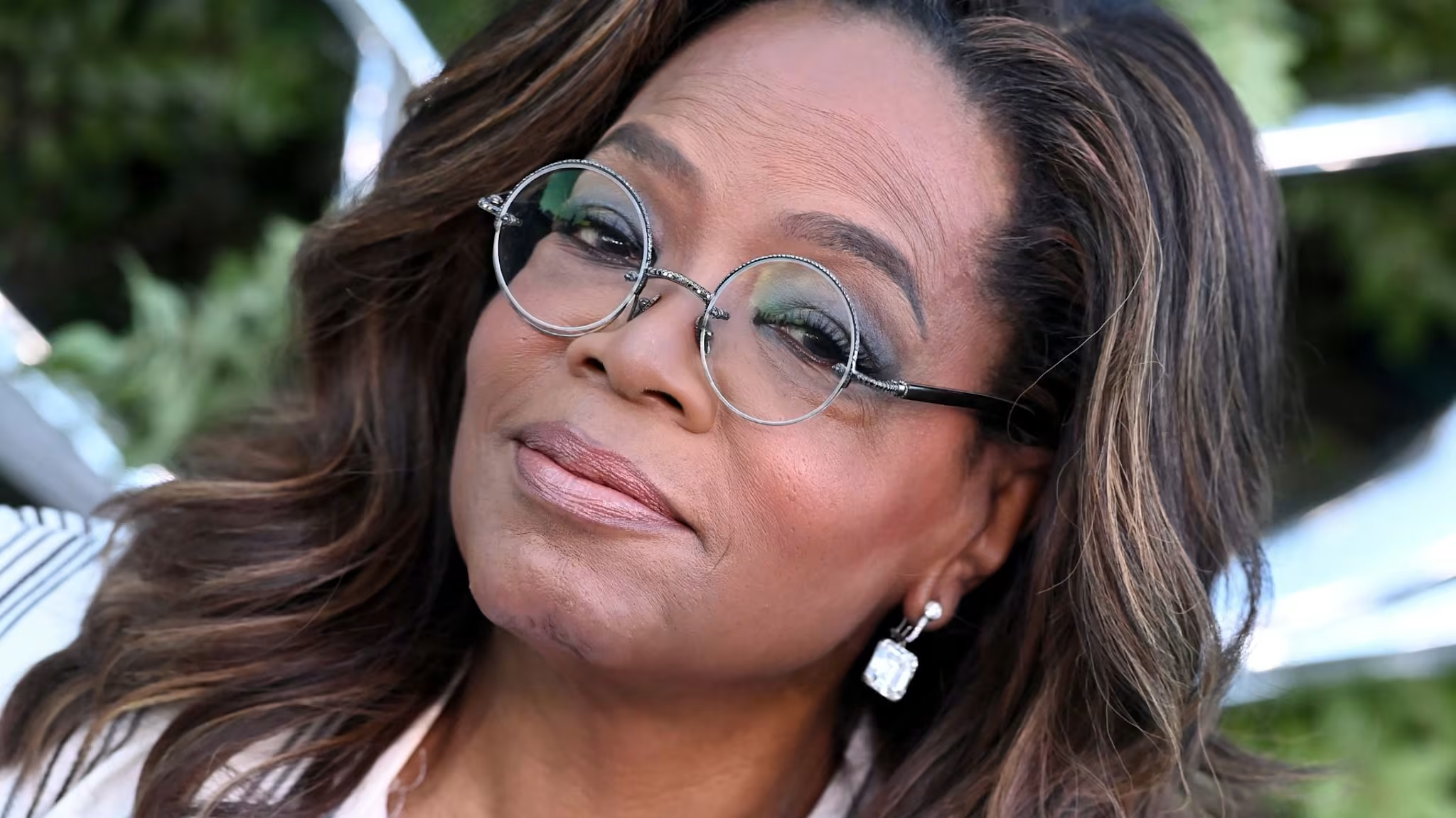
Winfrey made an undisclosed equity investment in 2018 and joined the company’s board after becoming a fan of its food and health-conscious mission. “When I first dined at True Food Kitchen, I was so impressed with the team’s passion for healthy eating and, of course, the delicious food, that I knew I wanted to be part of the company’s future,” she said then.
Her involvement carried the kind of promotional weight long associated with the “Oprah Effect.” At its height, The Oprah Winfrey Show drew between 12 million and 13 million viewers per day, and Winfrey’s endorsement could transform books, products, experts, and businesses into national brands.
That influence has also produced questions about how much responsibility Winfrey bears for what happens after an endorsement. She recently pushed back against criticism of Dr. Phil McGraw and Dr. Mehmet Oz, two television figures whose careers exploded after she put them before her audience.
“Everybody has their own path in life, and it has not one thing to do with me, and I don’t have one thing to do with them,” Winfrey said.
Winfrey is no longer on True Food Kitchen’s board, but the company confirmed she remains a minority investor. Her representatives did not immediately comment on the bankruptcy.