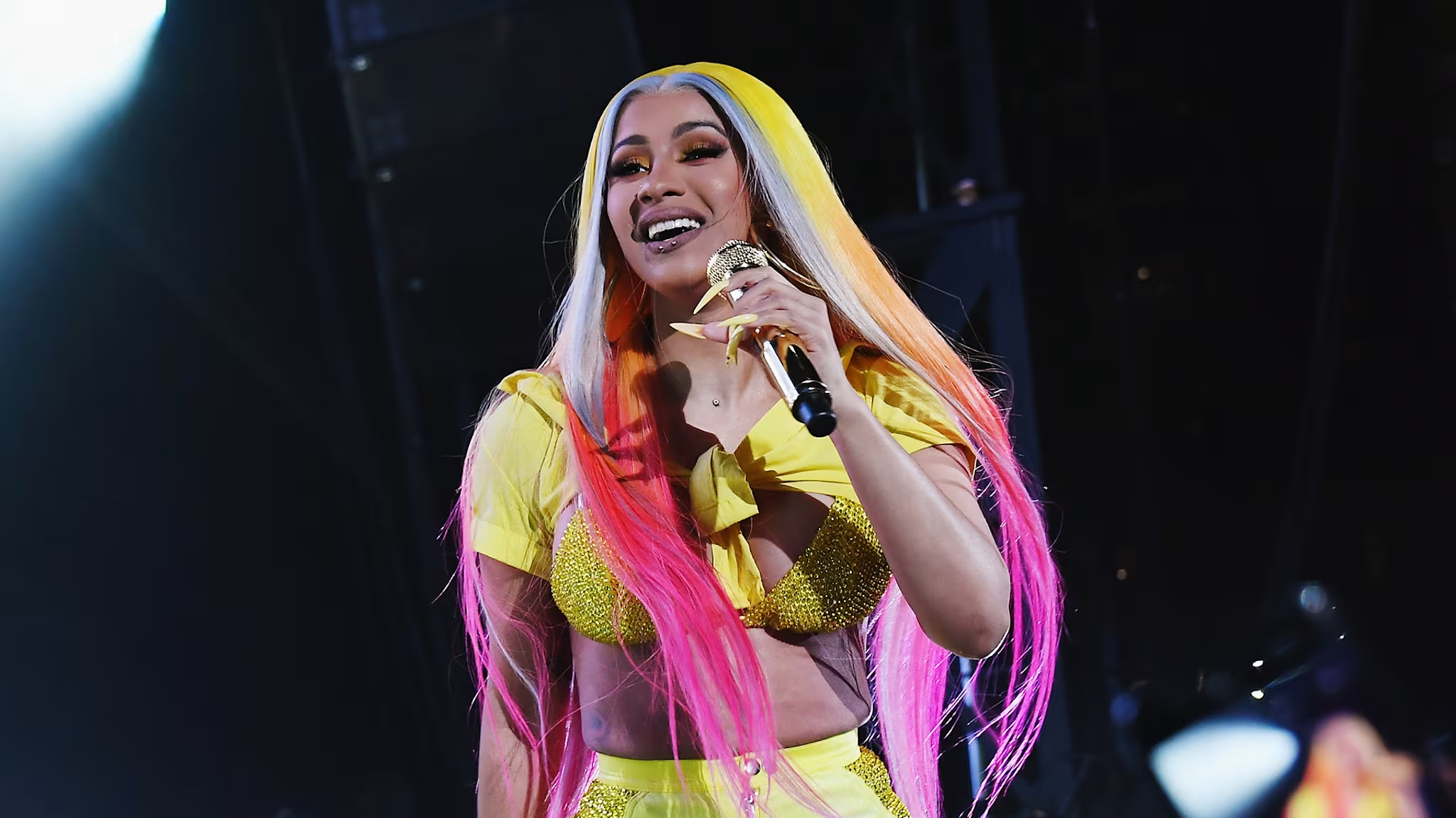
Image via Getty/Nicholas Hunt
In January, Cardi B won a $4 million defamation of character lawsuit against blogger Latasha “Tasha K” Kebe for what a judge ruled as repeated lies about the rap star. Then Cardi sought a gag order against Tasha K, hinting that she would pursue further legal action for what her team described as Tasha’s “promises to keep harassing” her. The ruling sent shockwaves through the industry, not just because of the dollar amount, but because of the precedent it set for bloggers to be penalized for publishing misinformation. Since then, two other artists have threatened to follow suit, in response to reckless social media posts.
At the end of February, Teyana Taylor hinted at suing a TikToker who claimed the singer was abusing drugs because of marriage woes. And soon after, Megan Thee Stallion chastised DJ Akademiks for a misleading report he made about her ongoing trial with Tory Lanez, warning on her Instagram Story, “Don’t get sued trying to create a hate campaign. Be a real journalist and post FACTS.”
Gossip merchants aren’t journalists, and therefore have no one to answer to when they’re wrong about an artist’s legal proceedings or the Queen of England “dying.” But after the ruling in Cardi B’s case, bloggers, YouTube pundits, and social media rap accounts are now on notice that they could face legal action for the information they share.
Most people believe celebrities are justified in holding people accountable for sharing fake news, but anti-carceral onlookers believe that celebrities wielding their power (and working with the legal system to destroy people’s financial future) is too harsh of a clapback. There’s precedent for high-profile litigation to end with millions in punitive damages that are up to a judge’s discretion and exist strictly to punish defendants. That conversation will be ongoing, as more artists seek to sue over misinformation.
Celebrities have been suing tabloids for years. Cameron Diaz sued News Group Newspapers in 2005 after their paper The Sun ran a story claiming she was seen kissing another man while dating Justin Timberlake. In 2011, Katie Holmes settled with The Star in a $50 million lawsuit for claiming she was addicted to drugs. And even when the gossip went digital, bloggers like Perez Hilton were sued for leaking songs, lewd photos, and sextapes. In 2016 Kim Kardashian sued (and then settled) with online outlet MediaTakeOut for claiming her Paris robbery was orchestrated.
Cardi’s suit was the first major legal hit between an entertainer and a gossip YouTuber. Tasha K is an independent media personality running her own internet show, UnwineWithTashaK. She, like many in her realm, posts clips with salacious tidbits about celebrities, and conducts live interviews with people with proximity to celebrities.
Unlike traditional journalists who are beholden to fact-checking sources to avoid embarrassment (and lawsuits), independent gossip bloggers and social media rap accounts could conceivably share anything that’s sent to them, if it’s juicy enough. And if their information is bad, they can simply delete their post or explain “10 reasons why we thought Queen Elizabeth had died” like Jason Lee’s Hollywood Unlocked did after their incorrect claim.
That lack of oversight is reflected in Tasha’s content about Cardi, which the blogger framed as attempts “to drive public engagement with her online content” in court. She had previously claimed in her videos that Cardi had herpes, was a sex worker, and used cocaine. Those rumors were ripe for Cardi haters to spread on social media platforms where no one knows (or particularly cares) what’s true, but share the “tea” anyway. Cardi claimed in court that the rumors caused her emotional and physical distress.
Judge William M. Ray ultimately agreed that Tasha’s claims were false and defamatory, ordering the blogger to pay $1.5 million in punitive damages, $1 million for pain and suffering, $1.3 million in litigation expenses, and $25,000 in medical expenses.
Cardi B saluted the judgment in a statement, proclaiming that “the constant lies reported as factual from journalists and bloggers have to end.” But that seems unlikely. A month after the lawsuit was finalized, a TikTok account called @Klatschhh (which claims to post “unconfirmed stories and parodies”) posted a clip about a mystery “singer with a TV show and two daughters” with a husband on Dancing With The Stars who recently canceled a concert. The account didn’t explicitly mention Teyana Taylor’s name, but those details are so specific that it’s highly unlikely she was referring to anyone else. Klatschhh’s story claimed that Taylor had a “mental breakdown” because of her husband Iman Shumpert cheating on her, was “acting erratic and having lots of candy,” and canceled a recent show after overdosing “because of her husband’s serial infidelity and her suffering from pretending to have a perfect family.”
The clip went viral on TikTok, Instagram, and Twitter, compelling Taylor to deny the rumors on IG in a since-deleted post. “The person who sent in this CAP ass TikTok story is a fool, the person who ‘re-enacted’ this CAP ass story is a fool (she better have her court coin ready) but the people who believed the CAP ass story are the biggest fools smh,” she posted.
The person behind the @Klatschhh account detfly attempted to cloak themself from potential legal action. They omitted Taylor’s name, claimed their page is parody, didn’t explicitly identify the drug she allegedly used, and censored “infidelity.” But the person behind the account may still face action, as viewers easily unmasked who her “unconfirmed story” was about.
The Taylor clip typifies the information age’s restless ubiquity. Tabloid news and blog posts were written like reports in the ’90s and 2000s, and they were confined to an underworld of tabloid rags and gossip blogs that apathetic people could ignore and celebrities could discredit en masse. But rumors seep through social media with gaseous affect, and few people seem to know (or care) what’s actually true. In 2022, “news” is disseminated via a TikTok skit sharing secondhand information from an anonymous source. Or a graphic card on an Instagram post with no credible source. Or a comment under an Instagram post that’s screenshotted and goes viral. The culprits are a generation of people so addicted to parasocial relationships that they don’t care how they get their fix, and so addicted to social media oversharing that they can’t properly consider the concept of an invasion of privacy. And the development is made worse when credible outlets dignify them in an attempt to capitalize on the views the information is garnering.
Tory Lanez’s case on felony assault and gun charges has been ground zero for misinformation, as men rush to “report” misinformation in attempts to signal his innocence, but end up actually projecting their legal illiteracy. Last summer, an Instagram account reported that the case was dropped because they misinterpreted a hearing date change. And a couple of weeks ago, DJ Akademiks tweeted and deleted that it had been revealed in court that Tory Lanez’s DNA wasn’t found on the gun that was allegedly used the night of Megan’s shooting.
But court proceedings hadn’t started at the time of his tweet. Later that day, Rolling Stone reporter Nancy Dillon revealed that while Lanez’s lawyers announced they were in the process of seeking a DNA expert, and the LAPD had done a DNA analysis, “the precise nature of the LAPD analysis & its results were not disclosed or described” during the court date.
Megan spoke out on the misreporting multiple times on her Instagram Story, noting, “Court ain’t even started yet so why y’all ready to start lying. I know some of y’all blogs on payroll but please don’t get sued trying to create a hate campaign.” As the case unwinds and more people clamor to be first to report information they hastily processed, the chances of a lawsuit stemming from this case raises.
Megan also posted, “Y’all tryna win a social media campaign and this is MY REAL LIFE.” There is a human toll to celebrity misinformation that society overlooks. Fans want to be entertained, bloggers want to line their pockets, and everyone in between surmises that this is just the way it is. While some may chalk up the unsavory aspects of being a public figure to the “price of fame,” their salaries aren’t a fair exchange for being outright lied about. Only a society with deep moral qualms would resolve that being known for entertaining means we should know everything else about them—and get to make up things along the way.
There’s a cost to misinformation that the newest crop of gossip bloggers haven’t had to consider before now. Cardi B acknowledged in a statement about her victory that “the only difference between me and the high schooler who is being cyberbullied and lied on by their classmates is the money and resources I have access to,” which is an important distinction. So many people who deal with rumors simply have to deal with them, with no resources to recoup financial restitution.
FindLaw.com states that “a judge or jury can award a victorious defamation plaintiff millions for really bad cases, or $1 in compensatory damages if they find that the injury was nominal.” That’s a wide, ambiguous spectrum that raises the question: How much should defamation cost?
While no one’s going to cry for someone spreading mean-spirited rumors about a famous person, it’s also worth considering whether it’s a misdeed they should have to reckon with for the rest of their life.
In Tasha K’s case, she paid $1.5 million in punitive damages, which, according to FindLaw, isn’t “to compensate the plaintiff, but rather to punish the defendant.” In other words, that cost wasn’t even considered in relation to Cardi’s fame or earnings potential, but an arbitrary punishment that could ruin her financial outlook for the rest of her life. And it was decided by a judge representing the same system that egregiously punishes people in so many other manners.
That’s not to say that celebrities shouldn’t pursue damages to hold bloggers accountable. But stars wielding their power and resources with defamation suits is a collaboration with the justice system that literally exists to go overboard with punishment. Two things can be true. And while some may be unsympathetic to bloggers, resolving that they should have thought about the consequences of gossiping before they published their scoop, it doesn’t negate that any future high-cost suit will be another example of a vessel of the government litigating someone into poverty. Those seeking abolition of the criminal justice system should consider that the civil court is another cog of that beast.
People stand on different sides of that debate, especially with Stan culture involved. And now, thanks to Cardi, and perhaps others, there’s going to be a debate to be had when it comes to lawsuits for YouTube and social media gossip.




