Key Takeaways
- Bryan Kohberger, who previously admitted to murdering four University of Idaho students in a 2025 plea deal that spared him the death penalty, has filed a petition in Ada County to withdraw his guilty plea and conviction while now representing himself.
- He claims his lawyers gave him "ineffective" representation, pressured him to lie and "falsely confess" despite his asserted innocence, and told him that whether he was actually guilty "was not an important factor" in taking the plea.
- Prosecutors and victims’ families have condemned his reversal—Idaho’s attorney general vowed to uphold the original judgment, while the Goncalves family dismissed him as "the mosquito you just can't seem to swat" and said he simply wants "another chance to roll the dice."
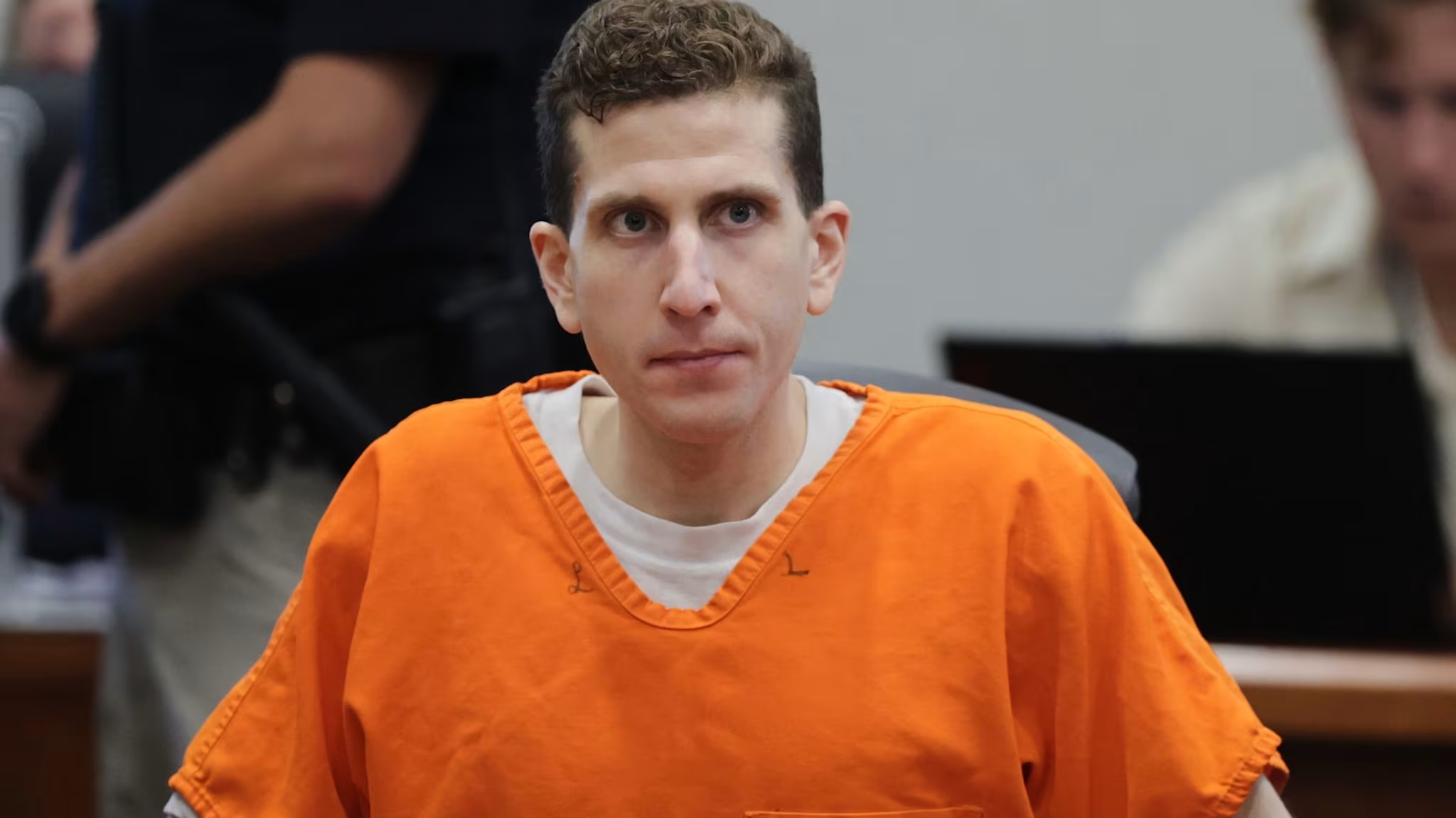
More than a year after admitting to the murders of four University of Idaho students, Bryan Kohberger is now trying to take back his guilty plea, claiming he falsely confessed after receiving ineffective legal advice.
CNN confirms that Kohberger filed a petition for post-conviction relief in Ada County District Court on Monday, July 27, seeking to withdraw his guilty plea and overturn his conviction. Court records indicate he is representing himself. In the filing, Kohberger argues that his defense attorneys persuaded him to plead guilty, even though he maintains his innocence.
According to the petition, Kohberger claims he received "ineffective" representation and was "convinced to falsely confess" to crimes he says he did not commit. He alleges he was told that whether he was actually guilty "was not an important factor" in accepting the plea and claims he was "advised to lie" because entering what he describes as a "false plea" would ultimately result in a "legal victory."
The filing follows comments Kohberger recently made to The New York Times, where he also denied responsibility for the killings. "My actual innocence is my truth, and the plea, hinged on by false promises and blatant disinformation, MUST be withdrawn," he said.
Those claims mark a dramatic reversal from July 2025, when Kohberger stood before an Idaho judge and admitted to breaking into an off-campus home in Moscow, Idaho, and murdering University of Idaho students Madison Mogen, Kaylee Goncalves, Xana Kernodle, and Ethan Chapin on Nov. 13, 2022.
The plea agreement spared him the death penalty, and he was sentenced to four consecutive life sentences without the possibility of parole, along with an additional 10-year sentence for burglary. Although he admitted carrying out the killings, Kohberger never offered a motive.
In the months since his conviction, previously sealed court records have revealed additional details about the crime scene. Autopsy reports showed that Xana Kernodle fought back as she was stabbed 67 times, while filings suggested Kaylee Goncalves and Madison Mogen may have been moved and positioned together after they were killed.
Kohberger's own sister also broke her silence, saying she had "no idea" her brother was responsible and insisting she would have reported him if she had suspected his involvement.
The latest filing has drawn swift responses from both prosecutors and the victims' families. Idaho Attorney General Raúl Labrador said his office "stands ready to do whatever is necessary to ensure justice is fully carried out," adding that his thoughts remain with the victims' loved ones.
The Goncalves family was even more direct. In a statement, they criticized The New York Times for giving Kohberger a platform and dismissed his latest claims. Referring to him as "the mosquito you just can't seem to swat," the family said, "The piece had little else to offer beyond a guilty man once again claiming he is innocent."
They also noted that they had wanted the case to go to trial, where Kohberger could have faced the death penalty, before he instead accepted a plea deal.
"He wants another chance to roll the dice," the family said. "The defendant will get another day in court—a welcome break from solitary confinement: a ride, perhaps different food, photos taken, and the spotlight once again fixed on him and his supposed 'innocence.'"




