None
To the best of our knowledge, history is fixed. No matter what we may have learned from a series of Michael J. Fox movies, it's impossible to go back and change anything. But history is also filled with events that could have easily gone each of several ways, with even the most consequential of them hinging on seemingly inconsequential details. The world of "what-if" has long been mined by historians, novelists and sports fans: What if the South had won the Civil War? What if Scott Norwood's kick didn't go wide right? What if Len Bias had lived? But there's no reason sneakerheads can't join in these exercises. Because there have been plenty of sneaker-related decisions over the years that could have had a significant impact on the present day. These are The 10 Craziest Sneaker "What-Ifs."
What if Nike passed on Air?
Nike's most famous development, Nike Air, was not developed by a Nike engineer. Nike Air was the brainchild of Frank Rudy, a former aerospace engineer who struck out on his own in 1969. As legend has it, Rudy brought his cushioning setup to Nike in 1977, and after Phil Knight ran in a pair of prototype shoes, he was sold. But it's not like Nike didnt have options at the time. Shox was already in its early stages back then, but was shelved for decades because of Air. If Knight doesn't take a chance on Air - remember, in 1977 Nike was just a five-year-old company - maybe Shox is ready by the turn of the decade, and maybe Michael Jordan gets a different nickname. Boing.
What if Converse gave Magic Johnson a signature shoe in 1979?
There is absolutely no reason that Magic Johnson couldn't have been Michael Jordan first. Magic won titles, he had a better nickname, and his effusive personality and contagious smile could have sold lots and lots of sneakers. But who knew? In the late '70s, after all, Converse was still dominating the basketball market. They had Dr. J, they signed Magic, and they signed Larry Bird. They'd get Isiah Thomas, too. A shift was coming, but Converse didn't have the scrappy underdog mentality to actually force the change. If they had, and they put Magic and Larry (and Doc) in their own sneaker models, maybe Air Jordan still takes over, but it doesn't start in a vacuum.
What if Derek Jeter stayed with FILA and Grant Hill never got injured?
When FILA entered the U.S. signature sneaker market in the early '90s, they did it in a big way. They gave Jamal Mashburn a Ferrari (along with a considerable amount of cash), then signed a number of other young up-and-comers like Grant Hill, Derek Jeter and Barry Bonds. Jeter later jumped to Jordan, Hill suffered a series of injuries that derailed his career, and Bonds, well, he became the most reviled athlete of his generation. Forget Bonds, though. Had Jeter stayed and Grant Hill stayed healthy, FILA would have had two of the best - and most fan-friendly - athletes of the '90s. Does Jeter's line take over where Ken Griffey Jr's left off? Does Hill's contend with Jordan's? And if those two guys stay on board for their entire careers, is FILA still a performance brand now rather than just a heritage one? Too bad we'll never know.
What if Nike had never re-issued the Air Force 1?
Retro sneakers weren't always a thing. Yes, there was the Converse All-Star, but that was simply always in production. When Nike re-made the Air Force 1 a few short years after it was discontinued, it was not only still a viable performance shoe, but it established that there could be a market for "old" designs. The Air Force 1 remained a big seller and a sought-after model long after it was surpassed from a performance standpoint, which helped push Nike in a direction that wasn't based entirely around product for athletes. Modern sneaker "culture" started here. Otherwise, maybe the Air Force One is just another semi-obscure discontinued performance model and "retro" doesn't happen until Michael Jordan retires, if at all.
What if Tinker Hatfield was content to stay a corporate architect?
In the mid-80s, Nike needed a reboot. The first Air Jordan was a hit beyond their wildest expectations, but its design wasn't exactly a game-changer outside of its bold red and black colorway. But rather than hire away an experienced designer from another company, Nike decided to see whether they had anyone already on the payroll who wanted to try something new. As it so happened, they also had a corporate architect seeking a new challenge. Tinker Hatfield had come to Nike via the traditional path - competing for Bill Bowerman at the University of Oregon - but was trained as an architect rather than an industrial designer. As such, he had some very different ideas when it came to inspiration and athlete input. If Hatfield wasn't looking for a change, it seems likely that Michael Jordan leaves Nike in 1988, and a number of now-iconic sneakers never get produced. And without Tinker at the helm, do guys like Eric Avar and Aaron Cooper even go into sneaker design? Nike thought big, and in return, got even bigger.
What if adidas never gave Run-DMC a deal?
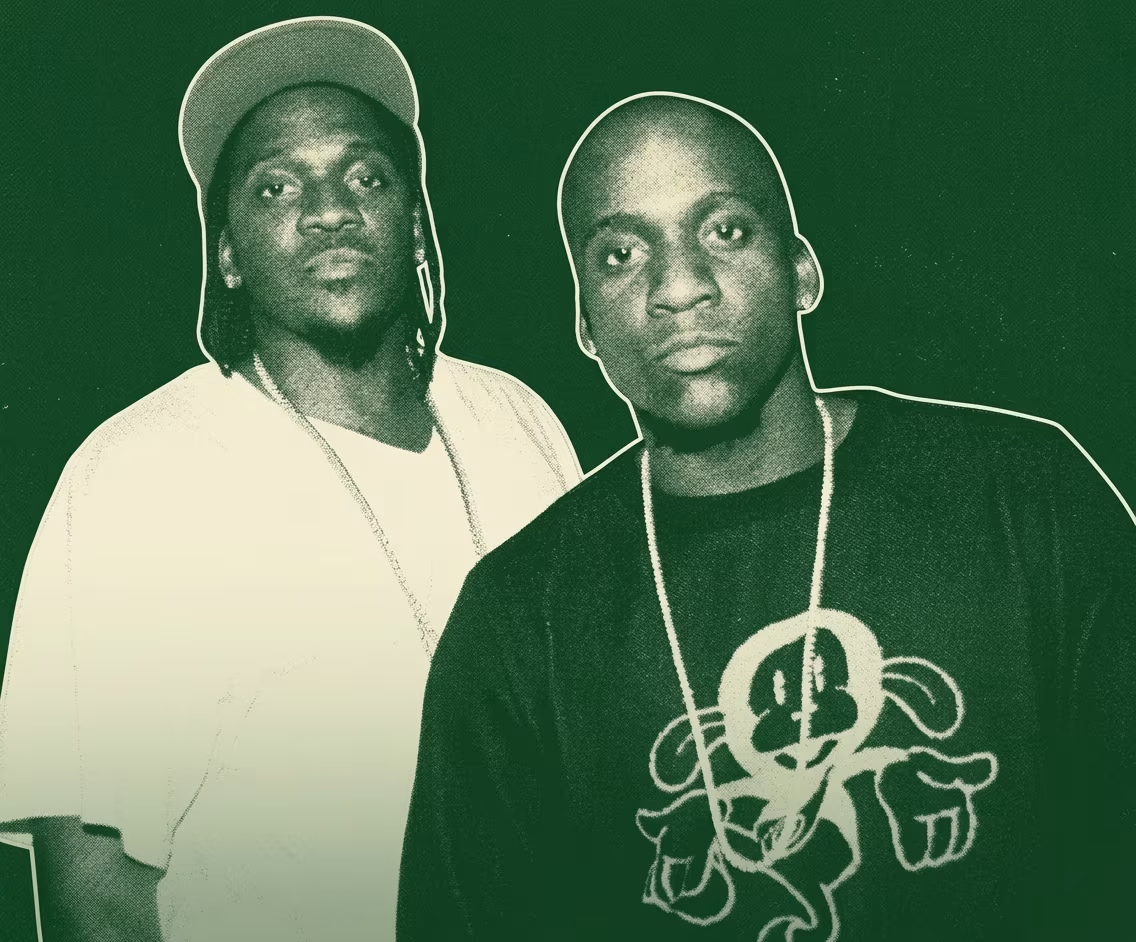
So lets say an adidas exec came to Madison Square Garden, saw everyone hold up their shelltoes during "My Adidas," and instead of giving Run DMC a million-dollar deal just said "huh, that's cool, thanks for the free PR." What, Run DMC was going to start wearing Nikes? The song was already out there, free of charge. adidas was going to reap the benefits regardless. What did a German company know from Queens rappers anyway? And if adidas doesn't pay Run DMC, does Reebok pay Jay-Z and 50 Cent? Does Nike give Kanye West a shoe? The synergy between sneakers and hip-hop was already there, but without that first deal, maybe it's just love and not money.
What if Michael Jordan had left Nike in 1988?
In 1988, Michael Jordan was restless. Yes, he had two signature shoes to his name, but the second wasn't as successful as the first, and the people most responsible for bringing him to Nike were leaving. If he was ever going to leave Nike, now was the time. Plus, his newest shoe was being designed by some new guy, one who had just joined the design team three years before. An architect, no less. As it turned out, the former architect - a guy named Tinker Hatfield - was pretty good. And the Air Jordan III would revolutionize the very concept of the signature sneaker. But Jordan still could have left. Maybe he joins friend and rival (and fellow David Falk client) Patrick Ewing at adidas. Or maybe - and this seems more likely - he's the one who starts his own brand instead of Ewing. Jordan Brand in 1988 instead of 1997? What could have been.
What if LeBron James had signed with Reebok?
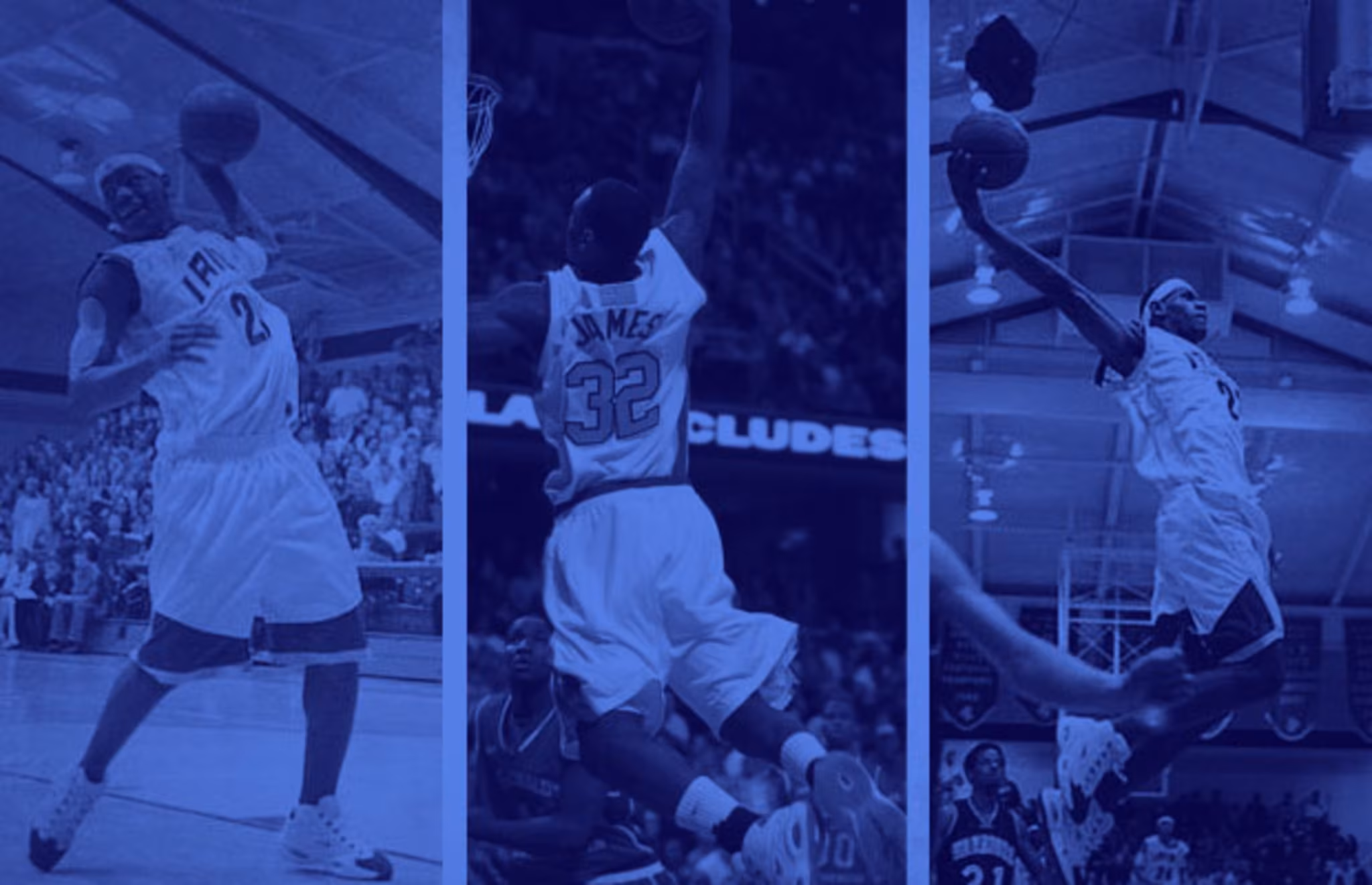
This is a big one. In 2003, Allen Iverson was still dominating, just two years off his Finals appearance and MVP. Reebok also had Jay-Z in the fold, whose S. Carter Collection would release that same year. If LeBron James chose Reebok over Nike, there could have been a seismic shift in the sneaker world. Michael Jordan was retired for good, Kobe Bryant was a sneaker free agent. LeBron goes to Reebok, and there's no question Reebok still has a performance basketball line today. And if a few other big names chose to follow LeBron, who knows what the balance of power would look like right now?
What if skateboarders accepted Nike's initial foray into the sport in 1996?
Nike first tried to enter the skateboard shoe market in the mid-90s. It did not go over well. This was not due to the sneakers themselves, which weren't so bad (although they did have awful names). It was just the thought of Nike doing skate at all, the corporate juggernaut entering an established market ruled by independent brands. Funny, since Nike was one of those independent brands themselves just 25 years prior. Had the first incarnation of SB succeeded, it seemingly wouldn't have made all that much of a difference. But SB 1.0 didn't include a retro sneaker like the Dunk, so perhaps performance takes center stage, and your grails never even get produced.
What if adidas matched Nike's offer to Michael Jordan?
Michael Jordan made no bones about it - he was an adidas guy. And, despite the fact that he wore Converse for his three years at the University of North Carolina, he had every intention of wearing adidas in the NBA. And even with Nike's over-the-top offer that essentially gave Jordan his own brand within the brand, he woud have gone with adidas had they only matched. They didn't, and the rest is history.
But what if they had? There's no guarantee that adi would have given Jordan a signature shoe, let alone a whole line. Maybe he winds up as the face of the Forum instead. And Nike, well, they would have had to pick someone else. Like another pick from the '84 Draft, a guy from Auburn named Charles Barkley. Or maybe they would have waited another year for the next David Falk client - an imposing center named Patrick Ewing.