None
The way sneakers are now it's easy to roll through countless colorways of the endless stream of new releases. No matter how many colorways of your new favorite signature sneaker drop, there are some things you should do as a sneakerhead and there are certain sneakers you should own before you check out of the game. Check out the 25 Sneakers You Should Own Before You Die and let us know how many of these are a part of your collection in the comments section.
LIKE COMPLEX SNEAKERS ON FACEBOOK
Reebok Insta Pump Fury
Colorways: Black/Red/Citron
Year Released: 1994
Reebok's Pump system pushed the envelope with what people would actually wear, but in 1994, they unleashed the Insta Pump Fury. Despite Kanye's suggestion to try some new things, the Reebok Insta Pump Fury was a shoe without shoe strings. The Insta Pump inflatable bladder was all you needed to tighten these up and be on your way. The original "Citron" colorway is bright, loud and definitely bucket list worthy.
Air Jordan I
Colorways: Black/Red, White/Black/Red
Year Released: 1985
The shoe that is credited by most for starting it all, the Air Jordan I. If you don't lace up a pair of the original colorway that cost MJ $5,000 a game in fines, you should probably be banned from life.
New Balance 1300 Made in USA
Colorways: Grey
Year Released: 1984
Made in the USA is something you see less and less of these days. Hell, we Americans would probably outsource anything (except maybe eating) if they can find a deal on Amazon or QVC. That said, the 1300 from New Balance is not only comfortable as fuck, the Made in the USA versions support your country in this overly-connected global economy.
adidas Superstar 80s
Colorways: White/Black, Black/White
Year Released: 1969
There isn't a more easily recognizable design element than adidas' "shell toes" rubberized toe cap that resides on the Superstar. Three Stripes and shell toes may be found on a number of the company's silhouettes but the Superstar, the version known as the Superstar 80s, is about as iconic as you can get.
Vans Authentic
Colorways: Navy/White
Year Released: 1966
Vans is THE skateboard shoe company. 1966 started with what we all know as the Authentic, a simple and waffle-soled sneaker that was the perfect choice for the So Cal surf and skate scene that would soon be taking over. Today, the Vans Authentic is still available in tons of colors but do yourself a favor and keep a pair of the classic navy versions on deck. You won't regret it. Unless of course you kick the bucket before you wear them.
Nike Air Max 95
Colorways: White/Neon Yellow-Black-Anthracite
Year Released: 1995
Air Max cushioning is available in almost any style now but the Neon colorway of the Air Max 95 is not to be fucked with. Aside from the cushioning and comfort, these have become a staple for sneakerheads and runners as one of the most comfortable and well-respected running shoes of all time.
Reebok Question
Colorways: White/Red, White/Blue
Year Released: 1996
The Question is arguably the best sneaker to even come from Reebok. Thanks to Allen Iverson, the Reebok Question is just as much a head-turner on the street as it is on the court. If you were alive to see AI cross up MJ, you know how big of a deal this sneaker was. If you weren't, you probably heard about it from the older 'heads.
Nike Air Force 1 High
Colorways: White/Grey, White/White
Year Released: 1982
It's worth noting - again and again - that when the Nike Air Force 1 was first introduced in 1982, it was a high-tech, on-court basketball product, available in hightop only. The lows came soon after, and the mids were a late addition to the family. So while the classic white-on-white lows remain a summertime staple, any sneakerhead worthy of the name should cop (and wear) a pair of the highs to fully appreciate Bruce Kilgore's design genius.
Airwalk One
Colorways: Black/White
Year Released: 1994
Skateboarding broke into main stream in the '90s and the Airwalk One was one of the game-changing sneakers of the day. Airwalk's direction as a brand, from the bulky high-tops to the simple style of the One, set the tone for the entire industry. For the ten years that followed, low-tops and extra padding became the norm for anyone who set foot on a skateboard, and the posers who just wanted the look.
Nike Air Max 90
Colorways: Infrared
Year Released: 1990
Three years after its introduction, the initial form of Air Max reached its pinnacle with the Air Max 90. Soon to blow out of the heel entirely in '93 (and spread to the forefoot in '95), the max-capacity Air bag in the 90 was provided further protection around the foam midsole, while a mudguard broke up the upper. The original Infrared colorway, which saw widespread use in the early '90s, is definitive.
Nike Air Safari OG
Colorways: Tan/Beige-Black-Charcoal
Year Released: 1987
Luxury sport as a concept may have existed at Nike before the Air Safari - the Air Jordan II, produced in Italy and featuring faux iguana skin preceded it by a year - but the Safari took performance out of the equation almost entirely. Sure, you could run in the soft deerskin lows, but why would you when Nike had so many performance-first runners on the market already? You can bet Biz Markie wasn't recording splits in his.
Nike Air Huarache
Colorways: White/Scream Green
Year Released: 1991
Inspired by a pair of water-skiing booties, Tinker Hatfield produced one of the best-fitting (and best-looking) running shoes of the early '90s. His "Huarache" concept found its way into everything from cross-training to basketball to outdoor (and even an Air Jordan), but the runner best embodied the glove-like feel.
adidas ZX 8000
Colorways: Light Blue/Yellow
Year Released: 1988
The pinnacle of the adidas ZX line, the ZX 8000 featured the best of adidas' 1988 technology as well as a killer teal and yellow scheme that still pops to this day. We're not saying the colorway made the shoe, but the two are certainly inseparable.
Converse Chuck Taylor All Star
Colorways: Black/White, White/Navy/Red
Year Released: 1923
Converse Chuck Taylor All Stars are the most universal and diverse sneaker ever made, not to mention the common ancestor of every basketball shoe since the '20s. There is no excuse for not owning a pair at some point. No matter how rebellious you are, how trendy you are, how rich you are or how gangster you are, Chucks are acceptable.
adidas Rod Laver
Colorways: White/Green
Year Released: 1970
Rod Laver was a hell of a tennis player, but even if his legacy were defined by his shoe alone, he'd still deserve to be considered a legend. The simple white and green mesh shoe, devoid of adidas' usual Three Stripes branding, is a timeless classic that should be a summertime staple for everyone. The perforated leather ones are cool too (what up, DOOM?), but mesh is unbeatable.
Vans Half Cab
Colorways: Black/White
Year Released: 1992
If there is ever an actual sneaker hall of fame, the first person to cut down the Vans Caballero deserves to get in on the first ballot. Removing a majority of the ankle collar converted the bulky Caballero into a lean and mean skate shoe, reflecting the transition of skateboarding itself from vert to street. Twenty years after its initial introduction, the Half Cab is still considered the best skate shoe ever.
New Balance 1500 Made in England
Colorways: Grey/Navy
Year Released: 1989
It didn't get much more high-tech than this. When New Balance introduced the all-new 1500 in 1988, it was part of a three-shoe pack including a tennis shoe and a basketball shoe. And while the latter two have been lost to history (and Defy NY), the 1500 runner has been elevated to the highest ranks of classic running shoes. Grey and navy is the way to go.
PUMA Suede
Colorways: Red/White, Navy/White
Year Released: 1968
PUMA Suede or PUMA Clyde, the suede low-cut has been killing 'em since the '60s. Developed for flashy Knicks point guard Walt "Clyde" Frazier, the Suedes saw a resurgence in the early '90s thanks to vintage diggers like the Beastie Boys. UNDFTD has flipped them in all sorts of ways, but there's nothing like the originals.
ASICS GEL Lyte III
Colorways: White/Green/Yellow, White/Orange/Purple
Year Released: 1991
With that distinctive split tongue and the bold ASICS branding, there's no mistaking a pair of GEL-Lyte IIIs for anything else. And as ASICS continues to push into the future with high-tech models like the Kayano and Nimbus, it's good that they still recognize their roots. And there are plenty of options out there, from Ronnie Fieg collabs to original '80s neon.
Reebok Pump Omni Lite
Colorways: White/Black/Orange, Black/White/Orange
Year Released: 1991
When Dee Brown paused to pump up his sneakers before winning the 1991 NBA Slam Dunk Contest, Reebok should have immediately cut him a huge check. Because that moment did more for Pump technology than any amount of advertising could have. It helped that the Pump Omni Lite, a lower and lighter take on the original Pump, was a dope shoe in its own right. Historic.
Nike Air Trainer 1
Colorways: Chlorophyll
Year Released: 1987
John McEnroe knew. The Nike Air Trainer 1 was developed as an across-the-board training shoe, but Johnny Mac adopted it as his own, wearing it on the biggest of stages in tennis. Doubtlessly it got run in plenty of anonymous gyms as well, but McEnroe's endorsement ensured the Air Trainer 1's legend. First and best.
Converse Pro Leather
Colorways: White/Navy, White/Carolina
Year Released: 1976
Worn by Michael Jordan in college and Dr. J in the pros, the Converse Pro Leather bridged the generation gap between the first high-flying superstar and his world-changing successor. The Pro Leather wasn't the first leather basketball shoe - that was the adidas Pro Model - but it was the first that was actually accessible to kids across the country. If you grew up in the '80s, the Pro Leather was probably your first "real" basketball shoe.
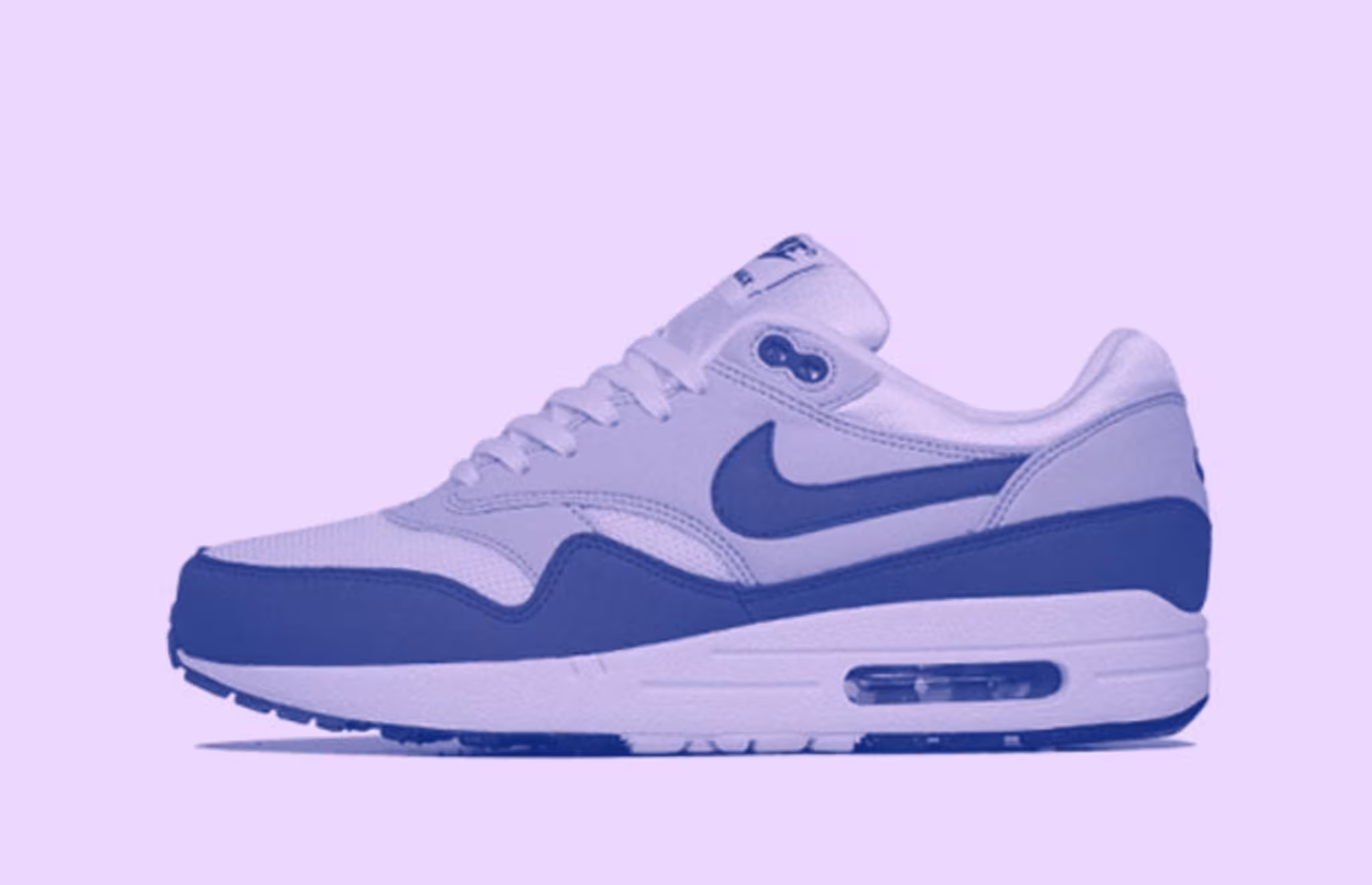
Nike Air Max 1
Colorways: White/Grey/Red, White/Grey/Blue
Year Released: 1987
The first Air Max shoe, the Nike Air Max 1 AKA Nike Air Max 87 celebrated its 25th birthday last year, and the Tinker Hatfield design still looks as fresh as it did back in 1987. There have been literally hundreds of colorways produced since, but the initial blue and red models still hold their own against any of them.
Air Jordan III
Colorways: Black/Cement, White/Cement
Year Released: 1988
Seriously.
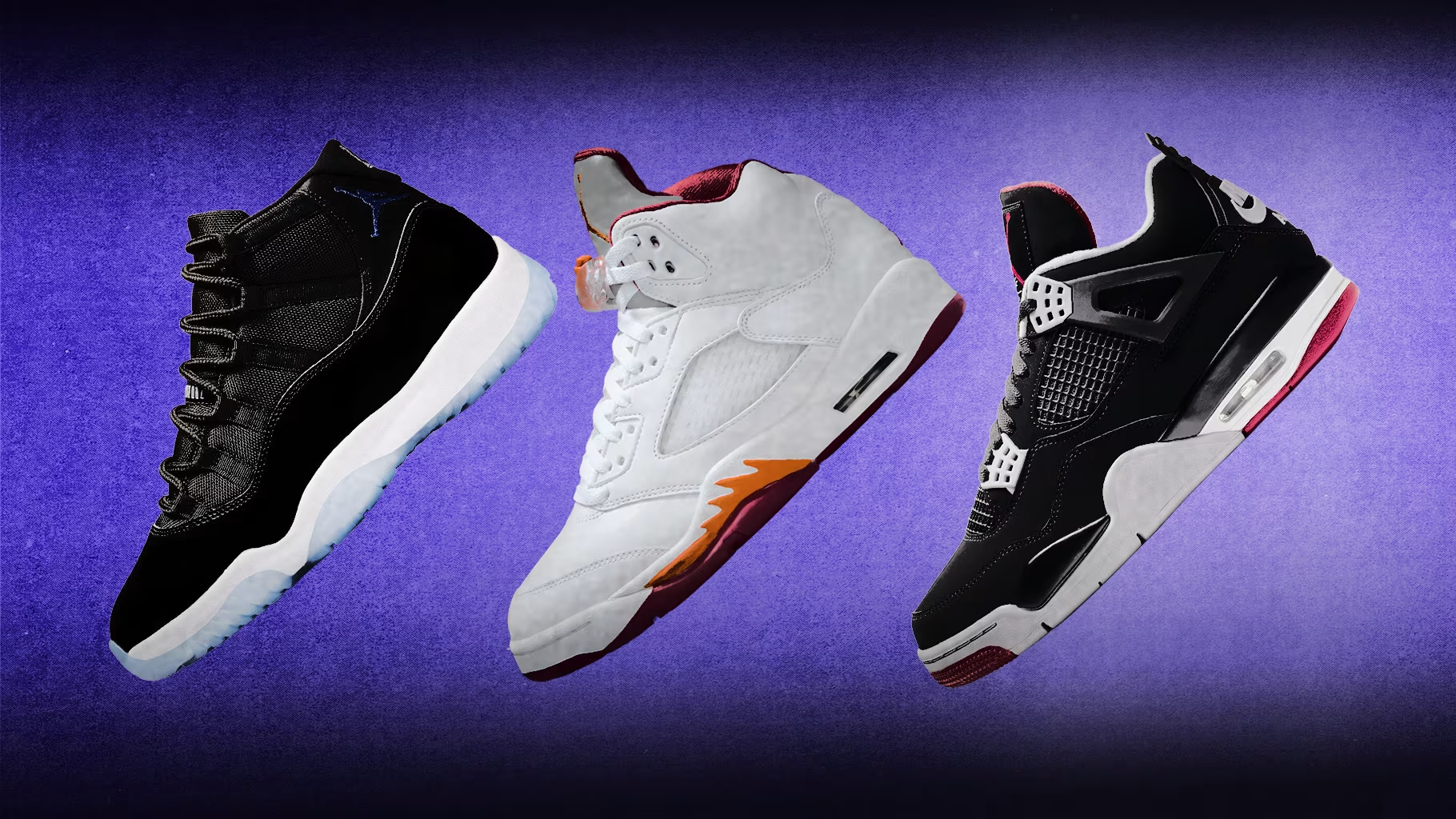
Air Jordan IV
Colorways: Black/Red, White/Black/Red
Year Released: 1989
They're not "108 with tax!" anymore (word to Buggin' Out), but the Air Jordan IV still carries a combined sport-cultural weight that few other sneakers can touch. Any of the OG colorways is worth seeking out, but the white/cement and black/cement have that Jordan/Spike pedigree that the others just don't. If you don't know, you better ask somebody. Just not Craig Ehlo - he's probably still upset.