Sneaker designers live in the future. Their days are spent laboring over product that won't become retail reality for the general public until many months, sometimes years, later. In their minds and sketches live tomorrow's best-selling silhouettes and technological footwear advancements. Shortening this temporal distance is adidas' Futurecraft program, a brand-wide design approach that signals to consumers where the Three Stripes hopes to steer shoes with respect to design, innovation, and manufacturing processes in the years to come. Adidas came up with the Futurecraft concept in 2014, with the first shoes from the line emerging in late 2015.
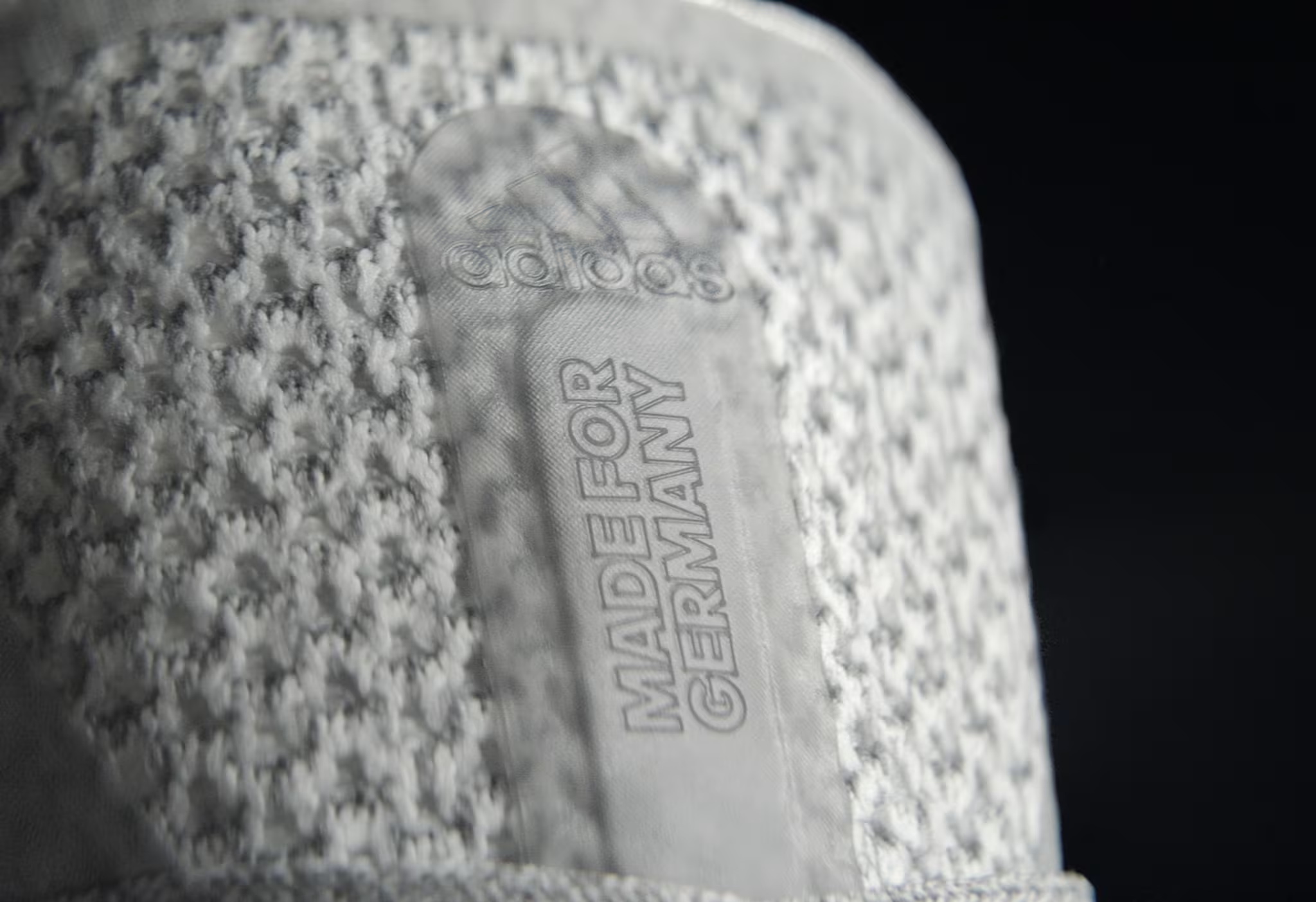
The latest adidas Futurecraft product, the Futurecraft MFG, debuted last week when the brand trotted out the forward-thinking runner in its home country of Germany. Not only did the sneakers release there, but they were made there. This detail is key—the shoes were produced at the first of a new kind of facility from adidas called the SpeedFactory, which localizes production by bringing the process closer to consumers. It also accelerates traditional shoemaking by using robots for automated means of production. The brand wants to leverage SpeedFactory spaces to create sportswear tailored to the exact specifications of the consumers and shrink the waiting time from design to finished product with new manufacturing techniques.
Helping to guide adidas' efforts with the Futurecraft project is Ben Herath, VP of design at the Three Stripes. His proven track record of performance designs—he's the guy behind the wildly popular adidas Ultra Boost from 2015 that's still going strong late in 2016—speaks to his real ability to keep the brand's shoes both salient on the street and relevant in sport. In the wake of the launch of the new Futurecraft MFG (Made for Germany) shoe, we caught up with Herath to discuss what the shoe represents for the brand, how adidas hopes to better cater to consumers with finely-tuned product, and more. Read on to see what he had to say.
Sneaker designers live in the future. Their days are spent laboring over product that won't become retail reality for the general public until many months, sometimes years, later. In their minds and sketches live tomorrow's best-selling silhouettes and technological footwear advancements. Shortening this temporal distance is adidas' Futurecraft program, a brand-wide design approach that signals to consumers where the Three Stripes hopes to steer shoes with respect to design, innovation, and manufacturing processes in the years to come. Adidas came up with the Futurecraft concept in 2014, with the first shoes from the line emerging in late 2015.
The latest adidas Futurecraft product, the Futurecraft MFG, debuted last week when the brand trotted out the forward-thinking runner in its home country of Germany. Not only did the sneakers release there, but they were made there. This detail is key—the shoes were produced at the first of a new kind of facility from adidas called the SpeedFactory, which localizes production by bringing the process closer to consumers. It also accelerates traditional shoemaking by using robots for automated means of production. The brand wants to leverage SpeedFactory spaces to create sportswear tailored to the exact specifications of the consumers and shrink the waiting time from design to finished product with new manufacturing techniques.
Helping to guide adidas' efforts with the Futurecraft project is Ben Herath, VP of design at the Three Stripes. His proven track record of performance designs—he's the guy behind the wildly popular adidas Ultra Boost from 2015 that's still going strong late in 2016—speaks to his real ability to keep the brand's shoes both salient on the street and relevant in sport. In the wake of the launch of the new Futurecraft MFG (Made for Germany) shoe, we caught up with Herath to discuss what the shoe represents for the brand, how adidas hopes to better cater to consumers with finely-tuned product, and more. Read on to see what he had to say.
Adidas' SpeedFactory Doesn't Totally Replace Humans With Robots
"There still are a few places here and there that people need to do something on the shoe but most of the time it’s automated...I don’t know if that’s going to replace [humans]. What we see is that this new SpeedFactory is going to complement what we already have in place with our existing supply chains. For us it’s a new way of building shoes. I think it’s the very distant future [where] it will replace our current model, but for us we are very excited about what this might mean for future production and where it can go."
Running Shoes Are the Best for Testing These Projects
"The running shoe is the vehicle and for us that was also an important approach to this whole project. We want to get closer to the people out there and bring production into where they are. For us, running is a great sport to do that [in] because it's such a democratic sport. There are so many different types of runners out here with different needs, different body shapes, different running styles, and different places they run in."
SpeedFactories Could Have the Answer to Perfecting Sizing
"I am most excited about how we can personalize the fit really by looking at and scanning the foot shape and analyzing how somebody runs to see the movement that they have. To know where they need support, where does their foot need to move, how much stabilization do we need, and out of that the design is almost generated—it's by science and data—analytics that informs the design so it's almost grown from an algorithm. That’s really where our ambition is and really that it’s a performance-driven approach to how we can create a better experience for runners and athletes out there."
Adidas Wants to Master Custom Shoes
"Half of what I'm excited about [with] this new SpeedFactory is that it isn’t just about being closer to people, but it's also about bringing the creation process closer so that you can actually create and build a running shoe that’s tailored for you in such a short amount of time. So for us the potential then to create different styles based on different needs can result in a range of different designs coming out of these SpeedFactories. Also what I'm excited about is that we could really tune and create designs based on what people need or what people just want and how they might want their running shoes to look."
SpeedFactories Could Make Futurecraft Shoes More Available
"Over the course of the next year, you will start to see us building up the volumes behind it so that we can sell more of these. That’s the goal behind every FutureCraft project that we have is really: these are concepts that show what we feel the future could be and where it is going. We then are looking to see how we can commercialize and scale these so that we can make it accessible for everyone out there."




