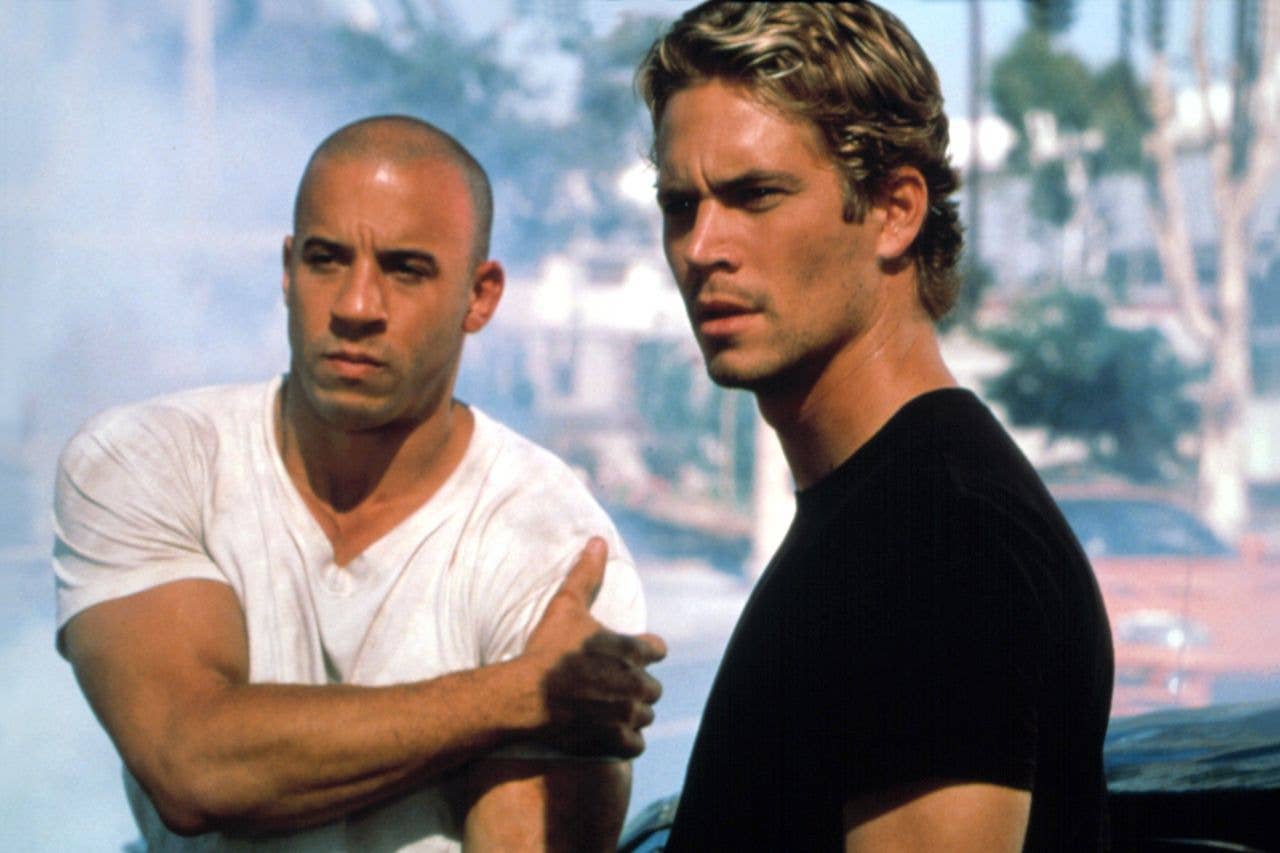
Image via Universal
The original The Fast and The Furious came out fifteen years ago this week. The series has been around for half my life. I was 15 when the first one dropped, which is pretty much the perfect age for it. It had hot girls and car chases and I was still dumb enough to think a Ja Rule cameo and using the DMX remix of Limp Bizkit' "Rollin" was cool. I thought it was the greatest film of all time. If you told me that here in 2016, the series would currently be approaching part eight, with the likes of The Rock, Jason Statham, Kurt Russell and Ludacris amongst its alumni, it would have blown my mind. The Fast and The Furious was not a film that was supposed to be a franchise, or a 'cinematic universe’ or any of that. It was the dumb little action movie that could. And somehow, in a sea of comic book movies and nerd pandering, it has become the most progressive and important franchise in Hollywood today.
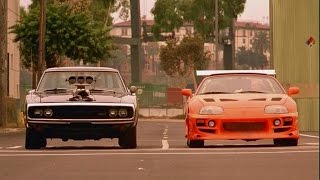
Looking back, The Fast and the Furious is actually a pretty different film from what you know think of series as a whole. Fasts 5, 6, & 7 are all big, sprawling international action-heist movies, almost James Bond movies with Vin Diesel in a sweaty vest. But part one is far more lowkey. It has action scenes, obviously, but it’s almost not an action film. It’s a street-level drama-thriller about an undercover cop trying to infiltrate a niche subculture and questioning his loyalties. A B-movie Donnie Brasco. Also, stylistically, it’s a lot, lot more nu-metal than you remember. The Fast franchise has a reputation for being very hip-hop heavy, and while the OST album for the first one is full of Ja Rule, Fat Joe and Scarface, there’s a hell of a lot of angry white boy music in the actual film. Saliva and Limp Bizkit get spins, and the members of Vin Diesel’s crew could easily be stand-ins for Puddle of Mudd or Rancid — greasy, hench early 00s white dudes with tattoos and snarls.
But it is the way that the series has evolved that is what makes it so special. The film was a surprise hit, but breakout star Vin Diesel didn’t want to do a sequel. Instead, he chose to take off with director Rob Cohen to make xXx, a hilariously dated attempt to create a James Bond for the Linkin Park generation. xXx is a fascinating timepiece in its own way, brilliantly dated in its attempts to be cool (Extreme sports! Rammstein! Asia Argento!), but what’s really interesting is that Diesel seemed to have taken all the nu-metal stuff from The Fast and The Furious with him.
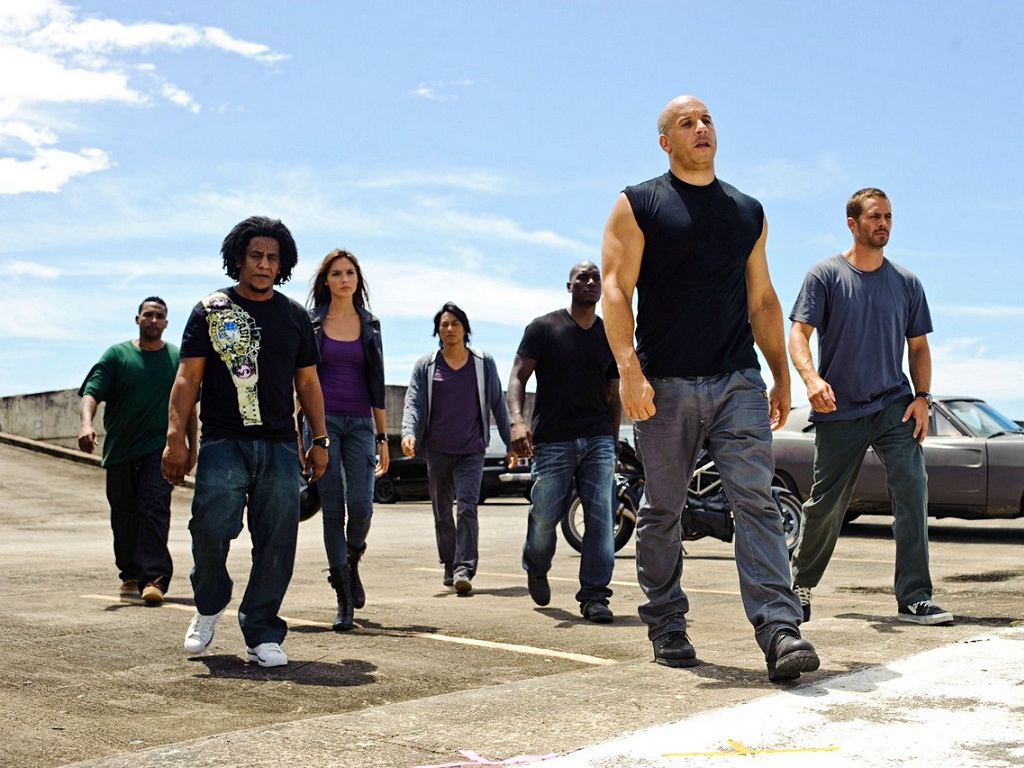
Thus the sequel 2 Fast 2 Furious (still the greatest sequel title ever btw), was left with only Paul Walker, the whitebread cornball cop who was nobody’s favourite character. The original idea was for Ja Rule, who was then at the height of his popularity, to step up from his cameo to take the co-lead, but he turned it down because either he wanted more money, or he thought it wasn’t good enough for him (He told MTV in 2002: “I just felt it wasn’t the best move for me as far as what I want to do in Hollywood right now. I’m really trying to do this acting thing very seriously.”). So the cast was filled out with new characters played by Ludacris (on was on the up as Ja Rule was on the way down), Tyrese, then-hot Ruff Ryders rapper Jin, Eva Mendes and Japanese-American model Devon Aoki, with Boyz N The Hood director John Singleton taking the reigns, and the film instantly became more hip-hop. It’s like the first movie was ripped in two, with xXx taking all the rock stuff and 2 Fast getting all the rap stuff — and history shows who the winner was there.
This move was actually exactly why the franchise has remained so relevant — they just added in a load of cool people who felt very ‘now’ at the time. And this had a very curious consequence: Paul Walker was now the only white face. This would continue throughout the rest of the series. The next part - Tokyo Drift - was a very direct-to-video-feeling ‘sequel in name only’, with a teen Paul Walker surrogate getting involved in Tokyo’s underground racing scene. But it brought on both Taiwainese-American director Justin Lin (the man who’d revolutionise the series over the next four instalments), and introduce Sung Kang’s Han, who is still probably the most prominent Asian character in Hollywood franchise filmmaking outside of a Rush Hour or Karate Kid movie.
And that’s how things would continue — just by thinking what cool shit can we do for the next one. Part four: Let’s bring all the original characters back! Part five: wouldn’t it be sick if The Rock was in this!? And let’s get Ludacris and Tyrese back as well! Part six: let’s get Gina Carano and one of the guys from The Raid! Seven: Ronda Rousey! Tony Jaa! Kurt Russell! Jason Statham!
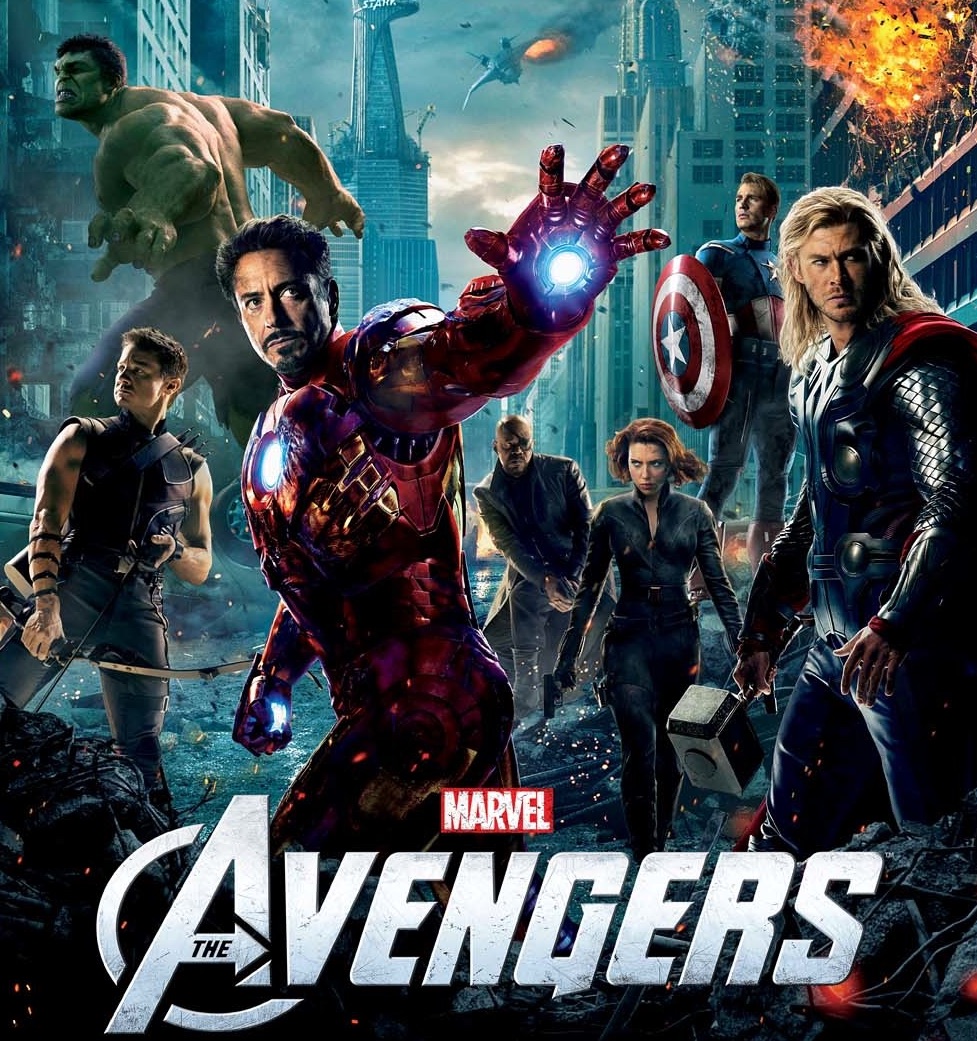
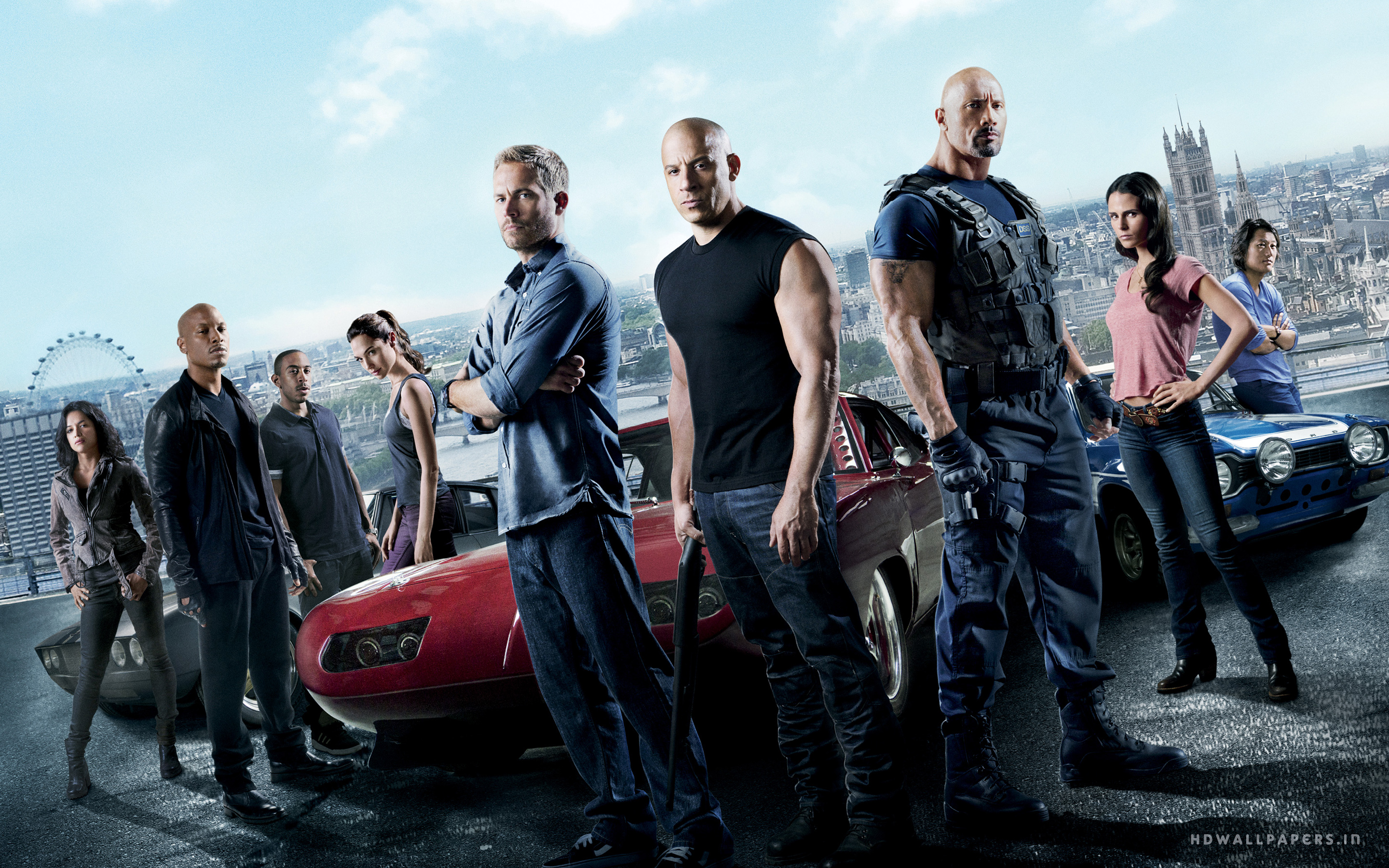
The end result is that the series has probably the most diverse casts in Hollywood. Led by Vin Diesel, a guy who describes himself as “of ambiguous ethnicity”, its ranks now include several African-American recording artists (Ludacris and Tyrese) a half-African-Canadian, half-Polynesian wrestler (The Rock), a Texan with Dominican and Puerto Rican heritage (Michelle Rodriguez), a Korean (Sung Kang), a Domican/ Saint Lucian Brit (Nathalie Emmanuel), an Israeli model (Gal Gadot), two female MMA fighters (Gina Carano, Ronda Rousey) and Thai and Indonesian martial artists (Tony Jaa and Joe Taslim). Part eight is even busting Hollywood action movies’ agism and sexism by adding septuagenarian Helen Mirren into the mix. Now, compare that to the first Avengers movie: one token black guy, one token woman. The upcoming Justice League is slightly better, with a Polynesian Aquaman joining thetoken black guy and token woman. The latest X-Men movie was still predominantly caucasian outside of Oscar Issac and Olivia Munn. And don’t even get us started on The Lord of the Rings.
The difference between the Fast & Furious movies and all those I just named is simple: they are all based on stories written 50 or 70 years ago. And back then, we didn’t get much diversity. The current geek-centric outlook of Hollywood doesn’t leave much room for original properties. And god forbid you should try and update a nerd-property to proper reflect a film being made in 2016. Fans can handle a film about space gods, but not Idris Elba playing a character that was originally white. Or a black Human Torch, or female Ghostbusters. Sadly, there’s a lot of people out there who think adhering to an old comic book is waaaaayyy more important than acknowledging marginalised groups.
Fast & Furious doesn’t suffer from that, because it’s not based on anything, and has developed organically. With each new instalment, produced have (arguably somewhat cynically) tried to add in whoever will appeal to the kids today. And the box office has shown that the kids respond to having a wide range of backgrounds in there. That’s why the series is so important. Despite being a corporate juggernaut, it actually feels like something reflective of millennials, as opposed to being slavish to a book your dad loved. And in an increasingly homogenised Hollywood, that’s vital.