None
Move over Negroni, get outta here Gin and Tonic—you too microbrewery pale ale. There’s a new drink taking the UK by storm…but it ain’t the first time.
Single Pot Still (SPS) whiskey has a long, rich history and has survived some pretty insane times over the years. Now, it’s re-emerging as a popular drink to enjoy both in the club, by the fire, and pretty much anywhere you should be enjoying the best damn whiskey out there.
It’s also proving popular with the guys who know spirits better than anyone else—those guys whipping up cocktails behind the bar. We spoke to Ireland’s very own Dead Rabbit—who just scooped second in the World Bar Awards—over at London Cocktail Week from their New York bar, to help us bring you 10 things every guy needs to know about Single Pot Still Whiskey.
What Defines SPS
“It’s made with unmalted barley mixed with malted barley. It’s a different mash in the pot still.
“What you get with SPS is a much creamier texture. It’s heavy and hardier, more robust than other whiskeys. It stands up to other liqueurs and extremely flavourful. SPS is full on—but it’s still fragrant and subtle too. Predominantly it’s about cream, spice, and honey.”
The Beginning
“Ireland has been making whiskey for a long time, and SPS came about in the 18th century when the Irish started working out ways to avoid new taxes brought in by the English. Basically, it was a way of getting round paying tax on barley malt. They began adding unmalted barley to the mash.
So there was this new style of whiskey, really different to others and it caught on. Distilleries started springing up in the 1800s—there were loads producing it”.
Ireland
“Around the 1800s and towards the turn of the century SPS was popular around the world—Scotland, France, England, and beyond. It was a really golden age for Irish whiskey. SPS was the most celebrated style in the world.”
“Ireland was on the map and was famous for it. I think at one stage there were nearly 100 or so distilleries in the country.”
But it hasn’t always been plain sailing
“There are a number of reasons why it went out of fashion and production was hit hard. One of the main things was a patent filed by this guy called Aeneas Coffey (1830), who invented continuous distillation, which changed the method of how whiskey was made. It impacted production in Scotland particularly and people developed a taste for blends.
“But there are other reasons too. Famine (the Great Famine of the 1840s) obviously affected things, and so did the prohibition era. Also, Irish distillers were really stubborn—and the Scottish were far better at branding. SPS suffered for a long time. There were so many economic and social factors that hit the industry.”
SPS revival
“To see the rebirth of SPS you have to go back to the 1960s. There were hardly any distilleries left, so three of them (Jameson, Powers, Cork Distilleries Company) merged to form a new group.
“Because producing whiskey in Dublin was getting even more expensive they moved to Cork, to Midleton, and set up there. I think they ploughed about £9 million into the move and it got things going again.
“That’s when Jameson’s famous green bottle was invented and those in the group got much better at branding. It was a big reinvention; people woke up to Irish whiskey once more.”
Key Players
“Because there’s been renewed interest in SPS there have been some new set ups. The industry has evolved and now there are four brands of traditional pure SPS whiskey: Powers John’s Lane Release; Midleton; and Redbreast and Green Spot.
“Jameson regular whiskey isn’t actually ‘pure’ SPS, though it’s produced it before—the 15 year-old. But its main serve is a blend of SPS and grain and is a bit lighter. It takes the edge off. I have to say the brand’s been so influential in SPS and restoring faith in Irish whiskey.”
Redbreast
“The history of Redbreast is fascinating. It was key in the merchant trade in the 19th century—there’s a long story behind it.
“The whiskey is matured in only sherry barrels so it takes on that flavour. It’s very rich and bold and I think its most distinct feature is its nuttiness. You can smell it and taste it.”
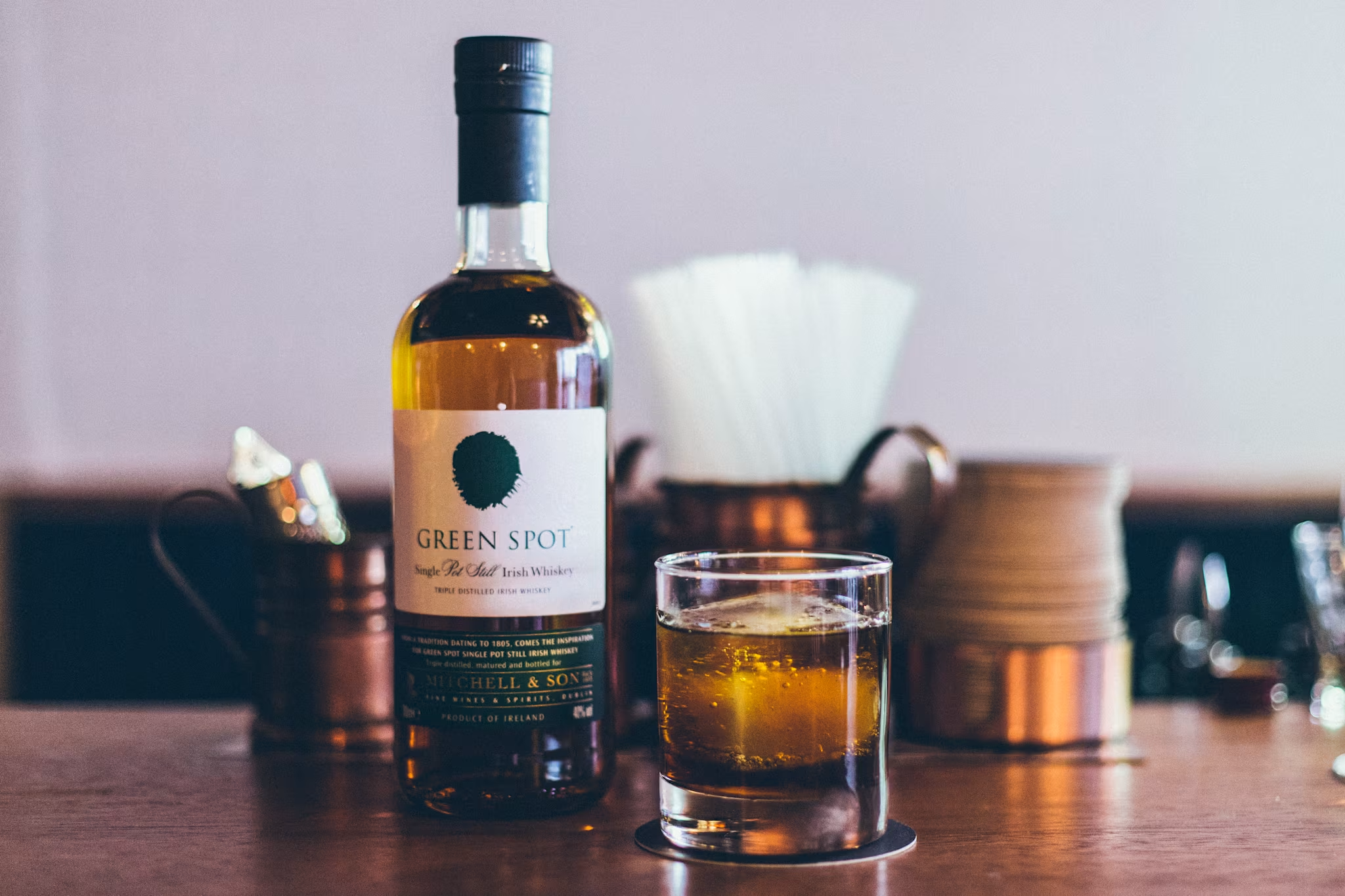
Green Spot
“Green Spot is actually quite light and subtle. It’s matured for about 7-10 years in sherry and bourbon barrels so is also really complex—it’s great in cocktails like the Tipperary, and works very well with modifiers like dry vermouth.”
Cocktails
“SPS is made for stirring cocktails, vintage favourites like Manhattans and the Old Fashioned. Because the whiskey is so powerful it stands up to other tastes and plays off things like green chartreuse and maraschino. We use SPS in a lot of our drinks.”
Stinger: ‘Green Spot Irish Whiskey, Fernet-Branca, Branca Menta, demerara syrup, Dead Rabbit Orinoco Bitters’
Thunderbolt: ‘Powers John’s Lane Release Irish Whiskey, ginger, banana, allspice, chocolate, Dead Rabbit Orinoco Bitters’
What's Next?
“I think Irish whiskey is integral to the future of cocktails and bars in general. It works with things like a pickleback and in creating new cocktails.
“We’re just at the tip of the iceberg at the moment. We’re bringing things back to what they should be—it’s ironic really, because it’s come full circle. SPS suffered because people moved to blended whiskeys, but now there’s a new taste for traditional flavours. It’s put the emphasis back on Ireland and its credibility. We’re proud to be part of it.”
For more info how on Irish Whiskey including recipes, history and event, visit thejamesonworks.com or follow @Jameson_UK