Image via YouTube/IGN
Microsoft and Sony have cushioned the landing pads for the their next-gen consoles.
The Xbox One and the PS4 are, essentially, PCs wrapped in a proprietary candy coated shell. With both systems dropping next month, and manufactured console wars being waged in the comment sections of the Internets it's important to remember one indelible fact: Some franchises don't have the legs to make it to next-gen.
When a game like Tomb Raider moves 4 million units worldwide and is still considered to have missed its sales goals by Square Enix, one is forced to question the viability of the franchise in the next-gen arena. AAA games are often times hampered by bloated development teams, unrealistic sales expectations, sequel/reboot fatigue, and a general hunger for new IPs.
Sega and Capcom have both recently posted layoffs. Konami is getting by on Metal Gear Solid and the house of Kojima. Where does that leave these franchises? Resident Evil 6 and Dead Space 3 both moved almost 5 million units and were still considered failures. One has to ask what hope these franchises have in the next generation.
RELATED: The 25 Best NBA 2K Teams Of All Time
7. Gears of War
Date of last release: March, 2013
Odds of surving next-gen: 190 to 1
The Gears of War franchise was already heading towards the endangered species list before the over-the-jeans, dry-hump that was Gears of War: Judgment.
The franchise was almost synonymous with the Xbox 360 and was easily one of the console's biggest series. Well-earned criticism of the title focused mainly on a thin plot and problems with the story's pacing. Judgment managed to move just under half a million units in its first month of sales. Compare that with Gears of War 3 and its two million unit first month sales and you've got evidence of a series suffering from franchise fatigue on a massive scale.
With the departure of Epic Games' Cliff Bleszinski in October of the year before, it seems nearly certain no Lancers will be seen on the screens of an Xbox One.
During E3 2013, Microsoft Studios CEO Phil Spencer commented on the future of the franchise, saying:
“I love the Gears franchise, I think Epic’s done a really nice job building that. I think there’s an opportunity to spend some time on Gears and on what it means. It’s a rare franchise that managed to ship four times on the platform – 1, 2, 3 and then Judgment. I also think it’s also a really interesting time to launch new IP, and that’s something we’re really invested in."
"You saw Quantum Break, you saw Sunset Overdrive, you saw Crimson Dragon, you saw games big and small from many different developers. I think we were counting, and we had eight or nine different nationalities on stage. It’s a cool opportunity to bring a lot of new content."
6. Lost Planet
Date of last release: August, 2013
Odds of surving next-gen: 300 to 1
Was anyone else completely blindsided when a third entry in the Lost Planet series was announced? The first two entries in the series at least balanced some of the more standard and rote features found in the games, but as soon as I saw the launch trailer for Lost Planet 3, I knew mediocrity was the only conclusion. A grizzled, bearded protagonist clone from a million games that have come before should have been enough of a red flag, but when Capcom handed development over to Spark Unlimited, the people behind the abysmal Legendary, the series fate was all but sealed.
A plot that already seemed stale and derivative, level design that is elementary, and inconsistent game mechanics (sometimes I can get out of the mech and avoid death, sometimes my ejection seat doesn't work. Good luck!) all made a perfect shit-storm of a title.
Capcom need a hit that's not a fighting game and it needs to be an new IP to gain back the legions of fans it's hemorrhaging, but we'd be amazed if a Lost Planet entry saw any screen time on the PS4 or Xbox One.
5. Resident Evil
Date of last release: March, 2013
Odds of surving next-gen: 20 to 1
You can actually point to the exact moment in time when Capcom's survival-horror series made the turn from a work of a well-crafted, atmospherically dense, and genuinely scary series to a AAA, Michael Bay explosion parade.
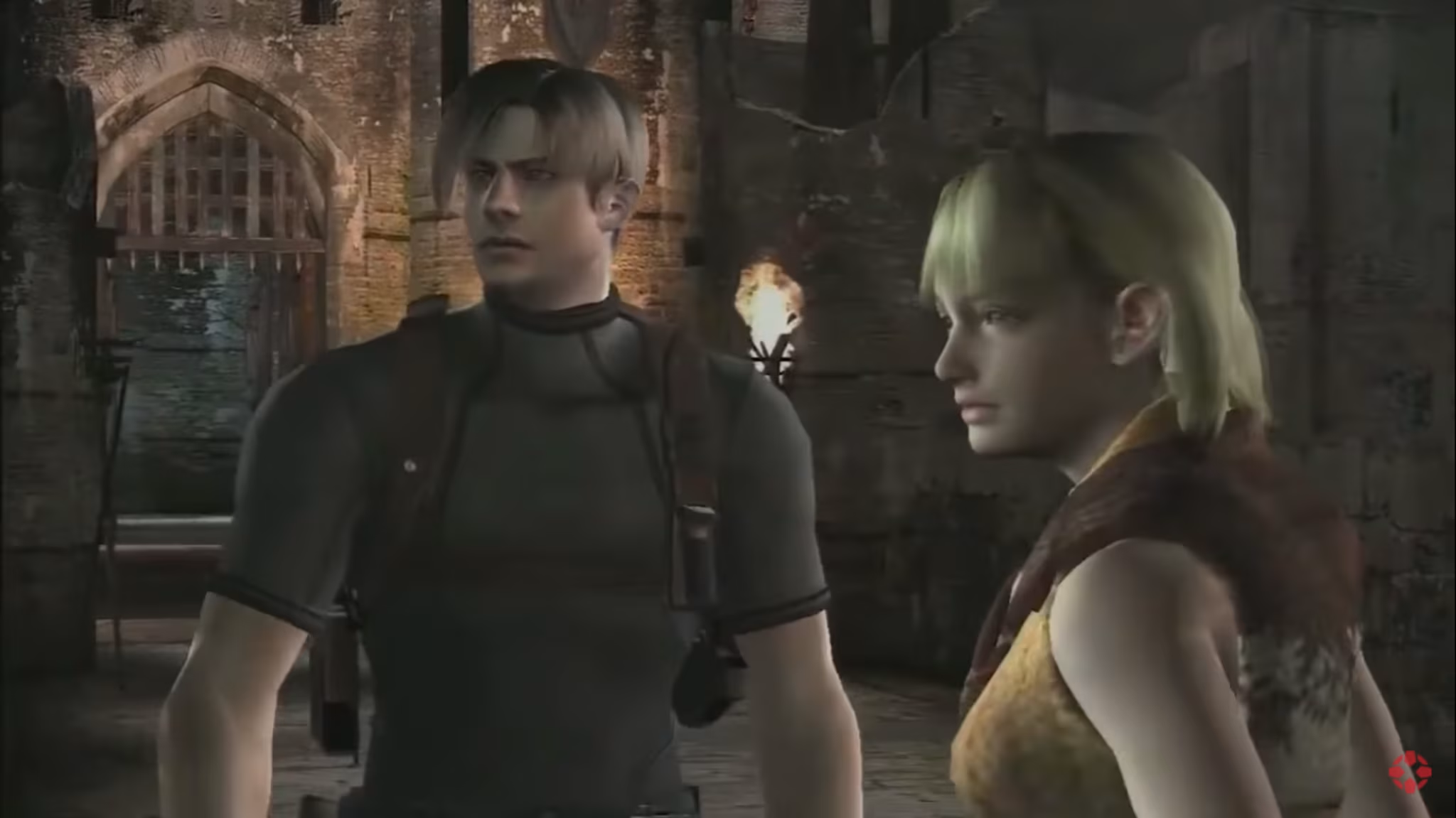
Resident Evil 4 was the first bout of schizophrenia. And Resident Evil 4 wasn't a bad game, not by a long shot. It merely serves as the title that marked the series conscious decision to prioritize action over horror. The series has been pulled in two directions ever since.
When Resident Evil creator Shinji Mikami made the decision to move the series to an over the shoulder, third person shooter he broadened the audience of the series, while at the same placing the franchise firmly into the action genre.
The identity crisis has persisted ever since and crystalized in the underwhelming Resident Evil 6. RE6, let's be honest, was a bland action shooter with a light dusting of Resident Evil sprinkled on for cursory fan service. Is the series now a blockbuster franchise looking to compete with Call of Duty and Halo, or, will there be a return to form for the series? I've no doubt Capcom will try and keep up with next-gen consoles, but the future of the RE series specifically looks uncertain
4. Splinter Cell
Date of last release: August, 2013
Odds of surving next-gen: 150 to 1
Splinter Cell has always strucks me as a franchise with a navigational deficit.
The series had begun its life as a not-so-subtle attempt to cash in on the stealth genre fad made popular by the Metal Gear Solid series. The first few entries in the series, Splinter Cell and Splinter Cell: Pandora Tomorrow felt dated even by 2002, Xbox/PS2 standards. The series took a turn and produced the solidly enjoyable Chaos Theory, but Blacklist proved to be another bland entry in the series. Choosing to focus on a plot that expanded action and marginalized stealth, Blacklist was saved from lasting Ignominy by it enjoyable multiplayer component.
The list of shortcomings for Blacklist; no Michael Ironside voicing Sam Fisher; a torture scene Ubisoft thankfully removed; refocusing on action and kills in favor of stealth left a flaccid taste in the mouth of gamers. Blacklist's ending and dated graphics were also widely held points of contention.
Ubisfot has recently gone on record saying that no new IPS will be created unless they can guarantee a sequel to AAA title. I'm thinking we're going to be seeing a lot more Assassin's Creed titles and we are almost guaranteed to see a Watch Dogs sequel. Splinter Cell may make it to a next-gen console, but genre fatigue strikes us as the franchise's biggest hurdle.
3. Silent Hill
Date of last release: October, 2012
Odds of surving next-gen:120 to 1
I think it's safe to say that Silent Hill is done for. 2012 was a rough year for the franchise and Konami managed to step on its dick at every turn.
We could start with the Silent Hill HD Collection. A botched release that received poor reviews amid awful production issues, the HD Collection was a disaster. Choppy frame rates, screen tears, lock ups, it was essentially a massive failure. The HD Collection was meant to revitalize the series and attract a new generation of players, instead it served as a well publicized death knell for the franchise.
The RPG/dungeon crawler, Silent Hill: Book of Memories, released in October, 2012 for the PS Vita was also a poorly received entry in the series. Failure after failure and setback after setback have not served the series well.
It's unfortunate. Fans hold the series in such high regard and the upcoming release of Shinji Mikami's The Evil Within seems poised to take psychological-horror and carry it to the next generation solo.
2. Fable
Date of last release: October, 2012
Odds of surving next-gen: 80 to 1
This one is a bit of a misnomer as Fable Legends has already been announced as an Xbox One exclusive. Peter Molyneux has left Lionhead studios and has been replaced with John Needham, a man who has cut his teeth in the MMO world. And that's what Legends already tastes like. From the footage we've seen, a strong WoW vibe has been felt.
Maybe Fable does have a future on next-gen, but Peter Molyneux's vision of the series is dead and buried. Fable: The Journey was a Kinect exclusive that advertised itself as not being 'on rails'. Care to guess how the narrative unfolded?
Yup. On some motherfucking rails. Removing the inherent self-consciousness that comes with waving your arms at a Kinect sensor, the game came off as novel at best. The reality of Legends being a fun game is something else entirely. Legends is being sold as a multiplayer co-op online experience which smells dangerously ripe and a series that was supposed to be a production of consequence and choice will limp on as a watered down console MMO.
1. Dead Space
Date of last release: February, 2013
Odds of surving next-gen: 40 to 1
Shitting all over EA and Dead Space 3 is easy. Microtransactions, a story nearly absent of any of the horror that defined the first Dead Space, dated graphics, a co-op mode stapled to a suspense title, a laughable plot that sacrificed mood and tension for explosions and macho man growling, and, ultimately, EA released an easier game than the first two titles.
The sense of lean economy and scavenging for resources was what made the first Dead Space so damn enjoyable. You had zero fucking guarantee that ammo was going to be picked up in the next room. The monsters were used strategically to maintain the established tenor of anxiety and didn't behave like disposable cannon fodder. EA took all of those elements and neutered an otherwise ambitious and enjoyable IP. The end result being a Dead Space 3 which was a generic action shooter with a coat of Dead Space colored shellac painted over it.
Will there be another Dead Space, it's EA so yeah, probably. Will it survive in the PS4/Xbox One era? I'd like to say no, but chances are EA has the time and capital to crank these out regardless of which console generation we're on.