Image via Universal
Police have always had a peculiar place in cinema history. For the most part, they are the good guys. Always standing on the right side of the law and willing to catch the bad guy at all costs (think Robocop, Serpico, Rush Hour). Yet some of the most interesting portrayals of police in film are that of rogue individuals who can't help but register their own brand of law enforcement (Dirty Harry, Die Hard, Bad Boys). There is also the undercover cop who develops a type of Stockholm syndrome, favouring the criminals they have infiltrated, causing an emotional schism to develops within their psyche (The Departed, Donnie Brasco, Reservoir Dogs).
But in the modern landscape of cinema, the police aren't exactly the most prominent heroes up on the big screen. That role has now been filled by superheroes, leaving cops in some sort of uncomfortable void. Not only that, but in the real world anti-cop sentiment is on the increase, mostly thanks to the numerous high profile killings and shootings of black men by officers that keep happening. Therefore, given the amount of controversies surrounding them, could police become a go-to villains in film and television, like Communists and Arab terrorists have been in the past? To an extent, yes, and it has already begun to happen.
An obvious place to look for villains is in horror movies, the genre that has provided some of the greatest fictional baddies ever. Cops are rarely the heroes in horror films and are mostly cast as cannon fodder for the antagonist. In 1988, director William Lustig flipped that notion on its head when he made Maniac Cop, a criminally underrated film from the height of the slasher subgenre. Although the story is not particularly original it is prepared to ask the rather on point question: are you scared of the police? As a seemingly crazed police officer kills people at random in New York City, scepticism of the Big Apple's cops begins to rise resulting in one particularly shocking scene where a woman takes the law into her own hands, fataly shooting an approaching officer she (and the audience) thinks is the killer — but is actually just an innocent beat cop.
With all those themes under the surface, 2016 would be the perfect time for a remake — and one is on the way, with Drive director Nicolas Winding Refn and comic book legend Ed Brubaker attached, and Universal Soldier: Regeneration director, John Hyams, set to helm it. With those sort of names working on the project we've got no idea what to expect but it would be to the film's detriment if it ignores the clear political implications of the original in favour of action and gore.
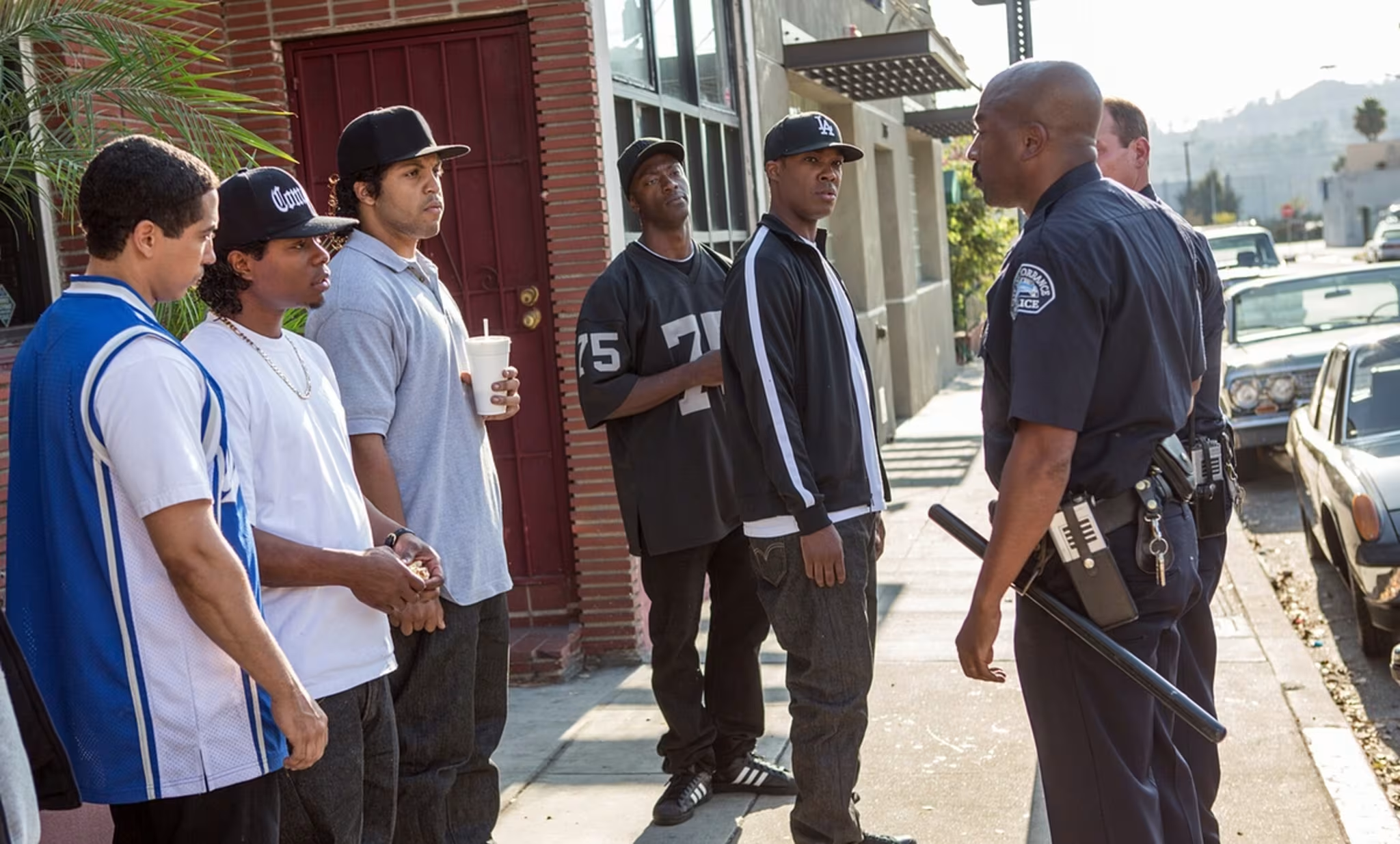
It will be a while before we see the new Maniac Cop but a film that was only in cinemas last year did not shy away from its thoughts on the police. If there are any villains in Straight Outta Compton it is definitely the police. Few films that would have drawn a mainstream appeal have presented cops so brazenly as racist, fear mongering, bigots who are so scared of the lyrics in songs that they were willing to put other people's lives at risk. This tension erupts in probably the best-constructed scene in the entire film in which ‘the law’ raid an NWA concert in Detroit, resulting in a near-riot and the arrest of the rappers in question. Although the police have a significant numbers advantage, their rabid pack-of-dogs mentality is frightening. Combine this with an earlier scene in which NWA are unlawfully frisked on the side of the street and there is no doubt that the police are definitely the villains of this film, posing more of a threat to society than keeping the peace.
Whilst the policies and actions of certain law enforcement agencies are undoubtedly questionable and morally deplorable, we can always find refuge in the humble world of superheroes, right? Whatever the situation, these all-powerful individuals will always stand arm-in-arm with the police. Well, no actually. When considering street-based heroes like Batman and Daredevil, corrupt and bigoted police officers are often bad guys that are dealt with in an effective manner. That’s recently been taken to it’s logical extreme in the current Nighthawk series by David F Walker and Ramon Villalobos (Nighthawk being Marvel Comic’s own off-brand Batman allegory). The Yeezy-wearing, Chicago residing vigilante feels like the perfect hero for 2016, actively seen fighting officers guilty of police brutality.
Superman, on the other hand, is the last character you would expect to go toe-to-toe with the boys in blue. Yet a recent storyline in DC comics saw Clark Kent's identity revealed, resulting in resentment towards him from members of the public for the amount of danger and damage that he has brought to their lives. Most of those disgruntled members of the public just happen to be cops. In Action Comics 41-42 by Greg Pak, Tomeu Morey and Aaron Kuder, supporters of Superman line the streets of Metropolis in solidarity and gratitude towards the Man of Steel, whilst also taking a stance against the irate police. Like any heated protest, all it takes is one mistake for the whole thing to explode but rather than waiting to see how things pan out, Superman interjects himself into the conflict and actively fights the unruly police officers in a robust and emotive act of defiance against these men that would usually support the Last Son of Krypton.
It's hard to think of a more guttural story to have emerged from the pages of a superhero comic in years and the fact that it comes from a blue collar individual like Superman makes it even more shocking and compelling. It wouldn’t be outlandish to compare this to the now historic events in Ferguson or Baltimore. The Metropolis citizens form a wall against the police, only for the officers to retaliate with violence. Thankfully for the members of this fictional city they had Superman to protect them. Sadly, superpowers don’t exist in reality (It is dialled back a bit by later revealing that an evil cop is being controlled by an alien monster, but it doesn’t make the image of Superman punching him any less powerful).
There will always be good cops and bad cops in the fictional world. These are characters that have survived for decades and are part of the fabric that makes crime stories, thrillers or television so exciting. Yet, as attitudes towards the police, especially in America, begin to change and become more and more skeptical can we really still believe in the honest cop that fights for justice and goodwill? Stories like Straight Outta Compton are real and whatever conclusion you choose to take from them, there is no denying that lives will have been gravely impacted by careless actions and clear racism. Of course every police officer isn’t a criminal in disguise, but if it has now gotten to a point where Superman is fighting the police and a remake of a once schlocky horror film now seems appropriate, what does that have to say our perceptions of those that are employed to protect us and bring justice?




