Key Takeaways
- Executive producer Leonora Ann Darby sued Tea Shop Productions co-founders James Harris and Mark Lane, claiming they promised her one-third of the net profits from films she produced but cut her out of Obsession’s earnings.
- Darby says she helped rescue the film by restoring director Curry Barker’s control of the edit, pushing for reshoots, reshaping its early acts, and committing the story to its supernatural premise.
- She seeks a full accounting, unpaid wages and expenses, and her alleged 33.33 percent share after the ultra-low-budget horror breakout grossed $505.7 million worldwide.
The producer who says she helped rescue Obsession before it became a $505 million horror phenomenon is now suing for her share of the money. Leonora Ann Darby filed a lawsuit against Tea Shop Productions co-founders James Harris and Mark Lane, alleging they shut her out of the film’s profits despite promising to compensate her as an equal producer.
Filed August 28 in the Los Angeles Superior Court, the complaint centers on an alleged 2024 agreement granting Darby one-third of the net profits that Tea Shop received from films she lead-produced, according to Entertainment Weekly. Darby, who is officially credited as an executive producer on Obsession, claims she performed the work of a lead producer but was denied the pay, recognition, and financial access that came with that role.
She is seeking her alleged 33.33 percent share, a full accounting of the film’s revenue, unpaid wages and expenses, compensation tied to other projects, and relief for alleged retaliation.
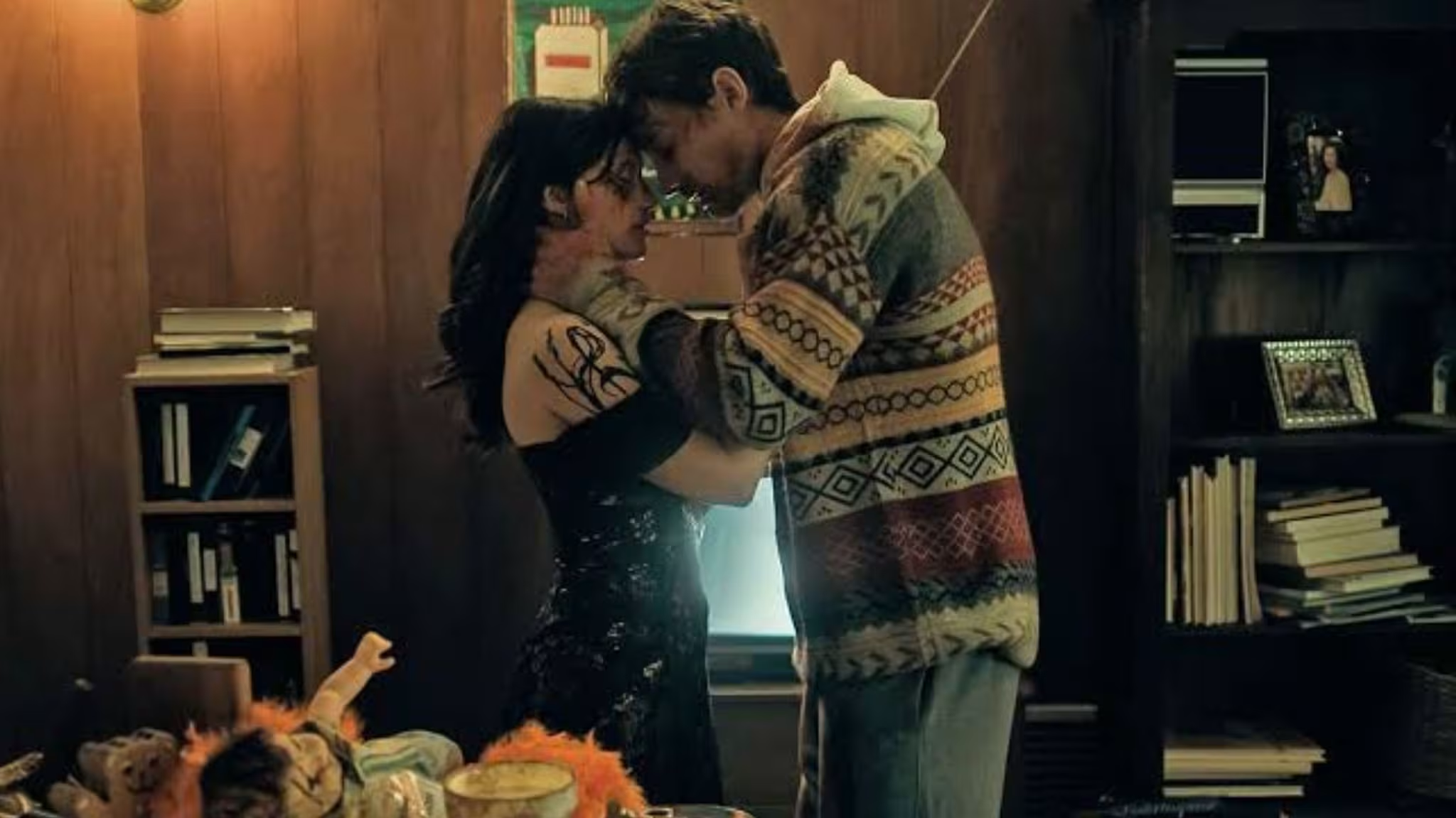
Directed by 26-year-old YouTube filmmaker Curry Barker and starring Inde Navarrette and Michael Johnston, the ultra-low-budget thriller opened with $17.2 million before showing unusually strong staying power at the box office. Driven by word of mouth, the movie eventually earned $505.7 million worldwide.
That figure represents the film’s theatrical gross—not its net profit—but it turned Obsession into one of the year’s biggest breakout hits and raised the stakes of any dispute over participation in its earnings.
According to the lawsuit, Darby stepped in after Barker lost control of the film’s edit to another editor. She allegedly pushed for Barker to regain authority over the cut, advocated for reshoots and supplied notes that reshaped the characters and early acts.
The complaint says her “strong recommendation” to commit fully to the story’s supernatural elements—including making the One Wish Willow real within the film—“critically resulted in a new pathway for the film.”
Her attorneys described the case as the result of “a seven-year pattern of unequal treatment and broken compensation promises” toward a younger female producer whose work was “material to the growth” of Tea Shop.
The filing also accuses Harris and Lane of minimizing Darby’s public role after the movie took off. She claims she was not invited to the Los Angeles premiere and was repeatedly denied the recognition she was promised.
Darby’s attorney, Thomas K. Richards, said she had brought “serious and substantial claims, supported by a detailed factual record,” adding that she intends to pursue the case fully.
Representatives for Tea Shop Productions and Barker had not responded publicly to requests for comment at the time the lawsuit was reported.




